

In the arid coastal valleys of southern Peru, an ancient civilization once thrived against overwhelming environmental odds. The Chincha Kingdom, known for its sociopolitical complexity and economic expansion during the Late Intermediate Period (circa 1000–1400 CE), owes much of its agricultural success to an unexpected source: seabird guano. A groundbreaking study, recently published in PLOS One, casts new light on how this marine-derived fertilizer fueled intensive maize cultivation nearly eight centuries ago — long before the Inca Empire asserted dominance in the region.
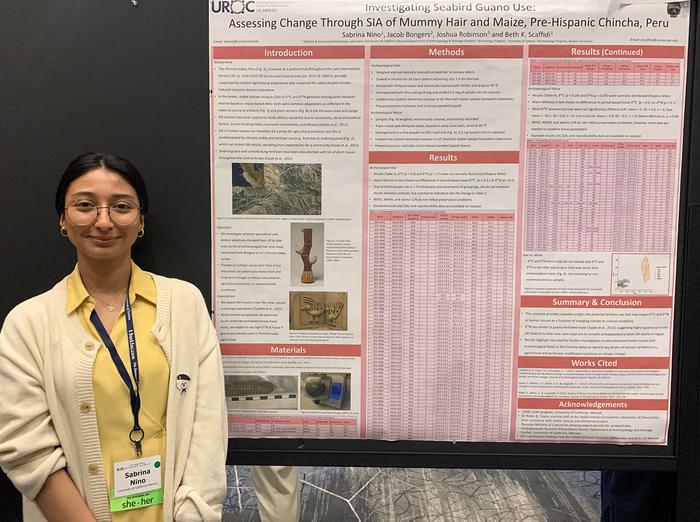
Research teams from the University of Sydney, Texas A&M University, and, critically, the University of California, Merced have brought advanced isotope analysis techniques to bear on this archaeological puzzle. UC Merced’s Skeletal and Environmental Isotope Laboratory (SEIL), under the guidance of Professor Beth Scaffidi from the Department of Anthropology and Heritage Studies, undertook the meticulous chemical examination of maize cob fragments excavated from 26 tombs spanning 14 cemeteries throughout the Chincha Valley. This work was further enriched by the involvement of Robin Trayer, technical director of UC Merced’s core isotope lab, ensuring the precision of the isotopic assays.
By focusing on stable isotopes of carbon, nitrogen, and sulfur embedded within the ancient maize tissue, researchers could reconstruct the agricultural practices that sustained this pre-Hispanic society. The distinct isotopic signatures revealed by these tests allowed scientists to determine not just what crops were grown but how they were cultivated. Most notably, the nitrogen isotopic ratios indicated a significant presence of marine nitrogen, hallmark evidence of seabird guano usage in fertilization.
Seabird guano is rich in nitrogen, a critical nutrient for plant growth, but its isotopic signature is unique compared to terrestrial sources. The maize samples showed nitrogen isotope values often exceeding +20, with some reaching as high as +27.4. These levels are well beyond what would occur through natural soil processes or conventional fertilizers of the time and strongly implicate seabird guano as the fertilizer of choice. The sulfur isotopic compositions found in the maize also aligned with controlled experiments involving guano-enriched soils, reinforcing the conclusion.
This transformative agricultural practice facilitated not only robust crop yields but also enabled the Chincha Kingdom to sustain a population estimated at 30,000 people—remarkable, considering the naturally arid environment. The region’s riverine valleys, once limited in productivity, became one of Peru’s most fertile agricultural hubs, supporting a complex economy composed of farmers and extensive merchant networks.
Human hair samples excavated from the same archaeological sites further corroborated these findings. The isotopic analyses of these remains reflected a marine-enriched nitrogen input consistent with the agricultural data. Beyond maize fields, isotopic baselines established through examination of ancient seabird species—pelicans, boobies, and cormorants—provided critical environmental context, allowing researchers to differentiate natural marine nitrogen inputs from human agricultural activity.
Far from simply increasing crop yields, the use of seabird guano acted as a catalyst in the sociopolitical development of the Chincha Kingdom. Fertilization practices not only bolstered food security but also stabilized and expanded the kingdom’s influence, positioning it as an essential partner and eventual target for the expanding Inca Empire.
However, the study underscored a nuanced understanding of sustainable resource management. While guano fertilizer was invaluable, its overuse can degrade soil health and reduce its long-term fertility. Additionally, modern guano mining operations are known to pose environmental hazards, including ecosystem disruption and toxicity to local wildlife—issues the ancient Chincha likely had to manage in their own way. Balancing the abundance provided by guano against risks of over-exploitation reveals a level of environmental stewardship not often attributed to pre-modern cultures.
Professor Scaffidi emphasizes the importance of this research in exploring how ancient societies achieved agricultural resilience. This pioneering isotopic approach provides not only historical insight but also valuable narratives for contemporary efforts in sustainable agriculture. The Chincha example demonstrates how indigenous technologies, guided by empirical environmental knowledge, empowered societies to thrive in challenging ecological landscapes.
In a modern context facing global food security challenges and environmental degradation, this study urges us to re-examine past practices and their complex relationship with natural resources. Understanding ancient human-environment interactions can inspire innovative pathways for managing fertilizers and agricultural inputs in ways that maintain productivity without compromising ecological integrity.
The Chincha Kingdom’s legacy, etched into their maize fields through molecular isotopes, invites a reevaluation of pre-Inca technological sophistication. Their strategic use of seabird guano illustrates a sophisticated symbiosis between human innovation and nature, a relationship deeply rooted in Indigenous knowledge systems. This work bridges archaeology, chemistry, and ecology, presenting a multidimensional view of how ancient cultures shaped their world and, by extension, how we might shape ours.
In unraveling these isotopic fingerprints left behind by ancient farmers, researchers have opened a new chapter on the intersection of environmental science, archaeology, and anthropology. These findings not only enrich our understanding of pre-Hispanic Peruvian societies but also remind us that sustainable agricultural solutions — drawn from the past — may hold keys to future resilience amid ongoing environmental change.
Subject of Research: People
Article Title: Seabirds shaped the expansion of pre-Inca society in Peru
News Publication Date: 11-Feb-2026
Web References: https://doi.org/10.1371/journal.pone.0341263
Image Credits: University of California, Merced
Keywords: Chincha Kingdom, seabird guano, isotopic analysis, pre-Hispanic agriculture, maize cultivation, stable isotopes, nitrogen enrichment, sustainable farming, indigenous technologies, pre-Inca society, environmental archaeology, agricultural resilience


