

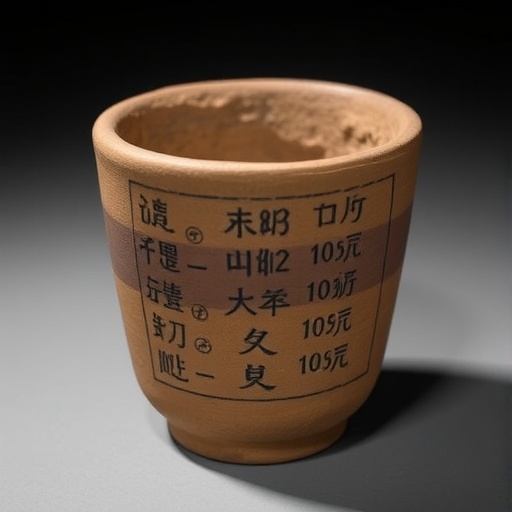
In an extraordinary archaeological discovery, researchers have unearthed a remarkable inscribed ear-cup from Barrow №1 of Duurlig Nars, Mongolia. This find, a testament to the rich cultural history of the region, has ignited significant interest among historians and archaeologists alike. The ear-cup, intricately decorated and inscribed with symbols that have yet to be fully understood, offers a tantalizing glimpse into the artistic and ritualistic practices of ancient Mongolian societies. The implications of this discovery extend beyond mere aesthetics; they invite us to consider the social and historical contexts that gave rise to such artifacts.
The team responsible for this significant finding comprises notable archaeologists, including I. Otani, F. Okada, and G. Eregzen, who have dedicated this research to shedding light on the life and times of the people who once inhabited this enigmatic region of Mongolia. Their extensive fieldwork and analysis have revealed that the ear-cup is likely to have been used in ritualistic practices, perhaps in ceremonies that marked the passage of life, death, and the connection to the spiritual world. Given its intricate details, the piece is not just a decorative object but a potential key to understanding the belief systems that pervaded ancient Mongolian culture.
The inscription itself is particularly noteworthy, as it hints at a language or dialect that remains largely unexplored. Preliminary studies suggest that the symbols may hold meanings related to either social status or lineage, possibly indicating that the ear-cup belonged to an individual of significance in their community. This raises questions about the hierarchical structures of ancient Mongolia, suggesting that objects of beauty and function were not just for personal use, but were also indicators of one’s position in society. The scholarly pursuit to decipher these inscriptions underscores the complex interplay between language and culture, as we seek to reconstruct past narratives.
Moreover, the discovery of the ear-cup within a burial site is particularly revealing. Archaeological contexts provide invaluable information about burial customs and the material culture associated with the afterlife. The careful placement of the ear-cup within the burial site indicates its importance, suggesting that such items were not mere possessions, but rather integral to the individual’s identity and societal role. The excavation of Barrow №1 adds to the growing body of research on burial mounds in Mongolia, which span centuries and offer insights into the evolving practices of honor, memory, and reverence for ancestors.
The Duurlig Nars site, known for its historical significance, has yielded other significant archaeological artifacts over the years, making it a focal point for scholars studying the dynamics of ancient nomadic societies. Each new discovery, like the inscribed ear-cup, paints a more detailed picture of the lives, beliefs, and traditions of those who once traversed these vast, windswept landscapes. This inscribed ear-cup not only contributes to our understanding of artistic practices but also challenges our assumptions about identity and agency in the ancient world.
Researchers have begun to theorize about the potential origins of these symbols. Could they be part of a broader tradition of artistic expression found in neighboring cultures? Or do they signify a unique linguistic heritage? The ear-cup’s context and inscriptions may help bridge connections between distant civilizations, offering evidence of trade, migration, or cultural exchange, thus enriching our understanding of historical interactions across the ancient world.
The implications of this ear-cup reach into contemporary discussions about cultural heritage and preservation. In an age where rapid globalization often leads to the erasure of local histories, findings like these remind us of the importance of archaeological practices that honor and respect the complexities of past societies. This discovery not only elevates our understanding of Mongolian history but also emphasizes the need for collaborative approaches to heritage management that involve local communities and respect traditional knowledge.
As the research progresses, the team is preparing to publish their findings in a forthcoming issue of Asian Archaeology, where they will present detailed analyses of the ear-cup’s inscriptions, its design elements, and its archaeological context. The publication will serve as a springboard for further discussion and debate within the academic community, inviting other scholars to contribute their insights and findings related to this groundbreaking discovery.
In conclusion, the unearthing of the inscribed ear-cup from Barrow №1 of Duurlig Nars marks a significant moment in the field of archaeology. It stands as a symbol of the rich tapestry of human experience in ancient Mongolia, urging us to explore the complexities of cultural expression, societal roles, and the enduring significance of ritual practices. Future studies will undoubtedly continue to unravel the mysteries encapsulated within this remarkable artifact, promising to shed light on the enduring legacy of the past while challenging us to reflect on the narratives we continue to construct in the present.
As researchers push forward in their study, the findings may not merely enrich our academic understanding of history but may also resonate within broader discussions about cultural identity and continuity, showcasing how ancient objects can have modern implications. The inscribed ear-cup from Mongolia reminds us that every artifact carries with it stories waiting to be told, and every find can act as a bridge connecting us to those who walked before us.
Subject of Research: Inscribed ear-cup unearthed from Barrow №1 of Duurlig Nars, Mongolia
Article Title: Inscribed ear-cup unearthed from Barrow №1 of Duurlig Nars, Mongolia
Article References:
Otani, I., Okada, F. & Eregzen, G. Inscribed ear-cup unearthed from Barrow №1 of Duurlig Nars, Mongolia.
asian archaeol 9, 139–147 (2025). https://doi.org/10.1007/s41826-025-00110-5
Image Credits: AI Generated
DOI: 10.1007/s41826-025-00110-5
Keywords: Mongolia, archaeology, inscribed ear-cup, ancient societies, cultural heritage


