


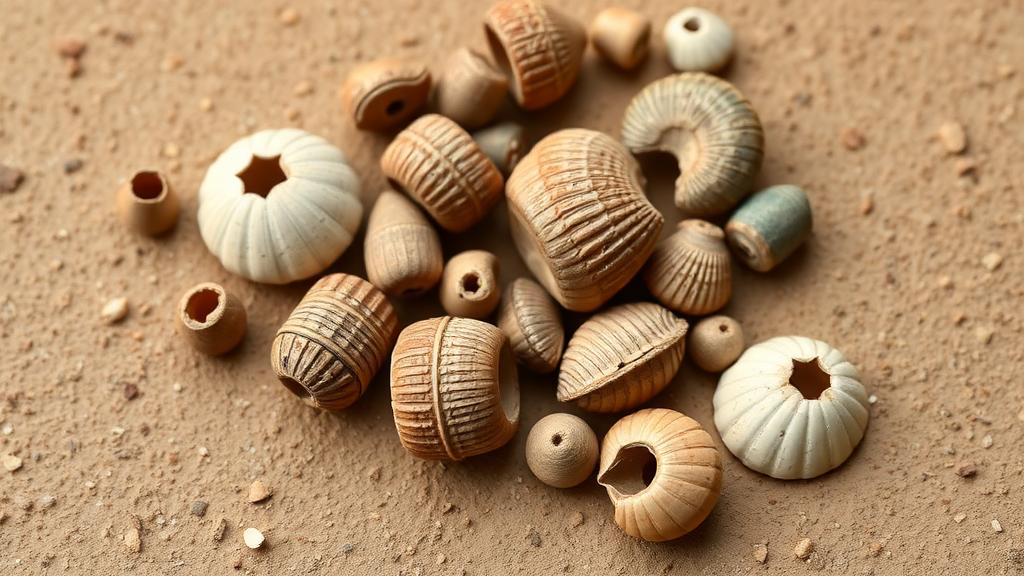
Deep inside a sea-facing cave near the town of Xàbia on Spain’s eastern coast, archaeologists have uncovered a collection of small but extraordinarily revealing objects: perforated animal teeth and mollusc shells that once adorned the bodies of some of the earliest modern humans to settle the Iberian Peninsula. A new study of the personal ornaments from Cova Foradada, published in Archaeological and Anthropological Sciences, offers one of the most detailed portraits yet of how these Early Upper Palaeolithic hunter-gatherers chose, made, wore and discarded their jewellery, and it hints at shared cultural identities that stretched across the eastern Mediterranean seaboard of Iberia.
Personal ornamentation is far more than decoration. To archaeologists, beads and pendants are a vital proxy for symbolic behaviour and technological complexity, encapsulating everything from raw material collection and environmental knowledge to manufacturing skill and patterns of use and discard. As one of the hallmark expressions of Homo sapiens arriving in Europe, ornaments are especially crucial for investigating the technological knowledge and non-utilitarian practices of the first modern human groups on the Iberian Peninsula. Yet detailed functional analyses of such assemblages remain surprisingly scarce, which is what makes the Foradada study stand out.
The research team, led by Oriol Montero-Buch of the Universitat d’Alacant together with Ester Verdún-Castelló, Magdalena Gómez-Puche, Josep A. Casabó and Javier Fernández-López de Pablo, subdivided the cave’s ornament record into three distinct assemblages using stratigraphic and contextual criteria: an Early Upper Palaeolithic group, a mixed Upper Palaeolithic group and a Holocene group. This careful separation allowed the researchers to focus on the earliest phase, when modern humans were first establishing themselves in the region, while acknowledging the complexities introduced by later occupations of the cave.
The assemblage comprises thirty-five finished ornaments, alongside elements related to technical failures and accumulations of raw material. That combination is exceptionally informative, because it captures the entire life history of ornament production rather than just the end products. The range of materials selected is impressively broad, stretching from terrestrial mammal teeth to both marine and freshwater mollusc shells. This diversity suggests that the cave’s inhabitants possessed an intimate understanding of multiple ecological zones, from inland hunting territories to the nearby coastline, and deliberately targeted specific raw materials for ornamental purposes.
To unlock the secrets of these objects, the team employed a combined technological and traceological approach. Technological analysis examines the chaîne opératoire, the sequence of operations involved in producing each ornament, from raw material selection through perforation to final finishing. Traceology, or use-wear analysis, reads the microscopic marks left on the surfaces of the objects, revealing how they were suspended, how they moved against one another or against clothing, and how they ultimately came to be discarded. Together, these methods allowed the researchers to characterise the full biography of each bead and pendant, from manufacture through use to disposal.
Perhaps the most striking finding came from Raman spectroscopy, a non-destructive analytical technique that identifies mineral compounds by the way they scatter laser light. This analysis identified evidence of colour modification technology on the ornaments, meaning that some of the beads or shells had been deliberately treated to alter their colour, most likely with iron oxide pigments such as ochre. This represents one of the earliest documented uses of such colour modification on personal ornaments during the Early Upper Palaeolithic in the Iberian Peninsula, adding the region to the growing map of early pigment use across Eurasia and underscoring that these small objects carried aesthetic and symbolic significance that went beyond their natural appearance.
Comparative analysis with nearby regional ornamental assemblages revealed clear similarities between Foradada and other contemporary collections in the surrounding region. In the study of early modern human groups, ornament types can function rather like cultural fingerprints, and such shared patterns potentially point to common social networks and ethno-cultural identities linking communities across eastern Iberia. Recent large-scale European studies of Aurignacian and Gravettian ornaments have suggested that distinct ornamental traditions may correspond to distinct cultural groups, and the Foradada material now contributes an important data point from the Iberian Mediterranean margins to this emerging continental picture.
The researchers argue that the Foradada assemblage constitutes a significant collection of personal ornaments on the Iberian Peninsula during the Early Upper Palaeolithic, a period for which well-preserved and well-studied ornament assemblages remain comparatively rare in this part of Europe. The cave’s location, close to what would have been a dramatically different Late Pleistocene coastline, makes it a particularly valuable window onto how early coastal hunter-gatherer communities integrated marine resources, both dietary and symbolic, into their lives. Previous work at the site has already documented shellfish consumption during this period, and the ornament study now shows that shells also served as vehicles of identity and meaning.
Beyond its regional importance, the study makes a methodological case that is likely to resonate across Palaeolithic archaeology. The authors assess the potential value of integrating techno-functional analysis with spectroscopic methods as a way to add evidence on hunter-gatherer procurement strategies and their relationship with the environment. By combining microscopic reading of manufacturing and wear traces with mineralogical identification of pigment residues, archaeologists can extract far richer narratives from small ornamental objects than either technique alone could provide. Applied more widely, this integrated approach promises to illuminate not only how beads were made and used, but also where their raw materials came from, how far they may have travelled, and what that can reveal about the mobility and exchange networks of Europe’s earliest modern human societies.
For now, the ornaments of Cova Foradada stand as quiet testimony to a world nearly forty millennia past: a time when small groups of modern humans, perched between mountains and a cold sea on the edge of Europe, were already investing time, skill and meaning in the objects they wore against their skin. In their perforated teeth and pigmented shells, the first Iberian sapiens left behind a durable record of who they were, who they knew, and how they wished to be seen.
Subject of Research: Early Upper Palaeolithic personal ornaments and symbolic behaviour in eastern Iberia
Article Title: Early Upper Palaeolithic personal ornaments from Foradada cave (Xàbia, Alacant, Eastern Iberia)
Article References: Montero-Buch, O., Verdún-Castelló, E., Gómez-Puche, M., Casabó, J. A., & Fernández-López de Pablo, J. (2026). Early Upper Palaeolithic personal ornaments from Foradada cave (Xàbia, Alacant, Eastern Iberia). Archaeological and Anthropological Sciences, 18(10), Article 208. https://doi.org/10.1007/s12520-026-02555-w
Image Credits: AI Generated
DOI: 10.1007/s12520-026-02555-w
Keywords: personal ornaments, Early Upper Palaeolithic, Foradada cave, Iberia, shell beads, perforated teeth, Raman spectroscopy, traceology, symbolic behaviour, hunter-gatherers, social networks, ochre
Cite Scienmag News
Courtney Benton. (September 30, 2026). Ancient Beads and Shells Reveal Early Modern Humans’ Symbolic World in Iberia. Scienmag. https://scienmag.com/ancient-beads-and-shells-reveal-early-modern-humans-symbolic-world-in-iberia/
Courtney Benton. "Ancient Beads and Shells Reveal Early Modern Humans’ Symbolic World in Iberia." Scienmag, 30 September 2026, https://scienmag.com/ancient-beads-and-shells-reveal-early-modern-humans-symbolic-world-in-iberia/. Accessed 4 October 2026.
Courtney Benton. "Ancient Beads and Shells Reveal Early Modern Humans’ Symbolic World in Iberia." Scienmag. September 30, 2026. https://scienmag.com/ancient-beads-and-shells-reveal-early-modern-humans-symbolic-world-in-iberia/


