

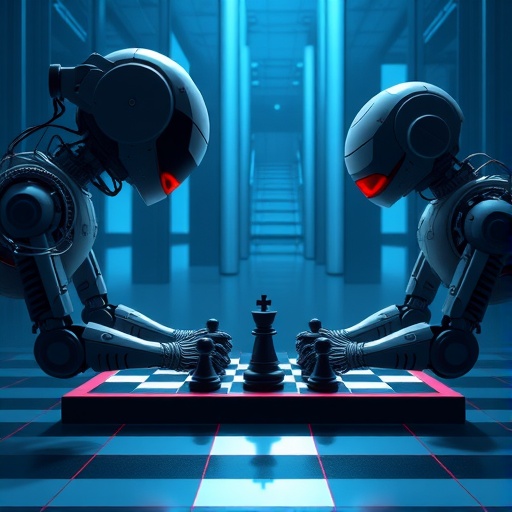
In the rapidly advancing arena of artificial intelligence, game-playing systems have long served as both benchmarks and crucibles for testing the prowess of learning algorithms. From Deep Blue’s historic chess victories to AlphaGo’s astounding mastery over Go, AI agents have demonstrated a formidable ability to learn complex strategies through self-play and pattern recognition. Yet, a groundbreaking new study challenges the assumption that these techniques alone suffice to comprehensively solve all types of games. Investigating Nim—a deceptively simple children’s game grounded in rigorous mathematical theory—researchers have uncovered significant limitations in the effectiveness of self-play reinforcement learning when applied to games requiring abstract arithmetic reasoning.
Nim, at first glance, is a straightforward impartial game involving sequential removals of counters from several heaps. Its optimal strategy, derived decades ago, hinges on computing the nim-sum, an exclusive-or (XOR) of the heap sizes, making it a canonical example of a game with a complete mathematical solution. Unlike complex, opaque games, Nim’s solution is precisely known and can be encoded analytically. This property makes Nim a perfect litmus test for understanding whether reinforcement learning systems that rely on pattern-based self-play truly internalize underlying principles or merely exploit surface-level correlations to generate competent moves.
In their experimental investigation, Dr Bei Zhou, a research associate at Imperial College London, and Dr Søren Riis, a reader in computer science at Queen Mary University of London, trained AlphaZero-style agents to play Nim under varying conditions. These agents, which combine deep neural networks with Monte Carlo tree search, have previously achieved superhuman performance in several strategic games. However, in Nim, despite intensive training regimes and exhaustive self-play simulations, the researchers observed consistent “blind spots” in the agents’ playbooks. In numerous game states, the AI failed to select optimal moves, often deviating from the mathematically guaranteed winning strategy.
As the size of Nim boards increased and the state space expanded exponentially, the agents’ predictive accuracy deteriorated dramatically, often approaching the performance of random guessing. This phenomenon suggests that the neural networks struggled to extrapolate abstract arithmetic rules solely from pattern recognition, without explicit symbolic understanding or analytical input. It highlights a crucial distinction between learning from extensive gameplay experience and internalizing a fundamental winning principle expressible through abstract representation.
This research has profound implications for the broader AI community, especially regarding the reliance on self-play and pattern learning in artificial intelligence systems. While self-play has paved the way for remarkable breakthroughs in games characterized by positional complexity, such as chess and Go, it appears insufficient in tackling games or tasks that are fundamentally defined by abstract, mathematical constructs. In these scenarios, purely statistical learning methods may fail to capture the underlying invariant structures and generate truly robust, optimal strategies.
The findings underscore the necessity for hybrid approaches that integrate symbolic reasoning or embed prior analytical knowledge into learning agents. Such methodologies could bridge the gap between raw pattern mining and conceptual understanding, empowering AI to generalize optimally across the entire problem space—even in mathematically tractable domains. This hybridization aligns with ongoing efforts in explainable AI and neuro-symbolic computation, which aim to combine the strengths of connectionist and symbolic paradigms.
Furthermore, the study offers a cautionary reminder that high performance metrics or astonishing competitive success in training environments do not inherently guarantee comprehensive understanding or flawless generalization by AI systems. When tested across the full gamut of possible game configurations, systems might reveal hidden brittleness or systematic lapses in rare but critical cases. This brittleness could have wider repercussions beyond gaming, potentially impacting autonomy and decision-making in real-world applications where rare-event robustness is paramount.
Dr Søren Riis aptly summarizes the challenge: despite Nim’s complete mathematical solution and the proven effectiveness of self-play reinforcement learning in other domains, AI agents continue to exhibit strategic deficiencies when the game’s core rules revolve around abstract arithmetic. The competitive prowess demonstrated by these systems may belie significant gaps in their internalization of fundamental principles. This observation sparks a clarion call to rethink how AI agents learn and represent knowledge, emphasizing the importance of capturing abstract structure, not merely statistical regularities.
Published in the journal Machine Learning, this research marks a vital step in charting the frontiers of reinforcement learning. By spotlighting a simple yet mathematically rich game like Nim, Zhou and Riis provide a clear, diagnostic example that complements the triumphs AI has achieved in complex strategy games. Their work advocates for the development of AI architectures that synthesize empirical pattern learning with principled, analytic reasoning capabilities—an approach that may prove crucial for advancing AI toward deeper understanding and more reliable performance.
The implications extend past game-playing, touching on fundamental questions about how intelligence—both human and artificial—grasps abstract concepts and optimizes decision-making under uncertainty. As AI research accelerates, this study prompts renewed scrutiny of evaluation metrics, training paradigms, and knowledge representation techniques. Particularly, it encourages a multidisciplinary discourse involving mathematics, cognitive science, and computer science to engineer AI systems capable of mastering the full spectrum of strategic intelligence.
In demonstrating that the current state-of-the-art methods falter in even an elegantly solvable testbed like Nim, Zhou and Riis underscore that intelligence in machines goes beyond mere statistical correlation. To surmount future challenges in AI, researchers must innovate learning models that incorporate abstract reasoning and hybrid learning frameworks, ultimately laying the groundwork for more generalizable and explainable artificial intelligence.
Subject of Research: People
Article Title: Impartial Games: A Challenge for Reinforcement Learning
News Publication Date: 13-Mar-2026
Web References:
https://www.researchgate.net/publication/401661362_Impartial_Games_A_Challenge_for_Reinforcement_Learning
http://dx.doi.org/10.1007/s10994-026-06996-1
Image Credits: Image by Dr Bei Zhou, Research Associate at Imperial College, London, and Dr Søren Riis, Reader in Computer Science, Queen Mary University of London
Keywords
Artificial intelligence, reinforcement learning, self-play, impartial games, Nim game, abstract reasoning, AlphaZero, hybrid AI models, pattern recognition, game theory, neural networks, machine learning


