

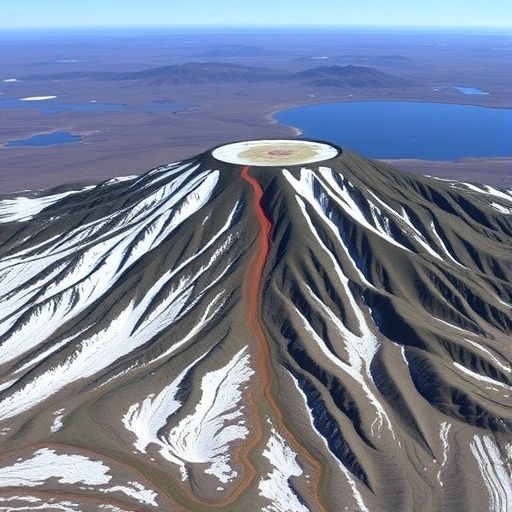
A recent groundbreaking study has emerged from the depths of the Alpha Ridge, shedding light on a significant geological event dating back approximately 90 million years. The research, authored by a collaborative team led by M.C. Williamson, G.E. Shephard, and K. Boggild, investigates a sediment sample obtained through dredging operations. This sample offers compelling evidence that could redefine perspectives on volcanic activity during the late Cretaceous period. As scientists delve into the implications of this discovery, it becomes increasingly evident that the Alpha Ridge may not be the inert geological feature previously assumed, but rather a site of ancient volcanic emergence that played a vital role in Earth’s geological evolution.
The Alpha Ridge, located in the North Atlantic Ocean, has long been a point of interest for geologists attempting to understand the tectonic and volcanic processes that shaped its formation. Traditionally, the ridge has been seen as a remnant of volcanic activity, but the recent findings challenge this notion by suggesting that magma eruption and volcanic activity persisted far longer than previously recognized. The precise nature of the volcanic setting revealed by the dredged samples suggests that the ridge may have been an active volcanic site during a turbulent time in Earth’s history when the planet was experiencing significant climatic and geological changes.
What sets this research apart is the meticulous methodology employed by the team to extract and analyze the dredged material. The study involved sophisticated techniques such as radiometric dating, geochemical analysis, and petrological investigation. These methods allowed the researchers to ascertain not only the age of the volcanic materials but also their composition and the environmental conditions under which they formed. The findings indicate a complex interplay of igneous processes, suggesting that the Alpha Ridge was subjected to substantial volcanic activity, possibly contributing to the broader Cretaceous volcanic record.
Moreover, the implications of this discovery reach beyond the mere identification of volcanic remnants. Understanding the dynamics of volcanic activity in this region provides critical insights into past oceanographic conditions, which can be linked to ancient climate patterns. The research highlights that periods of volcanic activity can significantly influence global climate, thereby potentially affecting biodiversity and geological developments in adjacent regions. As volcanic eruptions release gases and ash into the atmosphere, they can alter weather patterns and impact temperature regulation on a planetary scale.
In addition to its geological significance, this study contributes to the broader understanding of tectonic movements in the North Atlantic region. The Alpha Ridge is situated at the confluence of several tectonic plates, and therefore its volcanic history is inherently tied to plate tectonics. The identification of emergent volcanic activity indicates that the interplay of these plates, along with mantle plume activity, had profound effects on the formation and evolution of the ridge. The dynamic nature of plate interactions suggests that volcanic activity at the Alpha Ridge may have been influenced by tectonic stresses, which could unravel new layers of complexity in our understanding of plate tectonics.
Furthermore, the study raises intriguing questions about the ecological ramifications of historical volcanic activity. The authors propose that the emergence of volcanic activity during the late Cretaceous could have created new habitats for marine life and influenced biotic distributions. Volcanic islands, for instance, often serve as hotspots of biodiversity. Therefore, the implications of these findings extend into paleoecology, presenting a vibrant picture of how ancient ecosystems may have flourished in response to geological upheaval.
The research team is optimistic that their findings will inspire further investigations into the volcanic past of other geological features along the Atlantic Ocean floor. The Alpha Ridge is just one of many locations that may hold untapped evidence of volcanic activity, and it beckons geologists to broaden their scope of research. The data gathered from the ridge could serve as a reference point for understanding volcanic histories in parallel regions, potentially leading to significant breakthroughs in Earth sciences.
In the broader context of climate change, insights gained from such geological studies are increasingly vital. As contemporary climate change evokes global concern, understanding past volcanic activity can shed light on how natural processes contributed to climatic shifts in the geological past. By documenting the scale and impact of ancient volcanic eruptions, scientists can glean crucial information about the resilience of the Earth’s climate system in the face of extreme volcanic activity, which could inform current models of climate prediction.
This study is emblematic of the interconnectedness of various Earth science disciplines, from geology to climatology to ecology. Such interdisciplinary approaches are essential for developing a holistic understanding of Earth’s history. The multifaceted nature of volcanic studies emphasizes the importance of collaborative research efforts that integrate diverse scientific perspectives.
As the scientific community continues to engage with these discoveries, the implications of the findings will resonate throughout the fields of geology and paleontology. The evidence of an emergent volcanic setting at the Alpha Ridge introduces fresh challenges and questions, prompting researchers to reconsider established narratives about the geological and climatic history of Earth. It urges scientists to explore the complexities of volcanic systems and their roles in shaping not only regional landscapes but global climatic patterns.
In conclusion, this study authored by Williamson and colleagues serves as a pivotal contribution to our understanding of the geological history and volcanic activity at the Alpha Ridge. With careful analysis and an interdisciplinary approach, their research reveals the dynamic processes that have shaped our planet. As we stand on the precipice of new geological discoveries, one can only imagine the profound impact that such findings could have on our understanding of Earth’s past, present, and future.
Subject of Research: The investigation of volcanic activity and geological history of the Alpha Ridge during the late Cretaceous period.
Article Title: A sample dredged from the Alpha Ridge records evidence of an emergent volcanic setting at 90 Ma.
Article References:
Williamson, MC., Shephard, G.E., Boggild, K. et al. A sample dredged from the Alpha Ridge records evidence of an emergent volcanic setting at 90 Ma.
Commun Earth Environ 7, 32 (2026). https://doi.org/10.1038/s43247-025-02981-z
Image Credits: AI Generated
DOI: https://doi.org/10.1038/s43247-025-02981-z
Keywords: Volcanic activity, Alpha Ridge, geological history, late Cretaceous, tectonic movements, climate change, paleoecology, interdisciplinary research.


