

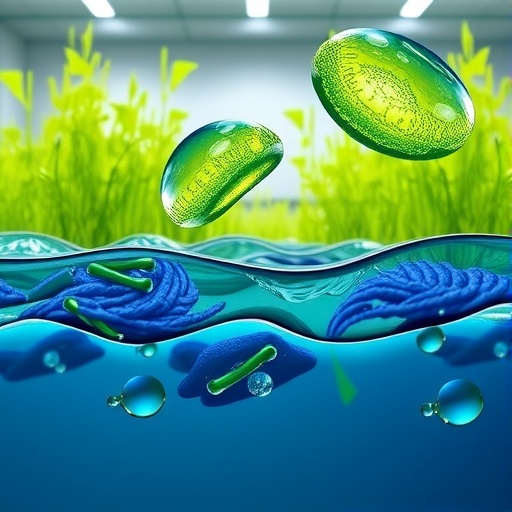
In an era increasingly defined by environmental challenges, one pressing issue that continues to escalate is the pervasive contamination of water bodies by microplastics—tiny fragments of plastic pollution so small that conventional wastewater treatment methods struggle to remove them effectively. Researchers worldwide have been grappling with the formidable task of not only identifying these pollutants but also innovating sustainable methods for their elimination. Enter Susie Dai, a pioneering researcher at the University of Missouri, whose groundbreaking work harnesses the power of genetically engineered algae to address this global predicament in a novel and multifaceted manner.
Susie Dai, a distinguished professor in the College of Engineering and the principal investigator at the Bond Life Sciences Center, has recently developed a remarkable strain of algae designed to capture microplastics from polluted water sources. These microplastics, prevalent in lakes, rivers, wastewater, and even the fish humans consume, represent a silent threat with far-reaching ecological and health implications. Traditional wastewater treatment plants fail to trap these minuscule particles effectively, creating a growing environmental quandary. Dai’s approach not only targets the removal of these pollutants but also envisions a circular economy model where captured microplastics are upcycled into valuable bioplastic materials.
The innovation lies in the genetic engineering of algae to produce limonene, a naturally occurring volatile oil famous for imparting the signature citrus aroma to oranges. This bioengineered algae modifies the surface properties of itself by becoming hydrophobic—that is, water-repellent—aligning with the inherent hydrophobic nature of microplastics. When these two elements come into contact in aqueous environments, they exhibit a strong affinity, binding together similarly to magnets. This affinity causes the microplastics and algae to aggregate into clumps dense enough to settle at the bottom, effectively separating the pollutants from the water and creating a biomass layer that can be readily harvested.
Beyond mere removal, this algae-mediated system exhibits a compelling environmental advantage: the algae thrive in wastewater conditions, consuming excess nutrients in the process. This biological nutrient uptake not only purifies the water but simultaneously enhances algae growth, catalyzing the pollutant removal system. The co-benefits of nutrient reduction and microplastic removal within one biological process mark a significant leap over conventional physical or chemical water treatment strategies, which often address these factors independently.
In a comprehensive study published in the journal Nature Communications, Dai and her research team detailed the mechanistic and experimental aspects of this algae’s capabilities. The combination of sophisticated genetic manipulation and environmental engineering showcased the algae’s potential to cleanse contaminated water effectively while setting the stage for subsequent industrial applications. The study highlights the experimental rigor encompassing laboratory-scale bioreactor trials conducted to validate the algae’s function under controlled conditions with microplastic-laden wastewater samples.
One of the ambitious visions shared by Dai involves integrating this algae-driven remediation process into existing municipal wastewater treatment plants. Currently, these plants are not equipped to filter microplastics effectively, which slip through filtration meshes and end up polluting natural water bodies and, subsequently, human drinking supplies. Incorporating Dai’s algae into the treatment process could revolutionize the elimination of these pollutants, enabling cities to significantly reduce environmental plastic contamination while recovering materials for bioproduct manufacturing.
Scaling the technology from laboratory benchtops to industrial applications necessitates sophisticated engineering solutions. Dai’s laboratory has constructed a 100-liter bioreactor named “Shrek” specifically designed to cultivate algae at relatively large scales and expose them to industrial flue gases, facilitating combined remediation of air and water pollutants. The success of “Shrek” in gas treatment demonstrates the algae’s resilience and potential adaptability. The next step involves developing larger, optimized bioreactors tailored for wastewater treatment contexts, ensuring sufficient biomass production and pollutant capture efficiency to meet urban treatment demand.
Complementing the pollutant removal aspect, the harvested algae-microplastic biomass opens promising avenues for producing bioplastics. Bioproducts derived from this biomass, such as composite plastic films, present sustainable alternatives to conventional plastic materials. This upcycling model embodies a circular economy approach, turning harmful environmental waste into raw materials for manufacturing, thus mitigating plastic pollution through both removal and reuse.
Dai’s research sits at the confluence of multiple scientific disciplines: molecular biology, environmental science, chemical engineering, and material science. By leveraging genetic engineering techniques to endow algae with limonene biosynthetic capabilities, the research addresses pressing environmental issues with biological innovation. The interdisciplinary nature of the work underscores the growing importance of integrated approaches to solve complex ecological challenges posed by anthropogenic pollutants.
Despite the overwhelmingly positive outlook, Dai acknowledges the early stage of this research. Extensive field trials across diverse wastewater treatment plants, coupled with environmental impact assessments, are required before broader adoption. Additionally, regulatory considerations surrounding the deployment of genetically modified organisms (GMOs) in open environments must be carefully evaluated to ensure ecological safety and public acceptance.
In essence, Susie Dai’s algae-enabled remediation strategy exemplifies a paradigm shift in tackling microplastic pollution by pairing engineered biological systems with environmental sustainability goals. The combined benefits of nutrient removal, microplastic capture, and biomass valorization herald a transformative approach toward cleaner water resources. If broadly implemented, this technology could become a cornerstone in municipal and industrial wastewater management, contributing significantly to ecosystem restoration and human health protection.
The implications of this innovative research extend beyond immediate pollutant cleanup — they herald a future where synthetic biology and environmental engineering converge to produce multifaceted, scalable solutions for some of humanity’s most daunting environmental crises. This work serves as an inspiring example of how scientific ingenuity can reimagine waste management, turning one of the planet’s pollutants into a resource with practical applications, while simultaneously safeguarding vital water ecosystems for generations to come. The continued advancement and adoption of such clean technologies are critical as global plastic pollution reaches unprecedented levels, demanding effective and sustainable intervention.
Subject of Research:
Cells
Article Title:
Remediation and upcycling of microplastics by algae with wastewater nutrient removal and bioproduction potential
News Publication Date:
22-Dec-2025
Web References:
http://dx.doi.org/10.1038/s41467-025-67543-5
References:
Dai, S., et al. (2025). Remediation and upcycling of microplastics by algae with wastewater nutrient removal and bioproduction potential. Nature Communications. DOI: 10.1038/s41467-025-67543-5
Image Credits:
University of Missouri
Keywords:
Environmental sciences, Engineering, Applied sciences and engineering, Human health, Cell biology, Biochemistry, Ecology, Microbiology, Molecular biology, Organismal biology, Life sciences, Earth sciences, Chemistry, Materials science, Environmental methods, Ecological methods, Laboratory procedures, Imaging, Scientific publishing, Science communication, Scientific community


