


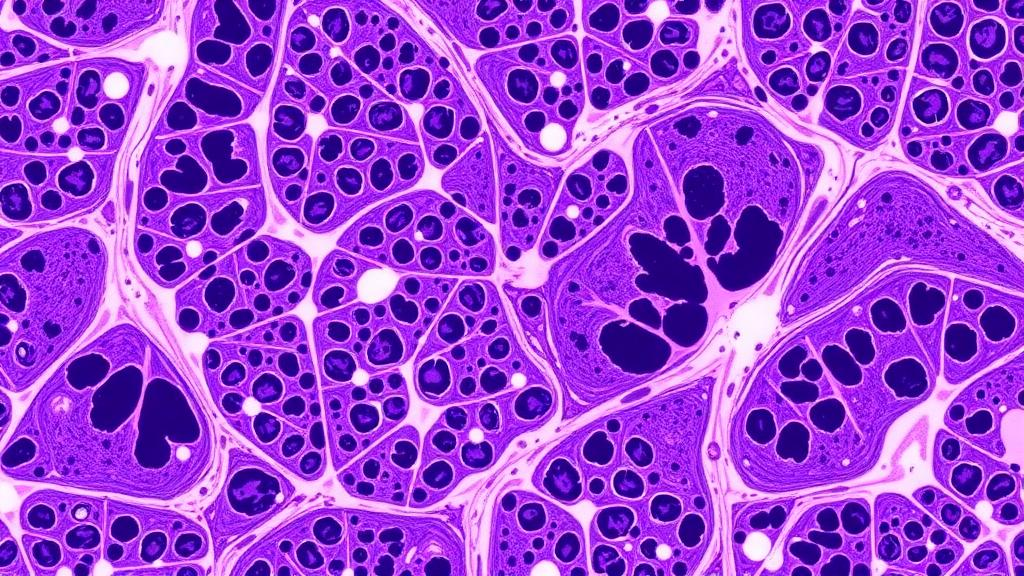
An artificial intelligence model taught to spot coeliac disease using nothing but adult biopsy samples has passed a demanding real-world test: it can diagnose the condition in children with near-perfect accuracy, even when analysing slides from hospitals and scanning machines it has never seen before. The finding, published in eClinicalMedicine, offers a striking answer to one of the most persistent worries in medical AI — that tools built on adult data will quietly fail when applied to paediatric patients.
Coeliac disease is far from a niche problem. This autoimmune disorder, triggered by gluten ingestion, affects roughly 1.4 percent of people worldwide based on blood tests, with about 0.7 percent confirmed by biopsy. Most cases go undiagnosed. Symptoms range from chronic diarrhoea, weight loss, anaemia and fatigue to skin rashes and infertility, and untreated disease carries a significantly elevated risk of serious long-term complications, including lymphoma and adenocarcinoma. In children and adolescents, the burden is not only physical: living with coeliac disease is increasingly recognised to bring anxiety, food-related hypervigilance, social restriction and impaired quality of life tied to maintaining a strict gluten-free diet. An accurate, timely diagnosis matters enormously.
Yet the diagnostic gold standard — histological examination of duodenal biopsies — is surprisingly shaky. Recent European Society guidelines acknowledge significant interobserver variability among pathologists. In one digital study, the mean probability of two pathologists agreeing on a coeliac diagnosis from whole-slide images was as low as 0.73, with a Cohen’s kappa of 0.59 when no clinical or laboratory data were available, improving only modestly to 0.80 with serological information. Earlier work reported kappa values as low as 0.35 using the Marsh–Oberhuber classification, and between 0.419 and 0.888 across different pathology practice settings. This inconsistency has real consequences for patient care and has fuelled the search for more objective, reproducible assessment methods.
Artificial intelligence has shown considerable promise here. Previous multicentre work by the same team demonstrated that deep learning models could reach expert pathologist-level accuracy in detecting coeliac disease from adult duodenal biopsies. But children remained largely unexplored territory. One earlier attempt to classify paediatric biopsies suffered a critical flaw: environmental enteropathy images came from hospitals in Pakistan and Zambia, while coeliac and normal images came from a different institution in the USA, acquired with different imaging methods. Because disease label and image source were entirely confounded, it was impossible to tell whether the model learned pathology or simply recognised where images came from. Meanwhile, some researchers have suggested paediatric and adult coeliac disease may differ biologically, with reported differences in gene expression, clinical presentation and mucosal pathology across age groups.
The clinical stakes are rising. Mass screening strategies for paediatric coeliac disease have been reported across 17 countries, and Italy has become the first to mandate nationwide screening in children, with a pilot programme screening more than 5000 children aged 2–3, 6–7 and 10–11 years across four regions. Children with positive serological results are referred for specialist evaluation, and those not meeting serology-based diagnostic criteria undergo duodenal biopsy sampling from both the bulb (D1) and descending duodenum (D2), as recommended by the 2020 ESPGHAN guidelines. As such programmes expand, the number of children needing histological confirmation will grow — and so will demand for accurate, scalable tools.
Children, however, remain profoundly underrepresented in medical AI development. A cross-sectional analysis of 876 FDA-authorised AI and machine learning-enabled medical devices found that only 17 percent were explicitly labelled for use in children, and of those, only one in five had been developed using paediatric datasets. A separate review of AI devices in radiology found just 4 of 213 clearly labelled for paediatric use. Children are not simply small adults: physiological, anatomical and histological differences mean adult-trained tools may fail or perform sub-optimally in paediatric cases, a risk that remains poorly characterised for most deployed systems.
The new study set out to test whether an AI model trained exclusively on adult whole-slide images could generalise to children. The training dataset comprised haematoxylin and eosin-stained duodenal biopsy slides from 8421 adult patients — 961 with coeliac disease, 6262 normal and 1198 with other diagnoses — collected between January 2014 and March 2025 from five UK hospitals and digitised at 40× magnification using five scanners from four manufacturers. The model pipeline is technically elegant: automated tissue detection and artefact removal, division of tissue into non-overlapping 256×256-pixel patches at 10× magnification, Macenko stain normalisation to reduce staining variability, and patch-level feature extraction using the hibou-b pathology foundation model as a fixed feature extractor. Multiple-instance learning classifiers from three architectures — CLAM, ABMIL and TransMIL — were trained with four-fold leave-one-source-out cross-validation, and predictions from all twelve trained models were combined into an equally weighted ensemble. Crucially, no retraining was performed before evaluation on children.
Two independent external paediatric cohorts provided the test: one from Southampton General Hospital in England and one from Western General Hospital in Edinburgh, Scotland, together containing biopsies from 708 unique patients aged 1 to 17 years (mean age 13; 49 percent female). The Edinburgh cohort shared a scanner platform with a training centre, while Southampton used a scanner from a different manufacturer, enabling assessment of cross-scanner generalisability. The results were remarkable. Overall, the model achieved 96.2 percent accuracy, 80.2 percent sensitivity and 98.4 percent specificity, with an area under the receiver operating characteristic curve of 98.8 percent. When analysis was restricted to predictions outside the intermediate-probability range — retaining 85.3 percent of cases — accuracy rose to 98.8 percent with 100 percent sensitivity. Most striking of all, among high-confidence predictions (probability below 2 percent or at least 85 percent), covering two-thirds of cases, there were no misclassifications whatsoever. Performance was consistent across centres, sexes and age groups, and calibration remained strong, with an expected calibration error of just 0.03, meaning predicted probabilities closely matched observed disease frequency.
The study also delivered quantitative support for a long-standing biopsy guideline. Using paired samples from 113 Edinburgh patients with suspected coeliac disease, of whom 55 were diagnosed with the condition, the researchers found that diagnostic performance was significantly lower when using either the duodenal bulb or descending duodenum alone (AUC 91.8 percent and 87.1 percent respectively) than when combining both sites (AUC 96.6 percent for averaged scores). These differences held up under statistical correction, and paired predictions revealed substantial variability between the two biopsy sites within the same patient — underscoring the patchy nature of coeliac disease and the risk of sampling error. The findings provide independent empirical backing for ESPGHAN and NASPGHAN recommendations to sample both D1 and D2, particularly given the recognised existence of ultra-short coeliac disease, in which villous atrophy is confined to the bulb and may be missed by descending sampling alone.
The implications reach well beyond coeliac disease. The results suggest that adult-derived datasets may be sufficient for training robust AI models where paediatric biopsy availability is limited, allowing scarce paediatric samples to be reserved for independent validation rather than training. The emphasis on well-calibrated probability outputs — grouped into five clinically interpretable categories from very unlikely to very likely coeliac disease — addresses a well-known weakness of deep neural networks, which have been criticised for assigning very high confidence to incorrect predictions. The authors are candid about limitations: all data came from UK centres, the cohorts comprised children undergoing clinically indicated biopsy rather than screening, the independent effect of age could not be isolated from institutional and scanner differences, and no prospective comparison with paediatric pathologists was performed. Future work should include prospective evaluation in routine workflows, direct comparison with pathologist performance, validation in more diverse international populations, and dedicated investigation of subgroups such as children with type 1 diabetes, selective IgA deficiency and screen-detected asymptomatic cases. Still, the core message stands: key histomorphological features of coeliac disease appear sufficiently conserved across age groups to permit robust cross-age generalisation, pointing towards safe, scalable AI-assisted diagnosis of coeliac disease in children — and a plausible template for closing the paediatric gap in medical AI more broadly.
Subject of Research: External validation of an adult-trained deep learning model for paediatric coeliac disease diagnosis on duodenal biopsy whole-slide images
Article Title: Generalisability of an adult-trained AI model to paediatric coeliac disease diagnosis: a multicentre external validation study
Article References: Jaeckle, F., Gillett, P. M., Kirkwood, K. J., Natu, S., Chan, J. Y., Bateman, A. C., Arends, M. J., & Soilleux, E. J. (2026). Generalisability of an adult-trained AI model to paediatric coeliac disease diagnosis: a multicentre external validation study. eClinicalMedicine, 101, Article 104246. https://doi.org/10.1016/j.eclinm.2026.104246
Image Credits: AI Generated
DOI: 10.1016/j.eclinm.2026.104246
Keywords: coeliac disease, artificial intelligence, deep learning, paediatrics, duodenal biopsy, whole-slide imaging, histopathology, model calibration, external validation, multiple-instance learning, ESPGHAN guidelines, medical AI generalisability
Cite Scienmag News
Ophelia Keating. (October 13, 2026). AI Trained Only on Adult Biopsies Accurately Diagnoses Coeliac Disease in Children. Scienmag. https://scienmag.com/ai-trained-only-on-adult-biopsies-accurately-diagnoses-coeliac-disease-in-children/
Ophelia Keating. "AI Trained Only on Adult Biopsies Accurately Diagnoses Coeliac Disease in Children." Scienmag, 13 October 2026, https://scienmag.com/ai-trained-only-on-adult-biopsies-accurately-diagnoses-coeliac-disease-in-children/. Accessed 13 October 2026.
Ophelia Keating. "AI Trained Only on Adult Biopsies Accurately Diagnoses Coeliac Disease in Children." Scienmag. October 13, 2026. https://scienmag.com/ai-trained-only-on-adult-biopsies-accurately-diagnoses-coeliac-disease-in-children/


