

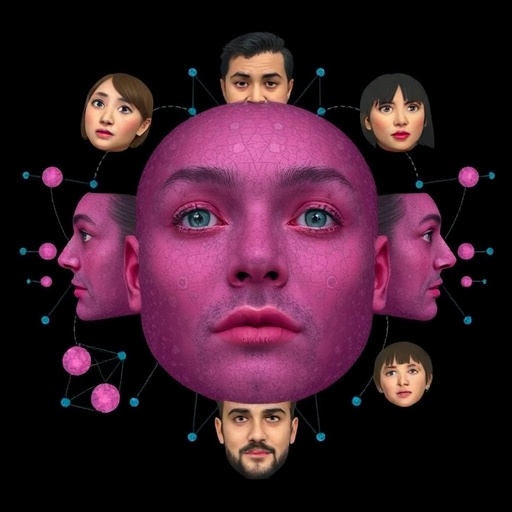
In recent years, the intersection of artificial intelligence (AI) and emotional intelligence has stirred significant interest within the scientific community. The ability of machines to recognize and respond to human emotions aligns perfectly with the broader trend of developing systems that not only perform tasks but also understand the nuances of human behavior. This has led to exciting advancements in various fields, particularly in mental health, marketing, and human-computer interaction. A recent study by researcher Ge Xu has introduced a novel framework, titled “Emotion Recognition Intelligent System Based on Machine Learning and Clustering Algorithm,” which could revolutionize the way technology interprets human emotions.
Ge’s research delves into the core mechanics behind emotion recognition through advanced machine learning and clustering algorithms. At the foundation of this intelligent system lies a robust dataset consisting of diverse emotional expressions captured through various modalities, including voice tone, facial expressions, and physiological signals. This comprehensive dataset serves as the training ground for the machine learning models, enabling the system to discern subtle variations in emotional states across different contexts and demographics. By employing these multifaceted inputs, the system promises a significant advancement over previous models that often relied on one-dimensional approaches.
The study’s methodology is centered around sophisticated machine learning techniques such as deep learning, which involves artificial neural networks with multiple layers that can learn progressively from data. Through deep learning, the system can extract intricate patterns and correlations between emotional cues and individual characteristics. Additionally, the integration of clustering algorithms enhances the model’s ability to group similar emotional expressions, which further refines the accuracy of predictions and classifications. This dual approach of utilizing both deep learning and clustering ensures that the system not only identifies emotions but also categorizes them effectively, leading to more nuanced insights.
One of the standout features of Ge’s research is its application in real-world scenarios, particularly in mental health assessments. Emotion recognition technologies have the potential to act as important tools in therapy and counseling settings, offering real-time feedback to both practitioners and patients. For instance, when integrated into therapeutic practices, the intelligent system could analyze a patient’s vocal inflections or facial expressions during sessions, providing therapists with insights into their emotional state that may not be verbally communicated. This could lead to more targeted interventions and improved patient outcomes.
Moreover, the system’s application extends beyond clinical settings into areas like marketing and user experience design. Businesses increasingly seek to understand consumer emotions during interactions with their products or services. By leveraging this emotion recognition technology, companies can tailor their offerings to fit emotional responses, enhancing customer satisfaction and engagement. For example, by analyzing customers’ facial expressions or voice tones during product trials, companies could adjust their marketing strategies in real-time, ensuring that their approach resonates with the emotional states of their target audience.
Furthermore, the implications of this intelligent emotion recognition system also touch on ethical considerations. As we create technologies capable of interpreting human emotions, the potential for misuse arises. There is a pressing need for developers and policymakers to establish ethical guidelines that govern the deployment of such systems. Guidelines should address privacy concerns, ensuring that data collected during emotional analysis is securely protected and used transparently. Engaging stakeholders in discussions around the ethical ramifications of emotion recognition technology is crucial, as it dictates the future of its integration into society.
In addition to the ethical considerations, another challenge lies in the system’s adaptability to cultural differences. Emotions can manifest differently across various cultures, impacting how individuals express and interpret emotional signals. Ge’s system must therefore take into account cultural variables to ensure its applicability and accuracy on a global scale. This might require extensive research to accommodate various emotional display rules and expressions inherent in different societies, ensuring that the system is both inclusive and representative.
Ge’s research does not stop at theoretical frameworks; it also emphasizes the importance of real-world testing and validation. The intelligent system’s performance was rigorously evaluated through various controlled experiments, showcasing its high accuracy in emotion recognition tasks. The study employed specific metrics to measure both the precision and recall of the system’s predictions, resulting in impressive outcomes that align with existing state-of-the-art technologies.
As AI continues to advance, the synergy between machine learning and emotional intelligence promises to deepen our understanding of human behavior. The intelligent system proposed by Ge Xu stands at the forefront of this evolution, illustrating how innovative technologies can bridge the gap between human emotions and computational analysis. While we are still in the early stages of integrating artificial emotional intelligence into our daily lives, the potential benefits are immense.
In conclusion, Ge’s research on the Emotion Recognition Intelligent System based on machine learning and clustering algorithms provides an exciting glimpse into the future of AI-human interaction. The ability for machines to accurately interpret and respond to human emotions carries incredible implications for industries ranging from healthcare to marketing. As we embark on this journey of technological evolution, it will be critical to navigate the ethical landscape diligently and ensure that we harness this power responsibly. The key takeaway from this research is not merely its technical proficiency but the profound connection it seeks to forge between technological innovation and the human experience.
The implications of such systems are vast and transformative, paving the way for future innovations that could reshape how we think about emotional intelligence in machines. As researchers like Ge Xu continue to push the boundaries of what is possible with emotion recognition, society stands at the brink of a new era where technology becomes more intimately attuned to the complexities of human emotion.
Subject of Research: Emotion recognition intelligent system based on machine learning and clustering algorithm
Article Title: Emotion recognition intelligent system based on machine learning and clustering algorithm
Article References:
Ge, X. Emotion recognition intelligent system based on machine learning and clustering algorithm.
Discov Artif Intell (2026). https://doi.org/10.1007/s44163-026-00831-1
Image Credits: AI Generated
DOI:
Keywords: Emotion Recognition, Machine Learning, AI, Intelligent Systems, Emotional Intelligence


