

Tuesday, July 28, 2026
Science
No Result
View All Result
  • Login
  • HOME
  • SCIENCE NEWS
  • CONTACT US
  • HOME
  • SCIENCE NEWS
  • CONTACT US
No Result
View All Result
Scienmag
No Result
View All Result
Home Science News Cancer

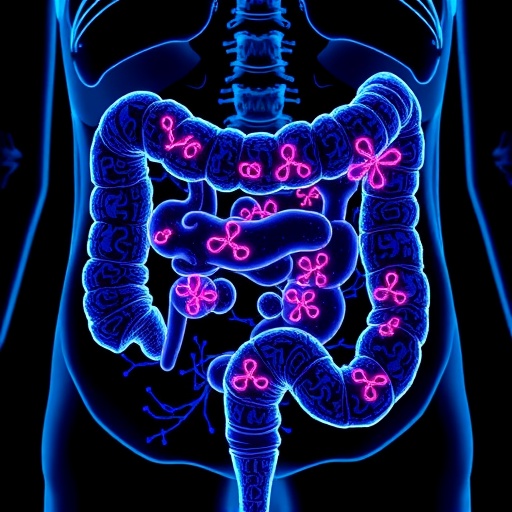
AI predicts bowel cancer relapse risk with improved accuracy

July 28, 2026
in Cancer
Reading Time: 2 mins read
0
AI predicts bowel cancer relapse risk with improved accuracy

AI predicts bowel cancer relapse risk with improved accuracy

65
SHARES
587
VIEWS
Share on FacebookShare on Twitter
ADVERTISEMENT

A new AI system from La Trobe University could help clinicians forecast relapse risk in patients with stage-two bowel cancer—potentially enabling earlier, life-saving treatment for those most likely to recur. The work appears in Gastroenterology and centres on SÉMIL (Semantically-Enhanced Multiple Instance Learning), a model designed to extract prognostic signals from routine pathology.

Instead of relying on new biomarkers or additional tissue sampling, SÉMIL learns from two sources that pathology already produces: digital slide images and accompanying textual descriptions. This “semantic” integration allows the algorithm to interpret tumour features while preserving clinical context, turning everyday diagnostic materials into quantitative risk estimates.

In the study, researchers analysed more than 1,600 pathology slides and validated the model on 1,220 stage-two patients across three independent cohorts. The validation extended beyond a single site, drawing on data from multiple Australian institutions, a step aimed at testing robustness in real-world clinical variability.

Technically, SÉMIL evaluates tumour architecture at the invasive front—the boundary where cancer spreads into surrounding tissue. This region is considered prognostically important, yet difficult to label consistently between pathologists, partly because subtle growth patterns can be subjective.

The results show that each tumour can be assigned to a higher- or lower-risk group, supporting triage decisions after surgery. Importantly, when AI-based assessments aligned with evaluations by expert pathologists, the model produced the most accurate risk ratings.

Such performance matters because current Australian guidelines generally reserve chemotherapy for high-risk stage-two patients. If relapse risk can be determined more precisely, more patients could receive timely escalation—or spared when escalation is unlikely to help.

The researchers stress that the tool is intended to support clinical decision-making rather than replace it. By adding an “additional layer of information,” AI could help clinicians balance the benefits of chemotherapy against its side effects.

Beyond bowel cancer, the team envisions future systems that combine AI-derived pathology features with other emerging biomarkers to refine risk stratification and treatment planning in precision medicine.


Subject of Research: Human tissue samples
Article Title: AI-Assisted Risk Stratification in Stage II Colorectal Cancer: Multi-Institutional Validation of Semantically-Enhanced Deep Learning
News Publication Date: 28-Jul-2026
Web References: https://www.gastrojournal.org/article/S0016-5085(26)07069-1/fulltext; https://doi.org/10.1053/j.gastro.2026.07.009
References: Gastroenterology (published article)
Image Credits:

Keywords: artificial intelligence, colorectal cancer, digital pathology, risk stratification, deep learning, multiple instance learning, invasive front, precision medicine, clinical decision support

Tags: AI in bowel cancer prognosisautomated risk estimation in cancer treatmentcancer relapse predictionclinical decision support toolsdigital pathology analysismulti-cohort validation of AI modelspathology slide image analysisprognostic biomarkers from routine diagnosticsreal-world validation of AI in oncologysemantically-enhanced machine learningstage-two bowel cancer risk stratificationtumor architecture assessment
Share26Tweet16
Previous Post

Cryogenic environment enables strong strain tuning of excitons in ZrSe3

Next Post

Researchers speed up robots by enabling predictive, ahead-of-time thinking

Related Posts

Spatial Transcriptomics Reveals Histology-Linked Growth Patterns in Colorectal Liver Metastases
Cancer

Spatial Transcriptomics Reveals Histology-Linked Growth Patterns in Colorectal Liver Metastases

July 28, 2026
DNA Damage Response Pathways Inform New Cancer Immunotherapy Strategies
Cancer

DNA Damage Response Pathways Inform New Cancer Immunotherapy Strategies

July 28, 2026
Review Finds Stable Circular RNAs as Noninvasive Biomarkers for Cancer Detection
Cancer

Review Finds Stable Circular RNAs as Noninvasive Biomarkers for Cancer Detection

July 28, 2026
Experimental Immunotherapy Could Help High-Risk Bladder Cancer Patients Skip Cystectomy
Cancer

Experimental Immunotherapy Could Help High-Risk Bladder Cancer Patients Skip Cystectomy

July 28, 2026
China Issues Consensus on Precision Testing and Molecular Diagnosis for Pancreatic Cancer
Cancer

China Issues Consensus on Precision Testing and Molecular Diagnosis for Pancreatic Cancer

July 28, 2026
Enzyme discovery may help clear deadly zombie cells from human tissues
Cancer

Enzyme discovery may help clear deadly zombie cells from human tissues

July 28, 2026
Next Post
Researchers speed up robots by enabling predictive, ahead-of-time thinking

Researchers speed up robots by enabling predictive, ahead-of-time thinking

  • Mothers who receive childcare support from maternal grandparents show more

    Mothers who receive childcare support from maternal grandparents show more parental warmth, finds NTU Singapore study

    27656 shares
    Share 11059 Tweet 6912
  • University of Seville Breaks 120-Year-Old Mystery, Revises a Key Einstein Concept

    1061 shares
    Share 424 Tweet 265
  • Bee body mass, pathogens and local climate influence heat tolerance

    682 shares
    Share 273 Tweet 171
  • Researchers record first-ever images and data of a shark experiencing a boat strike

    546 shares
    Share 218 Tweet 137
  • Groundbreaking Clinical Trial Reveals Lubiprostone Enhances Kidney Function

    531 shares
    Share 212 Tweet 133
Science

Embark on a thrilling journey of discovery with Scienmag.com—your ultimate source for cutting-edge breakthroughs. Immerse yourself in a world where curiosity knows no limits and tomorrow’s possibilities become today’s reality!

RECENT NEWS

  • Study Finds Behaviors Shaping Prescribing Decisions for New Neurodegenerative Drugs
  • Biographies of Scientists Could Discourage Children From Studying Science
  • Software Enables Researchers to Decode Lymphoma’s Cellular Architecture
  • Copanlisib plus nivolumab shows microsatellite-stable colorectal cancer activity in phase 1/2

Categories

  • Agriculture
  • Anthropology
  • Archaeology
  • Athmospheric
  • Biology
  • Biotechnology
  • Blog
  • Bussines
  • Cancer
  • Chemistry
  • Climate
  • Earth Science
  • Editorial Policy
  • Marine
  • Mathematics
  • Medicine
  • Pediatry
  • Policy
  • Psychology & Psychiatry
  • Science Education
  • Social Science
  • Space
  • Technology and Engineering

Subscribe to Blog via Email

Enter your email address to subscribe to this blog and receive notifications of new posts by email.

Join 5,146 other subscribers

© 2025 Scienmag - Science Magazine

Welcome Back!

Login to your account below

Forgotten Password?

Retrieve your password

Please enter your username or email address to reset your password.

Log In
No Result
View All Result
  • HOME
  • SCIENCE NEWS
  • CONTACT US

© 2025 Scienmag - Science Magazine

Discover more from Science

Subscribe now to keep reading and get access to the full archive.

Continue reading
