

Thursday, August 13, 2026
Science
No Result
View All Result
  • Login
  • HOME
  • SCIENCE NEWS
  • CONTACT US
  • HOME
  • SCIENCE NEWS
  • CONTACT US
No Result
View All Result
Scienmag
No Result
View All Result
Home Science News Cancer

AI model finds the cancer clues at lightning speed

July 1, 2024
in Cancer
Reading Time: 2 mins read
0
AI model finds the cancer clues at lightning speed
68
SHARES
614
VIEWS
Share on FacebookShare on Twitter
ADVERTISEMENT

Researchers at the University of Gothenburg have developed an AI model that increases the potential for detecting cancer through sugar analyses. The AI model is faster and better at finding abnormalities than the current semi-manual method.

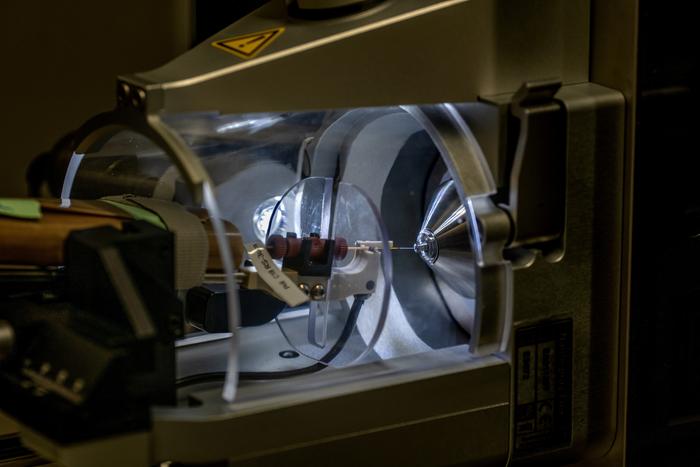
Mass spectrometer

Credit: Lundberg Research Foundation/Magnus Gotander

Researchers at the University of Gothenburg have developed an AI model that increases the potential for detecting cancer through sugar analyses. The AI model is faster and better at finding abnormalities than the current semi-manual method.


Glycans, or structures of sugar molecules in our cells, can be measured by mass spectrometry. One important use is that the structures can indicate different forms of cancer in the cells.

However, the data from the mass spectrometer measurement must be carefully analysed by humans to work out the structure from the glycan fragmentation. This process can take anywhere from hours to days for each sample and can only be carried out with high confidence by a small number of experts in the world, as it is essentially detective work learnt over many years.


Automating the detective work

The process is thus a bottleneck in the use of glycan analyses, for example for cancer detection, when there are many samples to be analysed.

Researchers at the University of Gothenburg have developed an AI model to automate this detective work. The AI model, named Candycrunch, solves the task in just a few seconds per test. The results are reported in a scientific article in the journal Nature Methods.

The AI model was trained using a database of over 500 000 examples of different fragmentations and associated structures of sugar molecules.

“The training has enabled Candycrunch to calculate the exact sugar structure in a sample in 90 per cent of cases,” says Daniel Bojar, Associate Senior Lecturer in Bioinformatics at the University of Gothenburg.


Can find new biomarkers

This means that the AI model could soon reach the same levels of accuracy as the sequencing of other biological sequences, such as DNA, RNA or proteins.

Because the AI model is so fast and accurate in its answers, it can accelerate the discovery of glycan-based biomarkers for both diagnosis and prognosis of the cancer.

“We believe that glycan analyses will become a bigger part of biological and clinical research now that we have automated the biggest bottleneck,” says Daniel Bojar.

The AI model Candycrunch is also able to identify structures that are often missed by human analyses due to their low concentrations. The model can therefore help researchers to find new glycan-based biomarkers.


Journal

Nature Methods

DOI

10.1038/s41592-024-02314-6

Method of Research

Computational simulation/modeling

Subject of Research

Cells

Article Title

Predicting glycan structure from tandem mass spectrometry via deep learning

Article Publication Date

1-Jul-2024

Share27Tweet17
Previous Post

Palliative care beneficial to manage symptoms, improve quality of life for people with CVD

Next Post

Sixty-million-year-old grape seeds reveal how the death of the dinosaurs may have paved the way for grapes to spread

Related Posts

Orai1 Calcium Entry Regulates Lipolysis and Mitochondrial Activation During Brown Fat Thermogenesis
Cancer

Orai1 Calcium Entry Regulates Lipolysis and Mitochondrial Activation During Brown Fat Thermogenesis

August 13, 2026
Damon Runyon Foundation Awards $4.2 Million to Promising Early-Career Cancer Researchers
Cancer

Damon Runyon Foundation Awards $4.2 Million to Promising Early-Career Cancer Researchers

August 13, 2026
Extinction intervention erases fear memories through locus coeruleus dopamine and D2 receptors
Cancer

Extinction intervention erases fear memories through locus coeruleus dopamine and D2 receptors

August 13, 2026
RTN4IP1 Drives Triple-Negative Breast Cancer Progression and Metastasis Through Metabolic Reprogramming
Cancer

RTN4IP1 Drives Triple-Negative Breast Cancer Progression and Metastasis Through Metabolic Reprogramming

August 13, 2026
Case Western Leads NIH Partnership Developing Rapid Chairside Oral Cancer Test
Cancer

Case Western Leads NIH Partnership Developing Rapid Chairside Oral Cancer Test

August 13, 2026
Genomic newborn screening may identify children at risk for early cancers
Cancer

Genomic newborn screening may identify children at risk for early cancers

August 13, 2026
Next Post
Sixty-million-year-old grape seeds reveal how the death of the dinosaurs

Sixty-million-year-old grape seeds reveal how the death of the dinosaurs may have paved the way for grapes to spread

  • Mothers who receive childcare support from maternal grandparents show more

    Mothers who receive childcare support from maternal grandparents show more parental warmth, finds NTU Singapore study

    27656 shares
    Share 11059 Tweet 6912
  • University of Seville Breaks 120-Year-Old Mystery, Revises a Key Einstein Concept

    1061 shares
    Share 424 Tweet 265
  • Bee body mass, pathogens and local climate influence heat tolerance

    682 shares
    Share 273 Tweet 171
  • Researchers record first-ever images and data of a shark experiencing a boat strike

    546 shares
    Share 218 Tweet 137
  • Groundbreaking Clinical Trial Reveals Lubiprostone Enhances Kidney Function

    531 shares
    Share 212 Tweet 133
Science

Embark on a thrilling journey of discovery with Scienmag.com—your ultimate source for cutting-edge breakthroughs. Immerse yourself in a world where curiosity knows no limits and tomorrow’s possibilities become today’s reality!

RECENT NEWS

  • N-glycosylation stabilizes CD155, helping colorectal tumors evade NK-cell surveillance
  • DOPAL Links Dopamine Dysregulation to Neurodegeneration, Systematic Review Finds
  • Practical Toolbox Enables Improved In Vitro Fibrosis Modelling
  • Similarity Bias Influences Grant Evaluations, Researchers Find

Categories

  • Agriculture
  • Anthropology
  • Archaeology
  • Athmospheric
  • Biology
  • Biotechnology
  • Blog
  • Bussines
  • Cancer
  • Chemistry
  • Climate
  • Earth Science
  • Editorial Policy
  • Marine
  • Mathematics
  • Medicine
  • Pediatry
  • Policy
  • Psychology & Psychiatry
  • Science Education
  • Social Science
  • Space
  • Technology and Engineering

Subscribe to Blog via Email

Enter your email address to subscribe to this blog and receive notifications of new posts by email.

Join 5,149 other subscribers

© 2025 Scienmag - Science Magazine

Welcome Back!

Login to your account below

Forgotten Password?

Retrieve your password

Please enter your username or email address to reset your password.

Log In
No Result
View All Result
  • HOME
  • SCIENCE NEWS
  • CONTACT US

© 2025 Scienmag - Science Magazine

Discover more from Science

Subscribe now to keep reading and get access to the full archive.

Continue reading
