


Forensic scientists in South Africa have shown that a fully automated way of measuring the human skull can identify a person’s population group with startling precision, reaching cross-validated classification accuracy of just over 90 percent in a study of 474 living individuals. The work, published in the International Journal of Legal Medicine, compares two rival ways of quantifying cranial shape and finds that the more geometrically complete approach dramatically outperforms traditional linear measurements, while also underscoring a sobering truth: even the best models cannot escape the continuous, overlapping nature of human biological variation.
The research team, led by Thandolwethu Mbali Mbonani of the University of Pretoria, tackled one of the most stubborn problems in forensic anthropology. When unidentified skeletal remains are found, investigators build a biological profile covering age, sex, stature and population affinity. In South Africa, that last component is complicated by a demographic landscape shaped by migration, admixture and apartheid-era classification. Official statistics recognise four broad categories, Black African, Coloured, Indian/Asian and White, which are socially and historically constructed rather than discrete biological units, yet they remain embedded in missing-person reports and medicolegal documentation. Estimating affinity therefore means comparing an unknown individual probabilistically against documented reference samples, not assigning a fixed biological label.
Existing reference data, largely drawn from skeletal collections assembled over decades, do not fully reflect the complexity of the contemporary population. The new study sidestepped that limitation by turning to living people. The researchers analysed 474 retrospective cranial computed tomography scans acquired between 2017 and 2019 at three tertiary academic hospitals: Groote Schuur Hospital, Inkosi Albert Luthuli Central Hospital and Steve Biko Academic Hospital. The scans represented recorded Black, Coloured, Indian and White South Africans, with ages ranging from 18 to 89 and a mean of 46 years. Scans showing major craniofacial trauma, congenital anomalies or previous surgery were excluded, and all data were anonymised under ethical approval from the University of Pretoria.
The technical heart of the study is a template-based automatic landmarking workflow. Rather than placing anatomical landmarks by hand on each of hundreds of skull models, a laborious and observer-dependent process, the team used a previously developed reference cranial template of 63,772 vertices. Six landmarks, including rhinion, nasospinale, the alare points and the porion points, were placed manually to initialise alignment. The template was then rigidly aligned and warped onto each individual cranial surface using progressively more flexible non-rigid registration, establishing point-wise anatomical correspondence. Eighteen three-dimensional landmarks were thereby transferred automatically to every skull, yielding 54 coordinate variables per person and, from those coordinates, nine inter-landmark distances spanning cranial length, frontal and orbital breadth, nasal dimensions, facial breadth and mastoid height.
Reliability testing showed the automation holds up under scrutiny. Mean intra-observer landmark error was 0.746 millimetres and mean inter-observer error 1.672 millimetres, with most landmarks falling within a practical 2-millimetre benchmark. A handful of landmarks on broad, curved or poorly defined regions, notably opisthocranion and glabella, showed higher inter-observer variability, but the derived linear measurements were highly precise, with relative technical errors well below published anthropometric guidelines. The results confirm that automatically transferred landmarks are suitable for population-level analysis, though the authors caution that expert decisions during template construction and initial placement still matter.
With the landmark data in hand, the researchers compared two representations of cranial form. Geometric morphometrics preserves the full spatial configuration of landmarks after mathematically standardising for position, orientation and scale through generalised Procrustes analysis, capturing coordinated patterns of shape variation across the whole skull. Inter-landmark distances, by contrast, reduce the configuration to selected pairwise linear measurements that are easy to interpret in conventional craniometric terms but discard much of the geometric information. Shape differences among the four recorded groups were statistically significant in every pairwise comparison, with the greatest separation between Black and White South Africans and the greatest overlap between Coloured and Indian South Africans.
The classification results were striking. Cross-validated discriminant function analysis built on the geometric morphometric shape variables achieved an overall accuracy of 90.08 percent, highest for Black South Africans at 94.78 percent and lowest for Coloured South Africans at 82.35 percent. The linear-measurement models lagged far behind: linear discriminant analysis reached 58.7 percent and random forest classification 52.0 percent in cross-validation, with independent validation accuracies of 53.8 and 56.4 percent respectively. Random forest variable-importance analysis ranked nasal breadth as the single most informative predictor, followed by minimum frontal breadth and right mastoid height, echoing earlier South African research that has repeatedly flagged nasal and midfacial morphology as highly differentiated.
The authors are careful not to overinterpret the gap. Their comparison pitted a complete 18-landmark configuration against only nine selected distances, so the result shows that this particular shape configuration retained more classification-relevant information than this particular measurement set, not that linear measurements are inherently inferior. Previous work, including a well-known comparison by Spradley and Jantz in North American samples, found the opposite pattern with non-standard inter-landmark distances. Classification success, the study concludes, depends on the reference population, the landmark configuration, the measurements chosen and the analytical framework, rather than on any universally superior method.
The overlap between Coloured and Indian South Africans is not a methodological failure but a reflection of history and biology. Coloured South Africans descend from admixed populations with contributions from Indigenous southern African, sub-Saharan African, European, South Asian and Southeast Asian sources, while Indian South Africans represent heterogeneous migration histories from different regions of the subcontinent. Statistically detectable group-level trends coexist with continuous variation, and the study reinforces that even 90 percent group-level accuracy should never be read as evidence that recorded categories correspond to discrete biological entities. Misclassifications clustered exactly where that continuity predicts, with Coloured individuals most often misassigned as White and considerable confusion between Coloured and Indian groups.
For forensic practice, the implications are twofold. Shape-based classification could in principle be applied to an unknown cranium by generating a three-dimensional model, transferring landmarks with the validated protocol and projecting the configuration into the reference morphospace, but routine adoption faces real barriers: the cost and availability of CT scanning for unidentified remains, and the specialised software, infrastructure and training required. Whatever the method, the authors argue, results must be reported probabilistically, considering posterior probabilities and the degree of overlap among the most likely groups, and integrated with DNA, dental evidence and missing-person records. Where probabilities are low or similar across groups, an ambiguous result should be reported as such rather than forced into the numerically highest category. External validation on independent contemporary samples, and evaluation on fragmented remains, remain necessary before the approach enters routine casework, but the study marks a significant step toward reference data and methods that reflect the populations forensic scientists actually serve.
Subject of Research: Population affinity estimation from cranial CT scans using geometric morphometrics and automatic landmarking in South African forensic anthropology
Article Title: Evaluating classification approaches for population affinity estimation in a contemporary South African CT-derived sample: an automatic landmarking-based approach
Article References: Mbonani, T. M., L’Abbé, E. N., Chen, D.-G., Krüger, G. C., & Ridel, A. F. (2026). Evaluating classification approaches for population affinity estimation in a contemporary South African CT-derived sample: an automatic landmarking-based approach. International Journal of Legal Medicine. https://doi.org/10.1007/s00414-026-03997-6
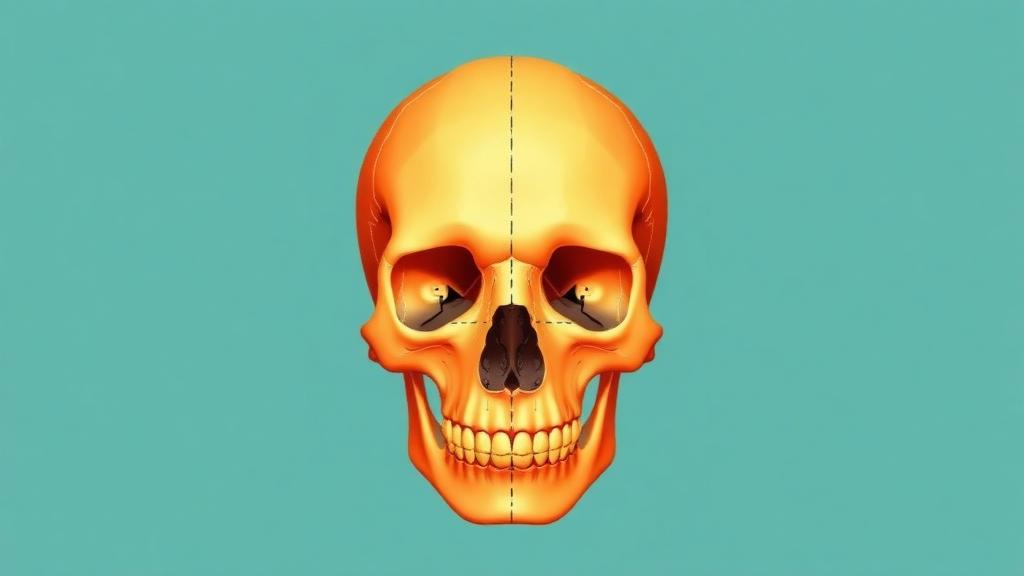
Image Credits: AI Generated
DOI: 10.1007/s00414-026-03997-6
Keywords: forensic anthropology, population affinity, geometric morphometrics, computed tomography, automatic landmarking, South Africa, cranial shape, inter-landmark distances, discriminant function analysis, random forest, human variation, biological profile
Cite Scienmag News
Ophelia Keating. (October 4, 2026). AI Landmarking Boosts Skull-Based Ancestry Estimates to 90% Accuracy. Scienmag. https://scienmag.com/ai-landmarking-boosts-skull-based-ancestry-estimates-to-90-accuracy/
Ophelia Keating. "AI Landmarking Boosts Skull-Based Ancestry Estimates to 90% Accuracy." Scienmag, 4 October 2026, https://scienmag.com/ai-landmarking-boosts-skull-based-ancestry-estimates-to-90-accuracy/. Accessed 4 October 2026.
Ophelia Keating. "AI Landmarking Boosts Skull-Based Ancestry Estimates to 90% Accuracy." Scienmag. October 4, 2026. https://scienmag.com/ai-landmarking-boosts-skull-based-ancestry-estimates-to-90-accuracy/


