

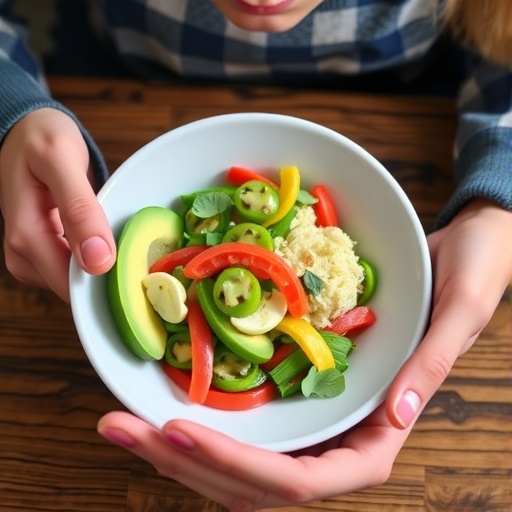
In recent years, artificial intelligence has emerged as a promising tool in personal health management, including dietary planning. Many teenagers struggling with weight management have increasingly relied on AI-driven meal plans to support their weight loss journeys. However, groundbreaking research from Turkey raises critical concerns about the nutritional adequacy of AI-generated meal regimens for adolescents. This study, recently published in Frontiers in Nutrition, exposes the concerning discrepancies between AI-created diet plans and those formulated by registered dietitians specializing in adolescent nutrition.
The research team, led by assistant professor Dr. Ayşe Betül Bilen from Istanbul Atlas University’s Faculty of Health Sciences, conducted an experimental comparison between meal plans generated by five prominent AI models and those crafted by professional dietitians. The models included ChatGPT 4, Gemini 2.5 Pro, Bing Chat-5GPT, Claude 4.1, and Perplexity. Each was instructed to design three-day meal plans specifically for 15-year-old teenagers categorized by overweight or obese percentiles, accounting for age, height, and weight. The objective was to evaluate whether AI tools can effectively replicate or approximate the nuanced nutritional strategies developed by clinical experts.
A striking revelation from this comparative investigation was that the AI-generated plans grossly underestimated the total caloric requirements of the adolescent subjects. On average, AI tools calculated almost 700 fewer calories per day than the dietitians, a deficit roughly equivalent to one full meal. This undercalculation has significant clinical implications as insufficient energy intake during adolescence—a period marked by intense growth and metabolic demands—can impair physical development and compromise long-term health outcomes. This caloric gap also challenges the reliability of AI models as autonomous nutritional advisors for vulnerable populations.
The imbalanced macronutrient distribution in AI meal plans was another critical finding. Despite the calorie shortfall, AI models paradoxically suggested an elevated intake of protein, exceeding dietitian recommendations by approximately 20 grams per day. Consequently, proteins accounted for 21 to 24 percent of total energy intake in AI plans, surpassing the generally accepted 15 to 20 percent range recommended by nutrition sciences. Meanwhile, fat consumption was also disproportionately high, with lipids constituting between 41 and 45 percent of total calories, compared to a healthier benchmark of 30 to 35 percent. Conversely, carbohydrates were significantly underrepresented, comprising only 32 to 36 percent of energy intake, far below the advised 45 to 50 percent.
Such a skewed macronutrient profile—high in protein and fat but low in carbohydrates—poses risks particularly alarming during adolescence. Carbohydrates are the primary fuel for brain function and physical activity and play a pivotal role in supporting bone growth and metabolic processes. Conversely, excessive protein and fat intake, especially beyond physiological needs, can tax the kidneys, disrupt metabolic homeostasis, and foster unhealthy eating patterns. The study’s findings starkly illustrate that AI-generated diet plans, at least in their current iterations, neglect critical aspects of evidence-based adolescent nutrition.
Part of the problem stems from the training objectives and data sets underpinning AI models. Dr. Bilen explains that these systems prioritize generating responses that are coherent, plausible, and engage user preferences rather than strictly adhering to clinical guidelines. AI dietary recommendations often echo popular diet trends or generalized nutritional advice rather than integrating age-specific scientific criteria outlined by authoritative bodies such as the World Health Organization or national nutritional guidelines. This limitation is particularly problematic in adolescence, a phase demanding tailored interventions to safeguard growth and cognitive maturation.
The research also highlights that, despite accessible online nutritional guidelines, AI models do not reliably harness such resources to ensure dietary plans align with best practices. This discrepancy underscores the risk of teenagers adopting meal plans derived from AI assistance without professional oversight. Overly restrictive or unbalanced diets during these formative years can precipitate stunted growth, metabolic irregularities, and the emergence of disordered eating habits. The consequence is not merely a matter of suboptimal weight loss but potentially profound developmental harm.
While AI technologies continue to evolve rapidly, this pioneering study calls for a cautious approach regarding their current application in adolescent nutrition. The authors emphasize that AI should serve as a supplementary tool augmenting professional dietary counseling rather than replacing it. Particularly for vulnerable demographic groups such as overweight or obese teenagers, personalized guidance from dietitians remains indispensable to ensure safe, balanced, and effective nutritional interventions.
Moreover, this research invites developers and researchers to focus on refining AI algorithms to adhere more closely to empirically validated nutritional frameworks. Integrating comprehensive datasets that embody clinical recommendations and American, Turkish, or WHO nutritional guidelines could enhance the clinical relevance of AI-generated meal plans. Such improvements would help mitigate risks and harness AI’s potential to democratize access to nutrition education sustainably and safely.
Ultimately, adolescence is a window of opportunity characterized by accelerated physical growth, bone mineralization, and neural development. The study’s cautionary insights into AI diet plans—characterized by caloric underestimation, macronutrient imbalances, and disregard for guideline-backed protocols—highlight significant pitfalls in relying solely on artificial intelligence for nutrition advice. Balanced energy and nutrient intake remain foundational to ensuring not only healthy weight management but also lifelong wellness trajectories.
As AI tools become increasingly embedded in health and wellness applications, ongoing scrutiny and rigorous validation of their outputs are essential. This Turkish study represents a landmark investigation that illuminates the current limitations of AI in the nuanced domain of adolescent nutrition. It advocates for vigilance among users and healthcare providers alike, underscoring the irreplaceable value of expert human judgment in crafting nutritionally sound, individualized dietary strategies.
In summary, while artificial intelligence presents exciting possibilities for personalized health interventions, its role in adolescent dietary planning is not without risk. The study from Istanbul Atlas University decisively demonstrates that present-day AI models underestimate caloric needs and produce unbalanced nutrient distributions that contrast sharply with standardized dietitian-consulted plans. These findings serve as a crucial reminder that AI, despite its promise, must be supplemented with professional insight to safeguard adolescent health during this critical developmental window.
Subject of Research: Not applicable
Article Title: Artificial Intelligence Diet Plans Underestimate Nutrient Intake Compared to Dietitians in Adolescents
News Publication Date: 12-Mar-2026
Web References: 10.3389/fnut.2026.1765598
References: Bilen, A. B. et al. (2026). Artificial Intelligence Diet Plans Underestimate Nutrient Intake Compared to Dietitians in Adolescents. Frontiers in Nutrition.
Image Credits: Not provided
Keywords
Artificial Intelligence, Adolescent Nutrition, Dietary Planning, Macronutrient Imbalance, Caloric Underestimation, AI Meal Plans, Registered Dietitian, Weight Management, Nutritional Guidelines, Adolescence, Metabolic Health, AI Limitations


