

Antibiotic contamination in water bodies has become a pressing environmental and public health issue, threatening ecosystems and accelerating the development of drug-resistant bacteria. In a groundbreaking advancement, researchers have harnessed the power of artificial intelligence to predict and analyze the degradation kinetics of antibiotics catalyzed by biochar materials. This innovative approach promises to revolutionize how environmental remediation technologies are designed and optimized, bypassing traditional trial-and-error methods. By integrating deep learning with environmental chemistry, this study offers new pathways toward efficient and adaptable water treatment solutions.
The team introduced a novel deep learning framework that accurately forecasts how quickly specific biochar-based catalysts can degrade antibiotic pollutants across various experimental conditions. This model draws upon a comprehensive dataset compiled from multiple previous studies, capturing intricate variables related to biochar’s physicochemical properties and operational parameters. By doing so, the research bridges the gap between complex catalytic reaction mechanisms and rapidly deployable predictive models, enabling researchers and environmental engineers to anticipate performance without extensive lab experimentation.
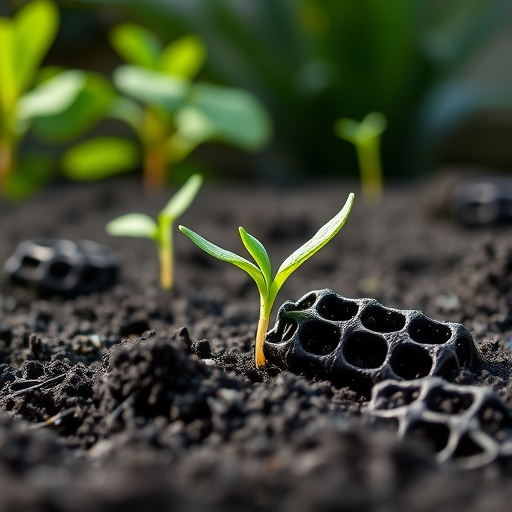
Biochar, derived from thermochemically converting biomass sources such as agricultural waste, features a porous carbonaceous structure that can activate oxidants generating reactive oxygen species (ROS). These ROS play a crucial role in breaking down persistent contaminants like antibiotics in water systems. However, the catalytic efficiency of biochar depends on a multitude of interdependent factors including pore morphology, surface chemistry, and the concentrations of both the oxidants and pollutants. This multifaceted dependence has historically hampered systematic catalyst optimization and scale-up.
To tackle this complexity, the researchers extracted 16 pivotal variables from reviewed literature, encompassing biochar’s surface properties, pore characteristics, chemical composition, and the experimental conditions under which degradation reactions occurred. The integration of this large, multidimensional dataset with advanced machine learning techniques allowed multiple models to be trained and tested, uncovering the most effective predictive algorithm. Out of all tested options, a transformer-based deep learning model known as TabPFN demonstrated unparalleled accuracy, reliably modeling reaction rate constants with an R-square value around 0.91 and minimal prediction error.
The predictive prowess of TabPFN not only accelerates experimental design but also sheds mechanistic light on which factors most significantly influence catalytic activity. Of particular importance were free radicals, formed during the biochar pyrolysis process, which sustain ROS generation essential for antibiotic breakdown. Additionally, the study highlighted the critical roles played by biochar’s pore volume, oxidant dosage, and pollutant concentration. Notably, the research found that enhancing these parameters beyond optimal thresholds could paradoxically impede degradation efficiency due to side reactions and accessibility limitations.
This discovery underscores the necessity of balancing material properties and reaction conditions for maximal catalytic efficiency. Moderate oxidant levels, for example, enhance ROS production without triggering adverse side effects. Similarly, biochar featuring a well-developed pore architecture facilitates effective pollutant diffusion and reaction dynamics. Such insights provide a scientific basis for tuning biochar synthesis protocols and operational parameters for customized environmental applications.
To democratize this technology and foster broader adoption, the team developed an intuitive web-based tool that empowers users to input key experimental parameters and instantly acquire predicted degradation rates. This platform enables rapid screening of potential catalysts, accelerates scaling strategies, and reduces reliance on time-consuming bench tests. By making AI-driven predictions accessible via a user-friendly interface, this tool can help propel the field toward swift, data-driven innovations.
Beyond antibiotic degradation, the framework’s versatility allows it to be adapted to other pollutant-catalyst systems, supporting the exploration of complex catalytic reactions in environmental engineering and beyond. Combining large-scale data mining, mechanistic understanding, and AI-powered predictions, this study showcases the transformative potential of computational methods in accelerating sustainable water treatment research.
As antibiotic pollution intensifies globally, threats to aquatic ecosystems and human health intensify alongside. Tools that fuse machine learning and material science, like this newly developed framework, are poised to become invaluable in the quest for effective, economically viable, and environmentally sound remediation strategies. By eliminating traditional guesswork and providing rapid, evidence-based design guidance, this research opens a path to the next generation of catalytic materials and engineered solutions.
The interplay of reactive free radicals, pore characteristics, and optimized reactant dosing identified by the model demonstrates the sophistication required for real-world application. These findings invite multidisciplinary collaboration, merging environmental chemists, data scientists, and engineers to develop tailored biochar catalysts for diverse conditions. Moreover, the detailed mechanistic understanding gleaned from the AI model could inspire novel synthesis approaches enhancing persistence and activity of critical radical species.
In summary, this work represents a paradigm shift in environmental catalysis research. It moves away from empirical trial-and-error toward predictive, model-informed engineering, supported by cutting-edge AI and vast experimental knowledge. The implications extend far beyond biochar and antibiotics, illustrating how digital tools can amplify scientific discovery and technological advancement toward cleaner water and healthier ecosystems worldwide.
Subject of Research: Deep learning prediction and mechanistic understanding of biochar-catalyzed degradation kinetics for environmental antibiotic remediation
Article Title: Deep learning-aided prediction and mechanistic analysis of reaction kinetics in biochar-catalyzed antibiotic degradation
News Publication Date: April 3, 2026
Web References: http://dx.doi.org/10.1007/s42773-026-00606-y
References: Latif, J., Chen, N., Xie, J. et al. Deep learning-aided prediction and mechanistic analysis of reaction kinetics in biochar-catalyzed antibiotic degradation. Biochar 8, 88 (2026).
Image Credits: Junaid Latif, Na Chen, Jia Xie, Zheng Ni, Lang Zhu, Azka Saleem, Kai Li & Hanzhong Jia
Keywords
Applied sciences and engineering, Life sciences, Biocatalysis, Biochemical processes, Biochemistry, Catalysis, Organic reactions, Chemical engineering, Engineering, Chemistry, Chemical kinetics


