


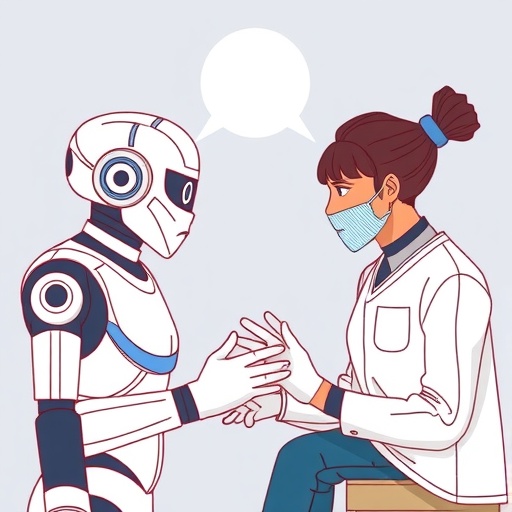
In an era dominated by rapid technological advancements, the integration of artificial intelligence (AI) into medical education has sparked significant interest among educators and practitioners alike. The emergence of AI-powered chatbots has transformed the way students engage with learning materials, presenting them with new opportunities to refine their clinical skills. One of the latest studies led by Lee, HY., Kim, J., and Choi, H., published in the journal BMC Medical Education, dives deep into a comparative analysis of AI chatbots and peer role-play as preparatory methodologies for Objective Structured Clinical Examinations (OSCEs). This pilot randomized controlled trial raises intriguing questions surrounding the efficacy and engagement levels of these two educational tools within the framework of modern medical training.
The objective of the study was to evaluate the effectiveness of AI chatbot simulations compared to traditional peer role-play in preparing medical students for their OSCEs. These examinations, which assess clinical competencies through practical, scenario-based testing, are pivotal in a medical student’s academic journey. By incorporating AI into this preparation, educators aim to enhance learning outcomes, ensure proficiency in essential skills, and better equip future healthcare providers for real-world challenges.
Participants were randomly assigned to two groups: one experiencing a series of structured interactions with an AI chatbot designed to simulate patient scenarios and the other engaging in peer role-playing exercises where they acted out clinical situations with classmates. This experimental design enabled researchers to capture data on several critical outcome measures, including knowledge retention, confidence levels, and overall satisfaction with the learning methods.
In deploying the AI chatbot, the study leveraged sophisticated language processing algorithms that allowed the chatbot to interactively engage with the students, posing questions and providing feedback as an actual patient would. This unique facet of the chatbot provided an opportunity for students to practice not only their clinical skills but also their communication abilities, essential traits for effective patient interactions. Many participants reported that the immediacy of feedback from the chatbot helped clarify their understanding of clinical concepts, contributing significantly to their learning experience.
Conversely, peer role-play has been a cornerstone of medical training, promoting collaboration and fostering teamwork among students. Engaging in role-play exercises facilitates a deeper emotional connection to the material and gives learners a safe environment to experiment with different approaches to patient care. Many participants of this group stated that acting out scenarios with their peers helped them internalize clinical situations effectively and provided them with psychological safety to make mistakes and learn from them.
Findings from the trial revealed nuanced insights. Students who trained with the AI chatbot demonstrated a marked improvement in knowledge retention when tested on clinical protocols compared to their counterparts in the peer role-play group. This aligns with existing literature which suggests that technology-enhanced learning, when executed well, can yield superior educational outcomes. However, while the AI-enhanced learning experience improved knowledge retention, it lacked the emotional engagement reported by students participating in peer scenarios.
Interestingly, participants expressed mixed feelings about the perceived empathy levels exhibited by the AI compared to human interaction. The lack of emotional depth from the AI chatbot was cited as a potential limitation compared to the more nuanced interactions developed through peer role-playing. The study emphasized that both modes of preparation possess unique strengths and weaknesses that may cater to diverse learning preferences among students.
Moreover, the implications of this research extend far beyond the immediate findings. As medical educators grapple with the challenge of preparing students for an increasingly complicated healthcare environment, the potential for AI to augment traditional methods emerges as a promising solution rather than a replacement. By incorporating tools like AI chatbots into the existing curriculum, educators can offer a hybrid approach that retains the social benefits of peer interaction while leveraging the advantages of technology.
As the study suggests, future iterations of this research could delve deeper into longer-term retention rates and the broader impact on clinical performance post-graduation. Understanding how these methodologies influence not only academic success but also the quality of patient care provided by graduates would be significant in shaping curricular decisions in medical schools around the world.
Certainly, the integration of AI chatbots in medical training represents a step towards a more personalized learning experience, tailored to the needs of individual students. As educators harness these advancements, they must remain vigilant in maintaining the essential human components of healthcare education. Balancing technology with empathy, understanding, and emotional intelligence will ultimately define the future of health professionals trained in this evolving landscape.
The conversation surrounding AI in medical education is just starting to gain traction. The potential for simulations to accurately prepare students for the real-world challenges they will face is profound, but important ethical considerations must also be made. As reliance on AI increases, ensuring that these systems function in a way that is equitable, transparent, and reliably informative becomes crucial.
The findings from Lee, HY., Kim, J., and Choi, H. offer a fresh perspective on the exploration of AI in education, underscoring a future where technology and tradition can coexist in mutual enhancement. As medical education continues to adapt to the demands of modern society, the insights gleaned from this study may serve as a guiding light for ongoing advancements, ultimately influencing medical training paradigms worldwide.
In conclusion, the implications of this research strongly advocate for a thoughtful integration of AI technologies within the educational sphere. As educators and institutions navigate the evolving landscape of medical training, we may well find ourselves standing at the precipice of a revolutionary transformation, one where AI acts not as a competitor to human interaction but as a complementary enhancement that fosters better-prepared healthcare professionals.
Ultimately, the fusion of innovative technology with traditional educational structures will define success in training the next generation of medical professionals. As we continue to investigate and refine these methodologies, we equip students not only with knowledge but also with the skills and confidence necessary for empathetic and effective patient care.
Lee, HY., Kim, J., Choi, H. et al. Comparing AI chatbot simulation and peer role-play for OSCE preparation: a pilot randomized controlled trial.
BMC Med Educ (2025). https://doi.org/10.1186/s12909-025-08308-y
Cite Scienmag News
Courtney Benton. (November 25, 2025). AI Chatbots vs. Peer Role-Play in OSCE Prep. Scienmag. https://scienmag.com/ai-chatbots-vs-peer-role-play-in-osce-prep/
Courtney Benton. "AI Chatbots vs. Peer Role-Play in OSCE Prep." Scienmag, 25 November 2025, https://scienmag.com/ai-chatbots-vs-peer-role-play-in-osce-prep/. Accessed 3 September 2026.
Courtney Benton. "AI Chatbots vs. Peer Role-Play in OSCE Prep." Scienmag. November 25, 2025. https://scienmag.com/ai-chatbots-vs-peer-role-play-in-osce-prep/


