

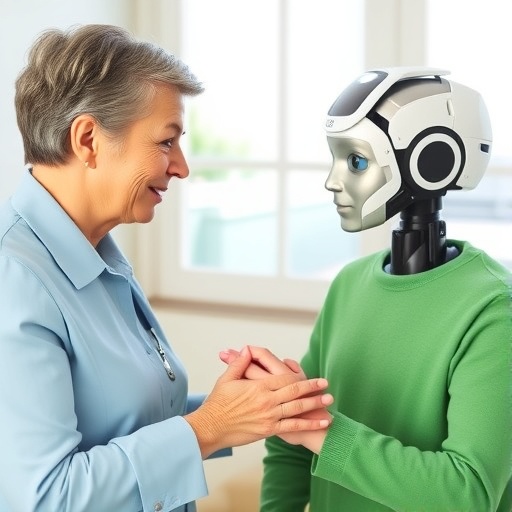
In recent years, the integration of artificial intelligence into healthcare has led to significant advancements in patient education and aftercare. A pioneering study conducted by a team led by Dr. Ozata, along with collaborators Cingar Alpay and Avlagi, introduces a new AI-assisted platform designed to enhance post-procedure education for older adults receiving percutaneous endoscopic gastrostomy (PEG) tubes. The study, titled “AI-assisted PEG aftercare education for older adults: clinician-informed chatbot design (PEGAssist),” showcases how a clinician-informed chatbot can effectively educate patients and their caregivers about the intricacies of PEG tube management. This innovative approach not only aims to improve patient knowledge but also seeks to enhance overall health outcomes.
The significance of this research is underscored by the growing number of older adults undergoing PEG placements, often due to conditions that impair their ability to consume food safely through traditional means. As a result, the need for effective educational resources that empower patients and caregivers is paramount. The study asserts that despite the increase in PEG tube procedures, many patients lack comprehensive education regarding aftercare and dietary considerations. This gap in knowledge can lead to complications, increased hospital readmissions, and decreased patient satisfaction.
The centerpiece of the research is the development of the PEGAssist chatbot, designed to provide tailored support for older adults and their families. This chatbot utilizes natural language processing algorithms to communicate effectively with users. It can answer common questions related to the PEG tube, such as care procedures, dietary recommendations, and signs of potential complications. By offering accurate and readily available information, the chatbot aims to bridge the education gap and provide reassurance to patients and their caregivers.
One of the distinguishing features of PEGAssist is its clinician-informed design, which ensures that the information distributed by the chatbot is clinically accurate and relevant. Input from healthcare professionals was integral during the development phase, helping to shape the content and responses generated by the chatbot. This collaboration not only enhances the reliability of the information but also aligns the platform with healthcare best practices, thereby increasing user confidence in the resource.
Furthermore, the research emphasizes the chatbot’s accessibility, as it is designed to function via both mobile devices and computers. This adaptability is crucial, considering the increasing trend of technology use among older adults. By allowing users to access the information from the comfort of their homes, PEGAssist aligns with contemporary healthcare trends that advocate for patient-centered care approaches. It encourages individuals to take an active role in their healthcare management by providing knowledge that fosters independence and confidence.
Investigating the potential impact of the chatbot, the researchers conducted a pilot study with a group of older adults and their caregivers. This phase was instrumental in evaluating the effectiveness of the PEGAssist chatbot in conveying meaningful educational content. Initial findings were promising, indicating a notable increase in participant knowledge about PEG care after engaging with the chatbot. Moreover, the anecdotal feedback from users highlighted an appreciation for the convenience and clarity of the information provided, suggesting a positive user experience.
The implications of this research extend beyond individual patient education. As healthcare systems continue to grapple with the challenges posed by an aging population, tools like PEGAssist may provide scalable solutions that address widespread knowledge gaps in aftercare education. The potential for such technology to reduce healthcare costs associated with complications arising from inadequate patient education is significant. This aspect underscores the need for ongoing investment in AI-assisted health technologies that prioritize patient empowerment and informed self-management.
In addition to the immediate benefits for patients and caregivers, the study also opens avenues for further research and development in the realm of AI in healthcare. The algorithms and methodologies used in developing PEGAssist could inspire similar initiatives targeting other medical procedures and conditions. Such expansions could lead to a more comprehensive digital health landscape where AI tools provide tailored education and support across various stages of patient care.
Moreover, as the field of artificial intelligence evolves, there lies an opportunity for continuous enhancement of the chatbot’s capabilities. Future iterations could incorporate more advanced machine learning techniques, enabling the platform to adapt and improve its responses based on user interactions over time. This evolution could significantly enrich the patient experience, creating an even more responsive and engaging educational tool.
As the healthcare sector increasingly embraces digital solutions, it is crucial to ensure that technological interventions like PEGAssist are rigorously evaluated and refined. Ongoing research efforts are essential to quantify the impact of such tools on patient outcomes and to identify best practices for their implementation within clinical settings. With further validation and research, PEGAssist could serve as a framework for developing more AI-enabled educational platforms designed for a wide range of health challenges faced by older adults.
The establishment of PEGAssist marks a noteworthy advancement in the confluence of technology and healthcare education. As researchers and clinicians continue to innovate in this space, the hope is that such initiatives will ultimately lead to safer and better healthcare experiences for the aging population. Through robust user engagement and ongoing research, AI-assisted platforms have the potential to revolutionize how patients and caregivers interact with healthcare information, ensuring that users feel supported and well-informed throughout their health journeys.
In conclusion, the development of PEGAssist exemplifies the transformative potential of using artificial intelligence in healthcare education. By contributing to a paradigm shift in patient-centered care, the research led by Dr. Ozata and her team heralds a future where technology serves as a crucial ally in empowering older adults and caregivers in managing their health care. Emphasizing the importance of knowledge in patient outcomes, PEGAssist stands as a testament to innovation geared towards enhancing the quality of life for those navigating the complexities of PEG tube management.
Subject of Research: AI-assisted education for PEG aftercare in older adults.
Article Title: AI-assisted PEG aftercare education for older adults: clinician-informed chatbot design (PEGAssist).
Article References:
Ozata, D., Cingar Alpay, K., Avlagi, G.K. et al. AI-assisted PEG aftercare education for older adults: clinician-informed chatbot design (PEGAssist).
Eur Geriatr Med (2025). https://doi.org/10.1007/s41999-025-01369-8
Image Credits: AI Generated
DOI:
Keywords: AI, healthcare education, elderly care, PEG tube management, patient empowerment, chatbot technology.


