


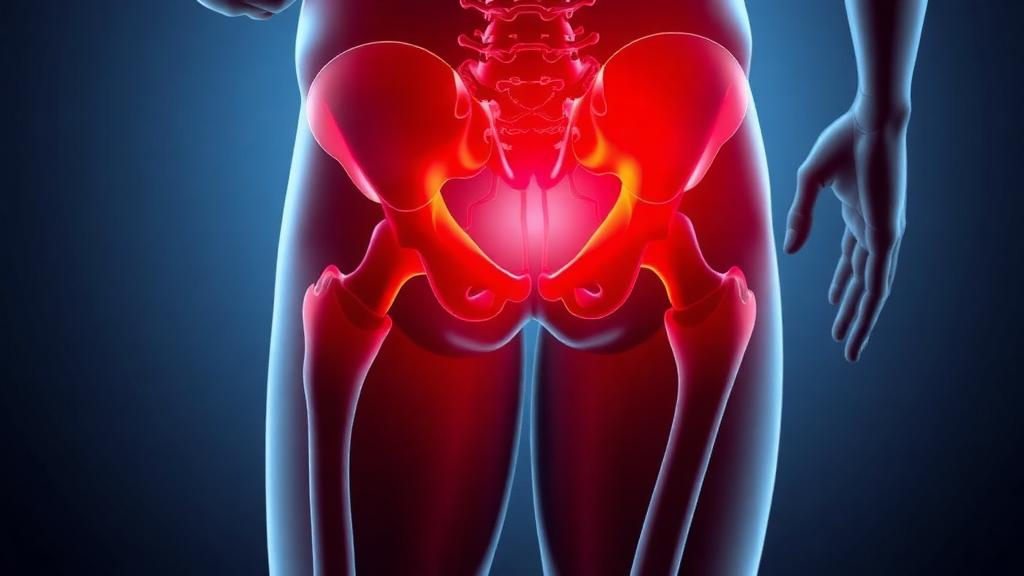
Every year, hundreds of thousands of older adults arrive at emergency departments and hospital wards with a broken hip, pelvis, vertebra, or femur that shattered not because of a car crash or a fall from a height, but because their bones had been quietly hollowed out by osteoporosis. These fractures are not merely painful accidents; they are sentinel events, warning signals that the skeleton has already failed once and will fail again. Yet a striking new analysis published in the Journal of General Internal Medicine reveals that the overwhelming majority of these patients leave the hospital without the one intervention proven to prevent the next break. Of nearly 10,000 patients admitted with a new non-traumatic fracture across 20 hospitals in a large academic health system, 91 percent had never received an osteoporosis medication in their lives, and only 6 percent walked out with a prescription or a filled prescription for an antifracture drug. The finding, and the editorial commentary it has prompted, is forcing clinicians to rethink where the responsibility for bone health actually begins.
The numbers deserve close scrutiny because they quantify a treatment gap that has persisted for decades despite abundant evidence. Hip fractures in particular carry a grim prognosis: they are associated with substantial morbidity and an estimated one-year mortality approaching 20 percent, a figure that places them in the same category of lethality as many cancers. Antifracture medications, including bisphosphonates, anabolic agents, RANK ligand inhibitors, and selective estrogen receptor modulators, have repeatedly been shown to reduce the risk of subsequent fractures and, in some studies, to lower mortality itself. In cardiology, no physician would discharge a patient after a heart attack without aspirin, a statin, and a beta blocker; secondary prevention after myocardial infarction is considered non-negotiable. The burden of disease imposed by a hip fracture is comparable to that of a heart attack, yet the parallel discipline of secondary prevention after fracture has simply never taken hold in routine practice.
The study at the center of this conversation, conducted by Silverstein and colleagues, is a retrospective cohort analysis that linked electronic health records to pharmacy prescription fill data across a single large academic health system. The researchers identified patients older than 50 years admitted between January 1, 2017, and August 31, 2023, for a hip, femur, pelvis, or vertebral fracture that was non-traumatic in origin. The primary outcome was receipt of any antifracture medication, whether initiated in the emergency department, during the inpatient stay, or in the outpatient setting within 180 days of discharge. What makes the analysis more than another grim audit is its attention to continuity: it asked whether a medication started in the hospital actually survived the transition to outpatient care, a question that has rarely been answered with linked fill data at this level of detail.
The results contain both a scandal and a surprise. The scandal is the 6 percent treatment rate among patients who had never previously received therapy, a figure that underscores how little progress has been made despite years of consensus recommendations calling for secondary fracture prevention in every eligible patient. The surprise is what happened among the small treated minority: 77 percent of those who did receive an antifracture medication got it during the hospital encounter itself, and, crucially, 71 percent of patients who started a medication in the hospital remained on therapy after discharge. In other words, the hospital is not a dead end for osteoporosis care. When treatment begins at the bedside, it tends to stick. Bisphosphonates dominated the prescribing pattern, accounting for 92 percent of medications, and hip fracture was the most common diagnosis, representing 60 percent of hospitalized patients.
Equally revealing are the disparities that emerged. Men, Black patients, those with longer hospital stays, and those with femur fractures were less likely to receive an antifracture medication, a pattern that echoes documented inequities in secondary fracture treatment by age, race, and sex. Patients discharged to skilled nursing facilities were also less likely to be treated, even though evidence demonstrates that frail older adults, the very population most concentrated in such facilities, still derive meaningful benefit from osteoporosis medications. These gradients suggest that the treatment gap is not randomly distributed but follows the fault lines of the health care system itself, with the most vulnerable patients, those navigating complex post-acute transitions, falling through the widest cracks.
The study has limitations that its commentators, geriatricians Annie Yang, William Hung, and Katherine Ritchey, are careful to note. It examined a single academic health system, so national generalization requires larger, nationally representative cohorts. Outpatient follow-up was truncated at 180 days after discharge, meaning that treatments initiated later would have been missed and the true treatment rate may be somewhat higher. Still, the direction of the findings is unlikely to be an artifact; the undertreatment of osteoporosis after fracture has been replicated across countries, databases, and decades, and the new analysis reinforces rather than revises that consensus.
What distinguishes the editorial response is its practicality. The authors argue that the 71 percent persistence rate among hospital-initiated patients should act as a catalyst: if starting the medication in the hospital works, then emergency physicians and hospitalists should be equipped and expected to start it. Some measures require nothing more than better communication. Discharge summaries should list osteoporosis as an active diagnosis or include explicit follow-up items, such as a prompt for the primary care physician or nursing home to review the antifracture medication started inpatient. Transitions of care are moments of vulnerability, but they are also moments of leverage, when a clearly documented plan can carry an evidence-based intervention across institutional boundaries that so often swallow it.
System-level tools already exist and have demonstrated their value. Clinical decision support embedded in the electronic health record can prompt clinicians to initiate antifracture therapy at the moment of admission, and a population-based before-after analysis found that simply introducing an order set after hip fracture improved both initiation and persistence of osteoporosis medications. Fracture Liaison Services, in which a coordinator systematically identifies fracture patients and shepherds them through assessment and treatment, and the American Orthopaedic Association’s Own the Bone program have both been shown to increase prescribing after incident fractures. The problem is dissemination: these programs remain patchy, available to a minority of fracture patients nationwide. The editorial points to the Centers for Medicare & Medicaid Services Age-Friendly Hospital measure, under which hospitals must now attest to delivering age-friendly care across domains including medication management and frailty screening, as a potential regulatory lever. If post-fracture care were explicitly integrated into one of those domains, hospitals would have a structural reason to invest in secondary fracture prevention.
History suggests, however, that the most powerful engine of change in American hospitals is financial. When CMS began measuring and publicly reporting hospital quality for heart failure and heart attacks in the early 2000s, institutions poured resources into cardiovascular care, and outcomes such as readmissions and mortality are now tied to reimbursement through programs like the Hospital Readmissions Reduction Program. The editorial’s implicit argument is that fracture-related outcomes deserve the same treatment: measure them, report them publicly, and attach them to payment, and hospitals will find the organizational will to close a gap that voluntary exhortation has failed to close for a generation. Cardiology offers the template; osteoporosis needs only the mandate.
The deeper conceptual shift the editorial demands is deceptively simple. Osteoporosis treatment has long been framed as an outpatient problem, the province of primary care physicians and DXA scans ordered months after the fact, if at all. The new evidence inverts that framing. The hospital admission for a fragility fracture is the single moment when the patient, the diagnosis, and the indication for treatment converge in one place, under the care of clinicians with the prescription in hand. Treating the hospital as part of osteoporosis care rather than a departure from it would not require new drugs or new science, only the application of practices already proven to work. For the 94 percent of treatment-naive fracture patients currently leaving without therapy, that reframing cannot come soon enough.
Subject of Research: Underprescribing of antifracture medications after non-traumatic fracture and the role of hospitals in secondary fracture prevention
Article Title: Hospitals Are an Opportunity to Close the Osteoporosis Treatment Gap
Article References: Yang, A. W., Hung, W. W., & Ritchey, K. (2026). Hospitals Are an Opportunity to Close the Osteoporosis Treatment Gap. Journal of General Internal Medicine. https://doi.org/10.1007/s11606-026-10880-y
Image Credits: AI Generated
DOI: 10.1007/s11606-026-10880-y
Keywords: osteoporosis, hip fracture, secondary fracture prevention, antifracture medications, bisphosphonates, hospital care, Fracture Liaison Services, clinical decision support, health disparities, CMS quality measures, geriatrics, Journal of General Internal Medicine
Cite Scienmag News
Ophelia Keating. (October 6, 2026). After a Broken Hip, Only 6 Percent Get the Drug That Could Save Them. Scienmag. https://scienmag.com/after-a-broken-hip-only-6-percent-get-the-drug-that-could-save-them/
Ophelia Keating. "After a Broken Hip, Only 6 Percent Get the Drug That Could Save Them." Scienmag, 6 October 2026, https://scienmag.com/after-a-broken-hip-only-6-percent-get-the-drug-that-could-save-them/. Accessed 6 October 2026.
Ophelia Keating. "After a Broken Hip, Only 6 Percent Get the Drug That Could Save Them." Scienmag. October 6, 2026. https://scienmag.com/after-a-broken-hip-only-6-percent-get-the-drug-that-could-save-them/


