


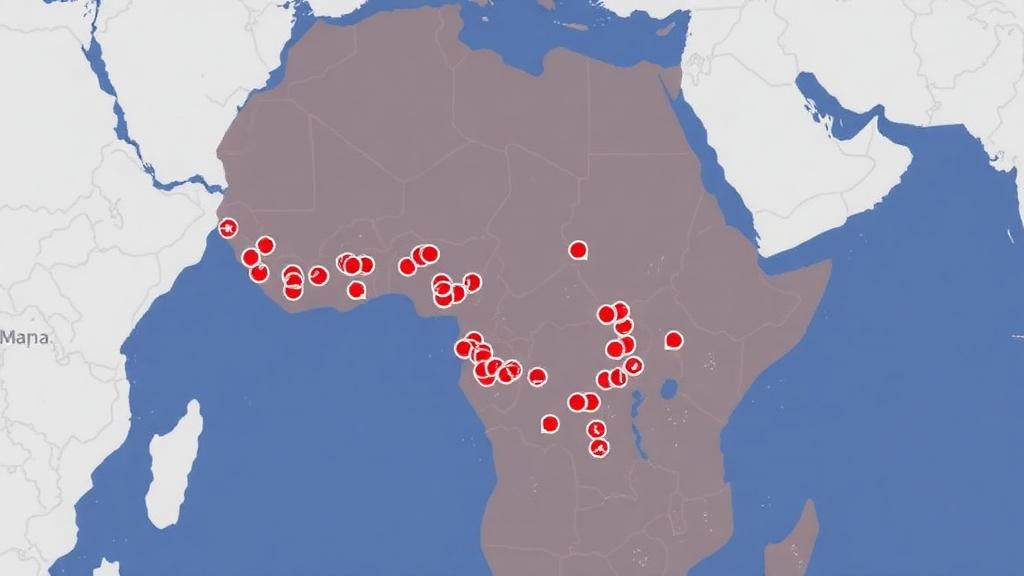
Pseudomonas aeruginosa is one of the most feared bacteria in modern hospitals, a pathogen the World Health Organization has placed on its “Priority 1” critical list of antimicrobial-resistant threats. Yet while genomic surveillance of this organism has expanded rapidly in Europe, North America and Asia, Africa has remained largely a blank space on the global map, contributing less than five percent of publicly available P. aeruginosa genomic data. A new continent-scale study published in BMC Genomics now fills a substantial part of that gap, offering the most detailed picture to date of how this dangerous hospital pathogen is structured and how its resistance arsenal is distributed across the African continent.
The research team, led by Abdulwasid Abubakari and Charity Ahiabor of Accra Technical University in Ghana, together with George Osei-Adjei and corresponding author Hizbullah Khan of Guangdong Medical University in China, assembled and analyzed 467 high-quality P. aeruginosa genome assemblies. Every genome included in the analysis met a strict quality threshold of greater than 95 percent completeness, and the collection spanned 17 African countries over a remarkable 26-year window, from 1998 to 2024. All of the data were drawn from publicly available assemblies in the NCBI database, meaning the study required no new sampling or ethics approvals, but its systematic reanalysis with standardized tools allowed comparisons that had previously been impossible across such a geographically and temporally scattered dataset.
The methodological backbone of the study was a pangenome analysis, an approach that partitions the collective gene repertoire of a bacterial species into the core genome shared by all isolates and the accessory genome carried by only some. The researchers used iterative pangenome clustering across seven amino acid identity thresholds ranging from 50 to 98 percent, a strategy that captures gene families at different levels of evolutionary relatedness. They complemented this with exploratory core-genome single nucleotide polymorphism phylogenetics to reconstruct the evolutionary relationships among isolates, and with pangenome-wide association studies, or Pan-GWAS, to detect accessory genes whose presence correlates with specific geographic regions.
The results revealed an exceptionally “open” pangenome architecture, quantified by a scaling exponent of gamma equal to 0.23. In pangenome mathematics, a low gamma value signals that each newly sequenced genome is likely to bring a substantial number of previously unseen genes into the catalogue, indicating enormous genetic diversity and extensive gene acquisition. Across the African population, the analysis catalogued 25,501 distinct gene families, a figure that underscores how genetically versatile this pathogen is on the continent. An open pangenome also has practical implications for surveillance: it suggests that local African isolates may carry functional repertoires that global reference-based analyses routinely miss, and that continued sampling will keep yielding new genetic material rather than approaching a saturation point.
Phylogenomic reconstruction resolved 466 unique core genome SNP profiles, and the resulting tree was characterized by strong regional clustering. In other words, isolates from the same part of the continent tended to be more closely related to each other than to isolates from distant regions, a pattern consistent with largely local transmission and evolution rather than a single continental epidemic lineage sweeping across borders. This regional structure matters for public health planning, because it implies that resistance control strategies may need to be tailored to regional population dynamics rather than applied as one uniform continental blueprint.
Perhaps the most striking finding is what the authors describe as an “African Clonal Inversion.” Globally, the sequence type known as ST235 is regarded as the archetypal P. aeruginosa super-clone, a multidrug-resistant lineage that has spread through hospitals worldwide and dominates high-risk clone surveys on other continents. In the African dataset, however, the picture is reversed. Among the 71 isolates identified as belonging to high-risk clones, ST111 accounted for 46.5 percent, or 33 of 71 isolates, outnumbering ST235, which represented 14.1 percent or 10 of 71, by more than three-fold. This inversion suggests that the forces shaping P. aeruginosa success in African healthcare settings differ from those driving the global spread of ST235, and it raises the possibility that ST111 possesses ecological or resistance advantages that are particularly effective in African hospital environments.
The study also mapped the resistome, the complete set of antimicrobial resistance genes carried by the isolates, and found it to be geographically stratified in a way that has direct clinical consequences. The gene blaNDM-1, which encodes the New Delhi metallo-beta-lactamase and confers resistance to some of the most powerful last-line carbapenem antibiotics, dominated in Northern and Eastern African country subsets. Meanwhile, blaVIM-2, another metallo-beta-lactamase gene but from a distinct enzymatic family, was concentrated in Southern Africa. Because both genes threaten the carbapenem class that clinicians rely on when treating severe P. aeruginosa infections, their uneven continental distribution means that empirical treatment guidelines and diagnostic panels may need to account for which resistance determinants are actually circulating in a given region rather than assuming a homogeneous African resistance landscape.
Beyond resistance genes, the Pan-GWAS analysis uncovered regional associations in the accessory genome that hint at how local P. aeruginosa populations differ in their broader functional biology. The researchers found enrichment of a Type VI Secretion System component, the tla3 gene, in North African isolates. The Type VI Secretion System is a molecular spear-like apparatus that bacteria use to inject effector proteins into competing microbes and host cells, playing a major role in interbacterial competition and virulence. In West Africa, the analysis identified enrichment of phenazine biosynthesis clusters, including the phzA2 gene. Phenazines are redox-active secondary metabolites that contribute to P. aeruginosa’s survival, biofilm formation and pathogenicity. These regional functional signatures suggest that different African populations may have evolved distinct ecological strategies, potentially shaped by local hospital conditions, antibiotic prescribing practices, microbial competition and environmental reservoirs.
To make these findings actionable rather than merely archival, the team integrated the entire dataset into a live interactive dashboard hosted on Microreact, a widely used platform for visualizing genomic epidemiology. This means that researchers, public health officials and clinicians across Africa and beyond can explore the phylogenetic trees, geographic distributions and resistance gene patterns themselves, updating the picture as new genomes are deposited. Such open infrastructure is particularly valuable on a continent where surveillance capacity varies widely between countries, because it lowers the technical barrier for local laboratories to place their own isolates in continental and global context.
The study’s authors are careful to frame their work as a foundation rather than a finished map. The dataset, while the largest of its kind for the continent, still reflects the uneven distribution of sequencing capacity and data deposition across Africa, and the researchers themselves categorized some countries with limited sampling as yielding only exploratory Pan-GWAS results. Nevertheless, by demonstrating that African P. aeruginosa populations have their own clonal hierarchy, their own resistance geography and their own accessory gene signatures, the analysis makes a compelling case that the continent can no longer be treated as a footnote in global pathogen genomics. As antimicrobial resistance continues to escalate worldwide, understanding how Priority 1 pathogens evolve in undermapped regions is not just an African concern but a global one, and this study provides both the evidence and the tools to begin that work in earnest.
Subject of Research: Pan-African genomic population structure and antimicrobial resistance distribution of Pseudomonas aeruginosa
Article Title: Pan-African genomics of Pseudomonas aeruginosa highlights regional population structure and AMR stratification
Article References: Abubakari, A., Ahiabor, C., Osei-Adjei, G., & Khan, H. (2026). Pan-African genomics of Pseudomonas aeruginosa highlights regional population structure and AMR stratification. BMC Genomics. https://doi.org/10.1186/s12864-026-13365-8
Image Credits: AI Generated
DOI: 10.1186/s12864-026-13365-8
Keywords: Pseudomonas aeruginosa, pangenomics, antimicrobial resistance, Africa, genomic epidemiology, high-risk clones, resistome, ST111, ST235, Pan-GWAS, MLST, BMC Genomics
Cite Scienmag News
Juliet Wilcox. (October 2, 2026). Africa’s Hidden Pseudomonas Superbug Map Reveals Regional Resistance Patterns. Scienmag. https://scienmag.com/africas-hidden-pseudomonas-superbug-map-reveals-regional-resistance-patterns/
Juliet Wilcox. "Africa’s Hidden Pseudomonas Superbug Map Reveals Regional Resistance Patterns." Scienmag, 2 October 2026, https://scienmag.com/africas-hidden-pseudomonas-superbug-map-reveals-regional-resistance-patterns/. Accessed 4 October 2026.
Juliet Wilcox. "Africa’s Hidden Pseudomonas Superbug Map Reveals Regional Resistance Patterns." Scienmag. October 2, 2026. https://scienmag.com/africas-hidden-pseudomonas-superbug-map-reveals-regional-resistance-patterns/


