


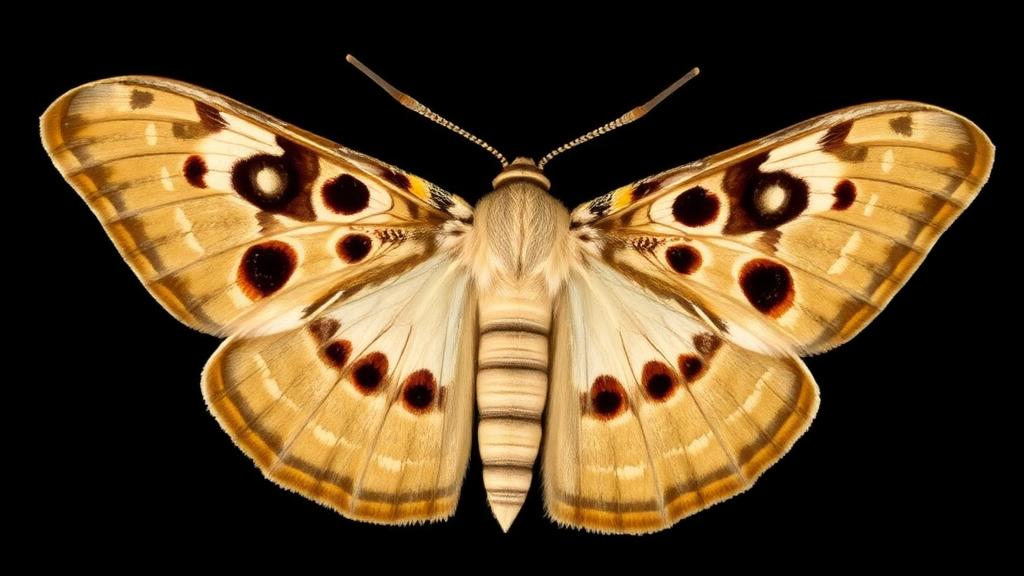
In October 2022, two moth enthusiasts working independently in the province of Almería, southern Spain, attracted a small, brownish, rather unremarkable-looking moth to their ultraviolet light traps. Neither Txema Revilla nor Peder Skou could have known at the time that their specimens would turn out to be Zizyphia cleodorella, a species never before recorded from Spain — or from anywhere in Europe. The discovery, published in the journal Nota Lepidopterologica, has now prompted a full re-examination of this little-known genus and, more dramatically, a reshuffling of its position in the moth family tree.
Zizyphia cleodorella was originally described by the French lepidopterist Pierre Chrétien in 1908, based on specimens bred from larvae collected in Biskra, Algeria. In the more than a century since, the species has been mentioned only a handful of times in the scientific literature, and its systematic placement has drifted confusingly between families. Chrétien himself placed the genus next to members of the Gelechiidae and Autostichidae without any formal comparison, while Edward Meyrick, who never saw actual material, doubted the association with Sophronia that Chrétien had implied. For most of its history, the genus sat within the Gelechiidae — the twirler moths — until Lvovsky transferred it to the Depressariidae in 2009.
The Spanish specimens were collected in the El Toyo/Retamar area and on the slopes of the Sierra Alhamilla, in habitats that the authors describe as strikingly African in botanical character. The biotope consists of sandy terrain with narrow, mobile dunes, within the semi-arid thermo-Mediterranean climatic zone where atmospheric humidity remains high. Extensive formations of Ziziphus lotus — known in Spanish as azufaifo — dominate the landscape, accompanied by patches of annual grassland and scattered Tamarix, Ephedra, Ononis and Thymelaea. This is precisely the kind of vegetation one would expect in North Africa, not on the Iberian coast, and it provides the host plants on which the larvae of Z. cleodorella feed.
That host association is no coincidence. The genus name Zizyphia refers directly to Ziziphus, the genus of evergreen shrubs and small trees on which the type species was found. Chrétien’s original description recorded the larva feeding during May on Ziziphus — probably Z. mauritiana or Z. lotus — before descending to the ground to pupate. Adults emerge in June and again in October, which matches the flight period of the Spanish specimens collected in early and mid-October 2022. A record from the Cape Verde Islands lists the species from Ziziphus mauritiana, though the authors note it is unclear whether this was based on direct observation.
Externally, Zizyphia adults most closely resemble certain species of Orophia and the predominantly East Asian to Australasian genus Eutorna, sharing a similar wing shape with relatively narrow forewings. The forewing of Z. cleodorella is brown with a broadly grey costal side, a grey spot along the basal third of the wing, irregular white longitudinal stripes along the fold, and an oblique white stripe running from the costa toward the apex, preceded by a black spot. The wing pattern is also similar to that of Orophia zernyi and several Eutorna species, which is part of what has made the genus so difficult to place.
The real diagnostic characters lie in the genitalia. Members of the subfamily Cacochroinae, to which the authors assign Zizyphia, share the typical features of the superfamily Gelechioidea — a basally scaled haustellum and long, upcurved labial palps with a particularly long second segment — but they are relatively small and slender-winged compared to most Depressariidae. In the male genitalia, the uncus is either absent or vestigial, but the tuba analis is well developed. The gnathos is mesially divided into a paired spinose knob, and in Zizyphia these knobs are significantly larger than in any other genus in the group — the authors note this seems to be the only male genital character separating Zizyphia from Orophia. The phallus is pistol-shaped with a curved caecum, and in Z. cleodorella it carries one long and one shorter cornutus, along with a comb-like dense group of spines near the base. The female genitalia feature a broad ductus bursae with a conspicuous sclerotization on its ventral side, three times as long as broad, and a small, star-shaped signum on the corpus bursae.
Separating Z. cleodorella from its only congener, Z. zizyphella Amsel, 1935, requires attention to subtle differences. Z. zizyphella has paler ochreous-brown forewings with only a little grey along the costa, and usually two inconspicuous dark spots near the apex, whereas Z. cleodorella is darker brown with broadly grey costal side and a single more prominent apical spot. In the female genitalia, the ventral sclerotization of the ductus bursae is three times as long as broad in Z. cleodorella but four times as long as broad in Z. zizyphella. Z. zizyphella is known only from Jericho in Palestine/Israel, the southern shore of the Dead Sea, and Cyprus, where its larvae feed on Ziziphus spina-christi and live in boat-shaped leaves that they skeletonize.
The systematic discussion in the new paper goes considerably beyond the genus itself. The name Orophiinae Lvovsky, 1974, which has occasionally been applied to the group containing Eutorna, Orophia, Cacochroa, Rosetea and Zizyphia, turns out to be a secondary homonym of Orophiini Thomson, 1863, a name in the beetle family Ciidae. Because that name is unavailable, and because Cryptolechiinae — the name widely but inconsistently applied to these genera — is considered by the authors to be unrelated, they reinstate Cacochroini Leraut, 1993 as the valid family-group name, at subfamily rank as Cacochroinae within Depressariidae. Furthermore, Eutornini Lvovsky, 2019, proposed as a replacement name for the unavailable Orophiini, is shown to be a subjective junior synonym of Cacochroini, since the two names have different type genera and Eutorna and Cacochroa are considered to belong to the same tribe.
The authors support the view that Cryptolechia straminella, the type species of Cryptolechiinae, is not closely related to the genus group treated here, pointing to differences in wing shape, the presence of a well-developed uncus, a unilobed gnathos, and the absence of lobes attached laterad of the juxta or the base of the valva. Previous molecular work by Heikkilä and colleagues in 2014 had already suggested that Cryptolechia might belong to the Lypusidae instead, and the new paper consolidates that interpretation. The reinstatement of Cacochroinae therefore resolves a nomenclatural tangle that has persisted for decades, giving this distinctive group of moths a stable name anchored to the type genus Cacochroa.
The Spanish discovery also fits into a broader pattern of range shifts in the Microlepidoptera fauna of the Mediterranean coast, which the authors link to ongoing climate change. Recent years have brought records of other Gelechioidea appearing in southern Spain for the first time, including Batrachedra amydraula in Mojácar in 2019, Labdia semicoccinea in Motril in 2022, and perhaps also Xenotorodor stygioxanthus near Tarifa. Given that Ziziphus species are grown horticulturally in many parts of the world for their edible fruits, and that published information on the life histories and distributions of Z. cleodorella and its host plants remains surprisingly sparse, the authors suggest the moth may have expanded its distribution northward due to climate change rather than human activity. Either way, the appearance of this African species on the Iberian coast is a vivid reminder that even the smallest moths can signal large ecological shifts — and that a single evening at a light trap in Almería can still rewrite a chapter of European lepidopterology.
Subject of Research: First European record of the moth Zizyphia cleodorella in Spain and reinstatement of Cacochroinae within Depressariidae
Article Title: The genus Zizyphia Chrétien, 1908, with notes on its systematic position and the first record of Z. cleodorella Chrétien, 1908 from Europe ( Lepidoptera , Depressariidae , Cacochroinae )
Article References: Kaila, L., Karsholt, O., & Revilla, T. (2024). The genus Zizyphia Chrétien, 1908, with notes on its systematic position and the first record of Z. cleodorella Chrétien, 1908 from Europe (Lepidoptera, Depressariidae, Cacochroinae). Nota Lepidopterologica, 47, 19-28. https://doi.org/10.3897/nl.47.115542
Image Credits: AI Generated
DOI: 10.3897/nl.47.115542
Keywords: Lepidoptera, Depressariidae, Zizyphia cleodorella, Cacochroinae, Spain, new record, taxonomy, climate change, Gelechioidea, Nota Lepidopterologica, genus, Zizyphia
Cite Scienmag News
Margaret Porter. (October 18, 2026). African moth makes first European appearance in Spain, rewriting its family tree. Scienmag. https://scienmag.com/african-moth-makes-first-european-appearance-in-spain-rewriting-its-family-tree/
Margaret Porter. "African moth makes first European appearance in Spain, rewriting its family tree." Scienmag, 18 October 2026, https://scienmag.com/african-moth-makes-first-european-appearance-in-spain-rewriting-its-family-tree/. Accessed 18 October 2026.
Margaret Porter. "African moth makes first European appearance in Spain, rewriting its family tree." Scienmag. October 18, 2026. https://scienmag.com/african-moth-makes-first-european-appearance-in-spain-rewriting-its-family-tree/


