


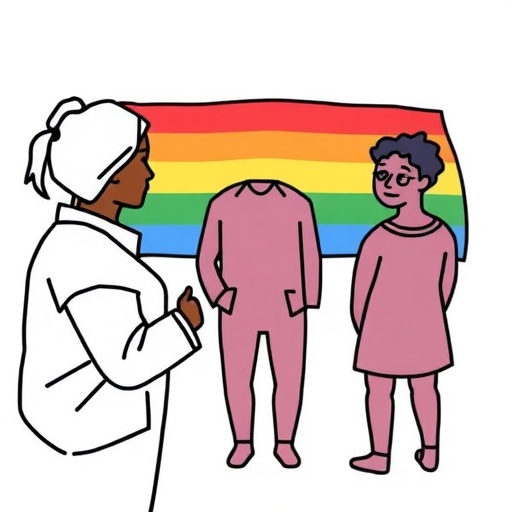
In recent years, the imperative for transgender-inclusive healthcare has surged to the forefront of global health discussions, challenging traditional frameworks and demanding systemic transformation. A groundbreaking study by Blus-Kadosh and Hartal, recently published in the International Journal for Equity in Health, sheds enlightening insight into the advocacy efforts undertaken by healthcare professionals striving to foster trans-inclusive primary care. Through meticulous qualitative analysis, the study unveils strategies that could redefine patient care paradigms, engendering more equitable and affirming healthcare services for transgender individuals across the spectrum.
Understanding the nuances of healthcare advocacy for transgender patients necessitates grasping the complex intersectionality of identity, stigma, and systemic barriers. Transgender individuals often face substantial healthcare disparities, stemming from widespread discrimination, lack of provider knowledge, and inadequate institutional policies. Against this challenging backdrop, frontline healthcare professionals emerge not only as caregivers but as crucial advocates driving change within their practice environments. The study explores how these professionals navigate institutional constraints, champion policy reforms, and cultivate clinical environments that affirm gender diversity.
Blus-Kadosh and Hartal employed an in-depth qualitative methodology, engaging with a diverse cohort of healthcare providers, including physicians, nurses, social workers, and administrators. Their aim was to uncover organic advocacy mechanisms naturally emerging within the clinical landscape. The researchers identified multifaceted advocacy approaches: from individual-level interventions, such as personalized patient support and education, to broader structural efforts, including policy advocacy and interdisciplinary collaborations designed to institutionalize trans-inclusive protocols.
One of the central revelations of the study is the critical role of knowledge dissemination and capacity building among healthcare staff. Many providers initially grappled with gaps in transgender-related clinical knowledge and cultural competency. To counter this, advocates spearheaded targeted educational initiatives, ranging from informal peer-to-peer training to formalized workshops. These educational efforts were designed not merely to transmit information but to transform attitudes—fostering empathy and dismantling unconscious biases that impede patient care quality.
Institutional roadblocks emerged as formidable challenges, with policies and bureaucratic inertia often hampering swift progress. However, the studied professionals demonstrated remarkable agility, utilizing strategic networking and coalition-building to amplify their advocacy impact. By forming alliances with community organizations, patient advocacy groups, and policy makers, they effectively broadened their spheres of influence, enabling sustained policy reforms that embed transgender health considerations into primary care standards.
The research highlights the profound importance of creating safe, affirming clinical spaces, recognizing that physical and emotional environments profoundly affect the efficacy of healthcare delivery. Healthcare professionals advocated for changes in clinical settings, such as inclusive language use in medical records, visible symbols of LGBTQ+ affirmation, and gender-neutral facility design. These seemingly subtle shifts play a pivotal role in building trust and reducing healthcare avoidance among transgender patients.
Integral to these efforts was the conscientious use of data collection and feedback mechanisms. Advocates emphasized the necessity of gathering disaggregated health data that accurately reflects transgender identities to tailor clinical interventions effectively. The study elucidates how healthcare teams incorporated patient feedback loops to continuously refine their services, ensuring responsiveness to evolving community needs and preferences.
Blus-Kadosh and Hartal’s findings underscore that effective advocacy transcends mere policy changes; it represents a holistic transformation of healthcare culture. This cultural shift necessitates embedding principles of equity, respect, and inclusivity into every facet of clinical practice, from patient intake procedures to follow-up care coordination. Frontline professionals viewed their advocacy not just as external lobbying but as a lived commitment to justice within their daily work.
The study also draws attention to the emotional labor inherent in healthcare advocacy. Advocates often navigate complex ethical dilemmas, balancing institutional demands with the urgent needs of marginalized patients. The authors articulate that such advocacy work requires resilience and sustained motivation, further accentuated by the emotional vulnerabilities experienced by transgender patients themselves.
Digital health technologies emerged as both an opportunity and a challenge within the advocacy landscape. On one hand, telehealth and electronic health records offer platforms to integrate gender-affirming care seamlessly; on the other hand, ensuring that these technologies respect confidentiality and appropriately capture gender identities remains a delicate endeavor. The study details efforts by healthcare professionals to adapt digital tools in alignment with trans-inclusive care principles.
Notably, the research accentuates the necessity of intersectional awareness within transgender healthcare advocacy. Providers recognized that transgender patients do not exist in monolithic experiences; factors such as race, socioeconomic status, disability, and age intersect to shape unique healthcare journeys. Advocates championed tailored approaches that honor these intersections, resisting one-size-fits-all solutions and promoting nuanced, patient-centered care.
The global implications of this study are profound. As many regions grapple with polarized cultural climates regarding transgender rights, the documented advocacy strategies offer a blueprint for navigating complex socio-political terrain while steadfastly advancing inclusive healthcare. The adaptability and resourcefulness exemplified by these professionals hold potential for replication beyond the study’s immediate context.
Importantly, the findings invite reflection on healthcare education curricula, which must incorporate robust transgender health content to prepare future providers effectively. By integrating advocacy skills into medical and allied health training, institutions can nurture a generation of practitioners equipped to confront and dismantle systemic inequities from the outset of their careers.
Blus-Kadosh and Hartal’s qualitative exploration thus advances both theoretical and practical understanding of how healthcare providers serve as agents of systemic change. Their study challenges stakeholders to recognize advocacy as a core component of clinical professionalism, essential for realizing health equity and justice for transgender populations.
Ultimately, the research presents a compelling call to action—urging healthcare leaders, policy makers, and practitioners to embrace advocacy as an ethical imperative. As primary care systems evolve to meet diverse patient needs, incorporating the insights from this study can accelerate progress toward truly inclusive, compassionate, and equitable healthcare landscapes worldwide.
Cite Scienmag News
Courtney Benton. (July 1, 2025). Advocacy Strategies for Trans-Inclusive Primary Care. Scienmag. https://scienmag.com/advocacy-strategies-for-trans-inclusive-primary-care/
Courtney Benton. "Advocacy Strategies for Trans-Inclusive Primary Care." Scienmag, 1 July 2025, https://scienmag.com/advocacy-strategies-for-trans-inclusive-primary-care/. Accessed 3 September 2026.
Courtney Benton. "Advocacy Strategies for Trans-Inclusive Primary Care." Scienmag. July 1, 2025. https://scienmag.com/advocacy-strategies-for-trans-inclusive-primary-care/


