

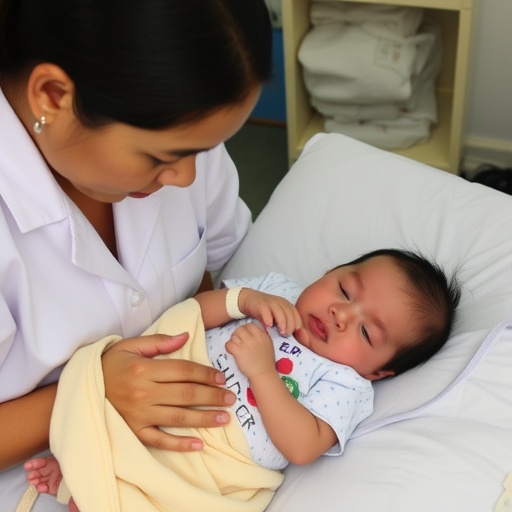
Vietnam is witnessing an evolution in neonatal respiratory care, particularly within its intensive care units, where surfactant therapy is becoming an integral part of treatment protocols for newborns facing respiratory distress. A recent study published in BMC Pediatrics examines the utilization of surfactant therapy in one of Vietnam’s largest neonatal intensive care units (NICUs). This groundbreaking research provides valuable insights into current clinical practices, aligning with global standards and highlighting the increasing sophistication of neonatal care in Vietnam.
Surfactant is a substance that reduces surface tension in the lungs, aiding in the proper expansion of alveoli and ultimately facilitating more efficient gas exchange. The introduction of surfactant therapy has drastically changed the outcomes for infants with neonatal respiratory distress syndrome (NRDS), significantly lowering the morbidity and mortality rates that have historically plagued preterm babies. As such, the study conducted by Vu et al. sheds light on how Vietnamese NICUs are adopting this vital treatment to improve the health of vulnerable infants.
In Vietnam, the rates of preterm births have been rising, mirroring global trends. Consequently, the demand for effective respiratory care has surged. The study assesses both the practical application of surfactants and the overall clinical environment in which these treatments are administered. This involves analyzing the types of surfactants used, administration methods, and the training of healthcare professionals in implementing these therapies effectively. Such an in-depth examination is critical to enhance the quality of neonatal healthcare in the region.
The researchers undertook a comprehensive cross-sectional study, involving a significant sample size from the NICU setting. By documenting and analyzing the neonatal respiratory care practices, their findings reveal not only the prevalence of surfactant use but also variations in protocols and types among different healthcare facilities. This aspect of the study emphasizes the need for standardized practice guidelines to ensure that all infants receive the best possible care, regardless of their location within the country.
While the positive impact of surfactant therapy is well-established in medical literature, the integration of this treatment in various healthcare settings differs widely. This research highlights the role of healthcare accessibility, resource allocation, and training in determining how effectively surfactants are utilized in practice. Furthermore, the cultural factors influencing treatment decisions and healthcare delivery in Vietnam are underscored, showing how local practices and beliefs can either enhance or hinder the adoption of evidence-based medical interventions.
The study’s authors also delve into the training and resources available to practitioners within the NICU. Identifying gaps in knowledge and expertise is essential for developing targeted educational programs aimed at healthcare professionals. Continuous professional development ensures that practitioners are not only informed about the latest research but are also equipped with practical skills to implement new treatment protocols.
Another critical element addressed in the study is the follow-up care and outcomes for infants who receive surfactant therapy. The researchers tracked the short- and long-term health of these newborns, providing data on survival rates, developmental milestones, and any complications that arose. This information is invaluable for understanding the full impact of surfactant therapy on infant health, allowing healthcare providers to develop comprehensive care plans that extend beyond the NICU.
The significance of family engagement and support during the neonatal care process is elaborated upon in this research. Recognizing that the NICU experience can be overwhelming for families, the study advocates for integrating family-centered care practices. This approach not only address the immediate health needs of the infant but also provides crucial emotional support for parents, ultimately enhancing the overall care experience.
As global healthcare continues to evolve, shared knowledge and resources can help bridge gaps in care. By participating in international networks and collaborations, Vietnamese healthcare facilities can exchange best practices and learn from the experiences of other countries. This collective knowledge-sharing fosters an environment where innovative solutions can be adapted to fit the unique cultural and systemic contexts of Vietnam.
Finally, this study underscores the essential role of research in driving improvements in neonatal care. By documenting clinical practices and outcomes, the authors provide a roadmap for future studies and initiatives aimed at enhancing neonatal healthcare in Vietnam. Their findings motivate healthcare stakeholders to prioritize research funding and infrastructure development, fortifying the healthcare system’s capability to meet the growing demands of neonatal care.
In summary, the examination of surfactant use and clinical practices in Vietnamese NICUs reveals significant advancements and challenges within the field of neonatal respiratory care. As the country continues to confront rising rates of preterm births and associated respiratory complications, ongoing research, training, and international collaboration will be critical in ensuring that every newborn receives the best care possible during those crucial early days of life. The growth of neonatal intensive care in Vietnam stands as a testament to the strides made in medical technology and compassion for the youngest members of society.
Subject of Research: Neonatal respiratory care and surfactant use in Vietnam.
Article Title: Neonatal respiratory care in Vietnam: surfactant use and clinical practices in a large neonatal intensive care unit.
Article References: Vu, H., Larsson, M., Nguyen, L.T. et al. Neonatal respiratory care in Vietnam: surfactant use and clinical practices in a large neonatal intensive care unit. BMC Pediatr (2025). https://doi.org/10.1186/s12887-025-06409-7
Image Credits: AI Generated
DOI: 10.1186/s12887-025-06409-7
Keywords: Neonatal care, respiratory distress syndrome, surfactant therapy, Vietnam, neonatal intensive care unit, healthcare practices.


