


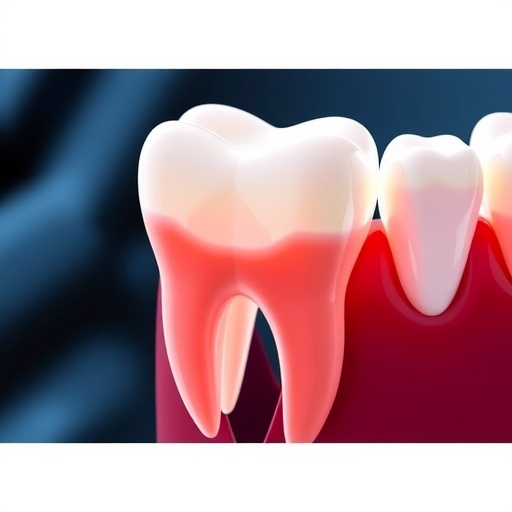
In a groundbreaking study, C. Ruan delves into the intricate world of bioengineered tooth regeneration, addressing its potential and the challenges that lie ahead for clinical implementation. This pioneering research, set to be published in the prestigious journal Annals of Biomedical Engineering, represents a significant leap in the field of regenerative dentistry, where the ambition to replace lost dental structures with bioengineered solutions is not just a dream but an impending reality. The implications of this research could revolutionize the way we think about dental health and tooth loss management, opening doors to innovative treatment options.
As our understanding of regenerative medicine expands, the focus on tooth regeneration highlights the convergence of multiple disciplines including biology, materials science, and clinical dentistry. Tooth loss has long been a challenge, often leading to significant functional and aesthetic issues for patients. Traditional dental solutions such as implants have their limitations, including the necessity of surgical procedures and the potential for complications. Ruan’s work proposes an advanced alternative, leveraging the body’s own biological processes through bioengineering to restore natural tooth structures.
The key to successful tooth regeneration lies in understanding the biological environment in which teeth develop. The article emphasizes the importance of stem cells and their ability to differentiate into various cell types necessary for tooth formation. It discusses state-of-the-art techniques used to harvest and manipulate these stem cells, along with the materials that can support their growth and integration into existing biological systems. This interplay between biology and technology creates a potent synergy that could lead to the successful regeneration of teeth.
In the realm of material science, the advancements made in scaffold development are crucial. Scaffolds serve as a framework for cells to grow and organize into functional tooth structures. Ruan’s study goes into detail about the various biocompatible materials currently under investigation, such as hydrogels and decellularized matrices. These materials not only provide a support structure but also play an essential role in signaling to stem cells, encouraging them to proliferate and differentiate into the required tooth-forming cells.
One salient point raised is the challenge of ensuring that the bioengineered teeth not only resemble natural ones in shape but also replicate their functionality. The complex anatomy of teeth, including the enamel, dentin, and pulp, must be reconstructed meticulously to restore proper bite force and sensory feedback. Ruan outlines the iterative processes involved in designing these structures to mimic the physical and mechanical properties of natural teeth, ensuring that the regenerated teeth perform as intended.
However, the journey from laboratory research to clinical practice is fraught with hurdles. Ruan emphasizes several translational considerations that need to be addressed before bioengineered tooth regeneration can be widely adopted in healthcare settings. This includes regulatory approvals, ethical considerations, and the need for extensive clinical trials to assess the safety and efficacy of these innovative treatments. The transition from bench to bedside is often lengthy and complex, but the potential benefits are too significant to ignore.
Another important aspect of Ruan’s research is the emphasis on patient-centered approaches in developing bioengineered tooth regeneration solutions. As with any medical advancement, understanding patient needs and expectations is crucial for successful implementation. The article explores the psychological and social impacts of tooth loss and restoration, suggesting that bioengineered solutions could not only restore physical health but also enhance overall well-being by improving patients’ self-esteem and quality of life.
Moreover, interdisciplinary collaboration emerges as a cornerstone of progress in this field. Ruan’s report calls for partnerships among clinicians, researchers, and industry stakeholders to foster a robust ecosystem that supports innovation and accelerates the path to practical applications. These synergies could facilitate knowledge transfer, resource sharing, and the alignment of research efforts with actual clinical needs, ultimately leading to more effective and accepted therapies.
Ruan also discusses the future landscape of dental practices with the incorporation of bioengineering technologies. The shift toward regenerative dentistry could lead to more personalized treatment plans, tailored to the unique biological profiles of individual patients. Such an approach would not only improve treatment outcomes but could also make dental care more consistent and less invasive.
As the field continues to evolve, the implications of Ruan’s work extend beyond just tooth regeneration. The methodologies and insights gleaned from this research could inform other areas of regenerative medicine, suggesting pathways for reconstructing a variety of tissues and organs. The principles of bioengineering that are being examined can serve as a blueprint for tackling broader challenges in the medical field, ultimately leading to more comprehensive restoration techniques across specialties.
This study on bioengineered tooth regeneration presents an exciting frontier in dental science and regenerative medicine. As Ruan advocates for a collaborative and innovative approach, the scientific community is urged to focus on the translational challenges that must be navigated before these concepts can be realized in everyday dental practice. The potential for improved dental health solutions is staggering, and as this field continues to advance, we may soon witness the resurrection of natural functionality that was once thought impossible.
In conclusion, C. Ruan’s exploration into bioengineered tooth regeneration not only sheds light on the complexities involved in growing new teeth but also revitalizes hope for those suffering from tooth loss. The intricate balance of biology and technology encapsulated in this research opens the door to a future where regenerative dentistry effectively restores lost functions, bridging the gap between traditional practices and futuristic solutions. As clinical trials and interdisciplinary collaborations pave the way, the dream of regenerating functional teeth may soon transition from research laboratories to dental offices, heralding a new era in oral healthcare and patient satisfaction.
Ruan, C. Extending the Discussion on Bioengineered Tooth Regeneration: Translational Considerations for Clinical Implementation.
Ann Biomed Eng (2026). https://doi.org/10.1007/s10439-026-04004-0
Cite Scienmag News
Ophelia Keating. (January 29, 2026). Advancing Bioengineered Tooth Regeneration: Clinical Insights. Scienmag. https://scienmag.com/advancing-bioengineered-tooth-regeneration-clinical-insights/
Ophelia Keating. "Advancing Bioengineered Tooth Regeneration: Clinical Insights." Scienmag, 29 January 2026, https://scienmag.com/advancing-bioengineered-tooth-regeneration-clinical-insights/. Accessed 4 September 2026.
Ophelia Keating. "Advancing Bioengineered Tooth Regeneration: Clinical Insights." Scienmag. January 29, 2026. https://scienmag.com/advancing-bioengineered-tooth-regeneration-clinical-insights/


