


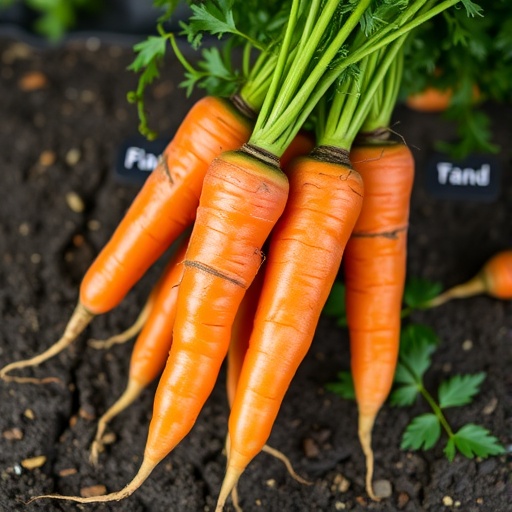
In an innovative stride towards agriculture’s future, a recent study sheds light on the pivotal role of omics and gene editing tools in fostering abiotic stress tolerance among carrots, scientifically known as Daucus carota L. As climate change escalates, resulting in unpredictable weather patterns, drought, salinity, and extreme temperatures, ensuring crop resilience has never been more essential. The researchers, M.D. Junaid, A.U.R. Aziz, and M.W. Meeran, have meticulously investigated the intersection of advanced biotechnological approaches and traditional agricultural practices, paving the way for a new era in crop improvement.
The increasing prevalence of abiotic stressors presents significant challenges for the cultivation of numerous crops, including carrots. These stresses not only diminish crop yield but also adversely affect nutritional quality. The team embarked on this research to develop carrots that thrive even under challenging conditions. Their findings underscore the potential of utilizing omics technologies—genomics, transcriptomics, proteomics, and metabolomics—together with cutting-edge gene editing techniques like CRISPR/Cas9. This combination may hold the key to enhancing vital traits in carrots, enabling them to withstand environmental stressors effectively.
At the heart of the research is the comprehensive understanding of the carrot genome, which has witnessed significant advancements with the advent of genomics. With the complete sequencing of the Daucus carota genome, researchers can identify and characterize genes linked to abiotic stress resistance. Such genomic insights fuel ongoing research aimed at isolating specific genetic markers that can be targeted for improvement, thus accelerating the breeding process. This genomic foundation supports other omics disciplines, integrating a holistic approach to breeding for resilience.
Transcriptomics delves deeper into the dynamic expression of genes under various stress conditions. By analyzing how stress influences gene expression patterns, researchers can uncover vital pathways and regulatory mechanisms that govern stress responses. The findings suggest that certain gene clusters are upregulated in response to drought or salinity, revealing critical targets for intervention. Utilizing transcriptomic data, the authors propose strategies to enhance the expression of these genes through selective breeding or gene editing, thereby developing carrots that can better endure environmental challenges.
Proteomics—the study of the entire set of proteins expressed—provides further invaluable insights. By mapping how proteins interact under stress conditions, researchers can determine which proteins confer resilience to abiotic factors. The integration of proteomic data with genomic and transcriptomic information forms a comprehensive framework for understanding stress responses in carrots. This multi-layered approach allows for a detailed analysis that will be essential for developing robust cultivation practices suited to a changing climate.
Metabolomics, the study of small molecules and metabolites in organisms, introduces another dimension to understanding carrot biology. By evaluating how metabolite profiles shift in response to environmental stresses, researchers can identify potential biomarkers for stress tolerance. Metabolomic profiling reveals how carrots accumulate specific compounds that may confer protective effects against stress. Such knowledge empowers breeders to select for these traits, enhancing the overall resilience and nutritional content of the carrot.
The integration of these four omics disciplines, termed ‘multi-omics’, represents a powerful analytical approach that enhances prediction accuracy for stress tolerance. By leveraging this strategy, the research elucidates the interconnected biological pathways that govern abiotic stress responses. The multi-omics analytical framework allows for the identification of key genetic and metabolic networks that could otherwise be overlooked when applying a single-omics approach.
Gene editing, particularly the CRISPR/Cas9 system, further revolutionizes the landscape of agricultural biotechnology. CRISPR technology enables precise modifications of the carrot genome, allowing researchers to knock out undesired traits or enhance beneficial ones. The potential to accelerate the development of high-yield, stress-tolerant carrot varieties is enormous. By targeting specific genes implicated in stress responses, researchers can create variants that not only survive but thrive in adverse conditions.
However, the practical application of these biotechnological advancements necessitates addressing regulatory and public concerns surrounding genetically modified organisms (GMOs). Transparency, safety assessments, and consumer education are critical components that can facilitate acceptance. This study underscores the importance of engaging with stakeholders, including farmers, consumers, and policymakers, to discuss the benefits and challenges associated with adopting gene editing in crop development.
The potential economic benefits of developing stress-tolerant carrot varieties are significant. Increased resilience translates into improved yields, reduced losses, and enhanced food security for farmers and consumers alike. Furthermore, these advancements can potentially result in reducing the reliance on chemical fertilizers and pesticides, leading to more sustainable agricultural practices. They align with global agricultural goals aimed at achieving food security while ensuring environmental sustainability.
As researchers continue to unravel the complexities of abiotic stress tolerance through advanced biotechnological methods, the future looks promising. The synergy of omics technologies with gene editing could revolutionize not only carrot cultivation but also broader agricultural practices. As the findings from this research disseminate throughout the agricultural community, the push for more resilient crops will gain momentum, ultimately leading to a more sustainable and food-secure future.
In conclusion, the research led by Junaid, Aziz, and Meeran serves as a clarion call to embrace the full potential of biotechnological innovations in agriculture. The interplay of omics and gene editing tools offers a beacon of hope in the quest for resilient crops. As the global community grapples with the pressing challenges posed by climate change, this work represents a critical step forwards in the fight for food security, environmental sustainability, and the future of agriculture itself.
Junaid, M.D., Aziz, A.U.R. & Meeran, M.W. Role of omics and gene editing tools in development of abiotic stress tolerant carrots (Daucus carota L.).
Discov Agric 3, 216 (2025). https://doi.org/10.1007/s44279-025-00361-x
Cite Scienmag News
Juliet Wilcox. (October 20, 2025). Advancing Abiotic Stress-Tolerant Carrots via Omics and Gene Editing. Scienmag. https://scienmag.com/advancing-abiotic-stress-tolerant-carrots-via-omics-and-gene-editing/
Juliet Wilcox. "Advancing Abiotic Stress-Tolerant Carrots via Omics and Gene Editing." Scienmag, 20 October 2025, https://scienmag.com/advancing-abiotic-stress-tolerant-carrots-via-omics-and-gene-editing/. Accessed 3 September 2026.
Juliet Wilcox. "Advancing Abiotic Stress-Tolerant Carrots via Omics and Gene Editing." Scienmag. October 20, 2025. https://scienmag.com/advancing-abiotic-stress-tolerant-carrots-via-omics-and-gene-editing/


