


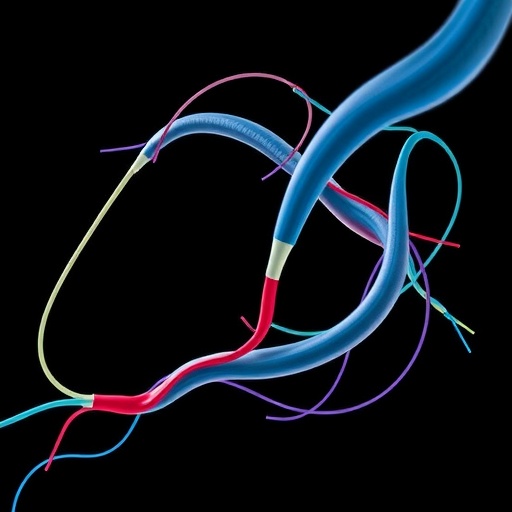
In a groundbreaking advancement within the sphere of medical imaging, researchers have made significant progress in the application of ultrasound technologies, specifically in enhancing lymphaticovenous anastomosis procedures. This innovative approach, integrating contrast-enhanced ultrasound with ultra-high-frequency ultrasound, presents a potential paradigm shift in how clinicians visualize and assess lymphatic systems and their connection to venous structures. This study, conducted by a team of experts under the guidance of lead researchers Huang, X., Tang, Y., and Liang, Z., represents a pivotal step forward in the realm of surgical and diagnostic techniques within clinical settings, showcasing the synergy of these ultrasound modalities.
The integration of contrast-enhanced ultrasound offers profound enhancements in imaging, enabling real-time visualization of lymphatic vessels and ensuring that anastomosis procedures can be conducted with unprecedented accuracy. Traditional imaging methods, while effective, often fall short in providing the necessary detail that modern surgical techniques demand. Contrastingly, the use of contrast agents in ultrasound can enhance the visualization of the lymphatic system, allowing clinicians to distinguish between different tissue types and vascular structures more effectively.
Ultra-high-frequency ultrasound, on the other hand, employs frequencies that surpass the limits of conventional ultrasound, providing a resolution that is markedly superior. This technology allows clinicians to visualize minute structures and subtle anatomical features within the lymphatic system that would typically remain undetected at lower frequencies. This heightened resolution dramatically enhances the precision of lymphaticovenous anastomosis, potentially reducing the likelihood of complications while improving patient outcomes. This research underscores the benefit of harnessing these two advanced ultrasound methodologies in tandem, providing a comprehensive backdrop for performing intricate surgical procedures.
As lymphaticovenous anastomosis becomes increasingly vital in treating lymphedema and similar conditions, the availability of enhanced imaging techniques becomes imperative. The study offers compelling insights into the nuances of lymphatic anatomy, significantly aiding surgeons during intervention phases. Prior to this study, challenges associated with visualization during surgery frequently hindered the success rates of lymphaticovenous connections, often leading to a reliance on invasive exploratory techniques that could compromise patient safety and recovery.
Central to this research is the concept of improving surgical precision. The results from the integration of contrast agents and ultra-high-frequency technology showcase a significant leap towards achieving optimal surgical outcomes. With enhanced imaging, surgeons can tailor their approaches more accurately, confidently navigating the complex networks of lymphatic vessels while preserving vital surrounding structures. This meticulous approach minimizes tissue trauma and promotes swifter postoperative recovery, illustrating the transformative potential of these advanced imaging technologies.
One of the standout features of this study is its emphasis on the real-time aspect of surgical imaging. The ability to obtain immediate feedback during procedures enables physicians to make decisions on-the-fly, which is a substantial advancement from previous methods that often required waiting for post-operative imaging for clarity on lymphatic configurations. This immediacy not only improves overall surgical efficiency but also instills increased confidence in surgical teams as they navigate these delicate procedures.
Moreover, the incorporation of contrast-enhanced techniques into ultrasound imaging holds the promise of better delineating pathological changes within the lymphatic system. This not only serves surgical purposes but also aligns with diagnostic capabilities in congestive conditions affecting lymphatic flow. The adoption of these technological evolutions forms a dual purpose—enhancing surgical precision while simultaneously providing diagnostic clarity that could lead to early and more effective interventions.
The collaborative efforts of researchers represented in this study indicate a broader trend towards interdisciplinary approaches in medicine. By merging concepts from radiology, surgery, and biomedical engineering, this research exemplifies how collaborative innovation can lead to revolutionary changes in patient care. Such interdisciplinary efforts are critical as they harness the strengths of various medical and technological fields, leading to holistic solutions to age-old challenges in surgical practice.
The implications of this research extend beyond immediate surgical applications. As the medical community looks toward the future, the advancements in imaging modalities could pave the way for novel therapeutic strategies across various disciplines. For instance, the potential applications of high-resolution imaging could significantly affect cancer surgeries, transplant surgeries, and procedures for vascular diseases, where precision is paramount. This study could very well catalyze further research that explores the broader applicability of enhanced imaging in other surgical domains.
In summary, this groundbreaking study on the application of contrast-enhanced and ultra-high-frequency ultrasound techniques heralds a revolution in the approach to lymphaticovenous anastomosis. While challenges in surgical imaging persist, the findings from Huang et al. promise to equip surgeons with the necessary tools for improved visibility and surgical excellence. It is an exciting time for ultrasound technology, as it evolves to meet the complexities of modern surgical needs. As we look ahead, the unification of these advanced methodologies stands as a beacon of hope for enhanced surgical outcomes and more effective patient care.
In conclusion, the application of these advanced imaging techniques in lymphaticovenous anastomosis illustrates the potential betterment of patient outcomes through technological advancements in medical science. As further research and clinical trials continue to unfold, the healthcare industry awaits with eagerness the next steps in this incredibly promising journey towards enhanced operational success and patient recovery through more precise surgical techniques.
Cite Scienmag News
Denise Maddox. (December 1, 2025). Advancements in Lymphaticovenous Anastomosis Using Ultrasound Techniques. Scienmag. https://scienmag.com/advancements-in-lymphaticovenous-anastomosis-using-ultrasound-techniques/
Denise Maddox. "Advancements in Lymphaticovenous Anastomosis Using Ultrasound Techniques." Scienmag, 1 December 2025, https://scienmag.com/advancements-in-lymphaticovenous-anastomosis-using-ultrasound-techniques/. Accessed 4 September 2026.
Denise Maddox. "Advancements in Lymphaticovenous Anastomosis Using Ultrasound Techniques." Scienmag. December 1, 2025. https://scienmag.com/advancements-in-lymphaticovenous-anastomosis-using-ultrasound-techniques/


