


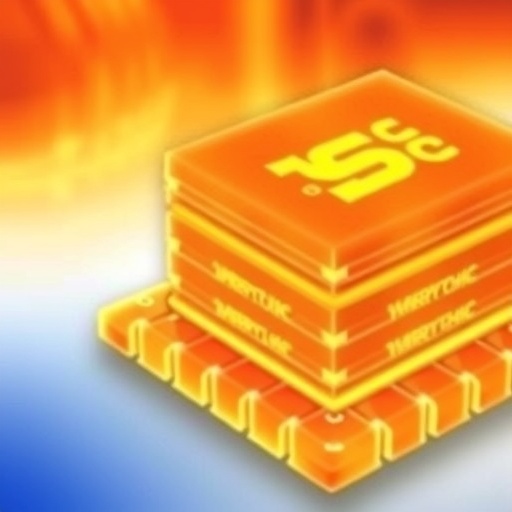
As the semiconductor industry pushes the boundaries of technology with the progression of transistor scaling to nanometric and even atomic dimensions, the advantages of 3D stacking techniques have gained significant attention. This method serves as a crucial enabler, particularly for applications demanding high performance, such as high-performance computing and artificial intelligence. However, while these advanced integration strategies promise remarkable improvements in performance and functionality, they also introduce formidable thermal management challenges that cannot be overlooked. The transition from two-dimensional to three-dimensional architectures inherently leads to an increase in power density, which poses severe constraints on heat dissipation pathways.
The crux of the thermal management issue lies in the low thermal conductivity of interlayer dielectrics and the intricate interfaces formed during the 3D integration process. As heat builds up in densely packed components, efficient heat dissipation becomes essential to prevent overheating, which can compromise performance and reduce the lifespan of integrated circuits. Therefore, addressing these thermal challenges is vital for the continued advancement and reliability of 3D-stacked integrated circuits. As researchers delve deeper into this subject, state-of-the-art thermal management materials emerge as a beacon of hope—a pathway to not only mitigate heat buildup but also optimize the performance of these next-generation technologies.
In recent years, researchers have been working diligently to develop novel thermal management materials that address the unique challenges posed by 3D stacking. These materials must exhibit high thermal conductivity and robust performance characteristics while maintaining process compatibility with existing fabrication technologies. The integration of such materials into manufacturing pipelines is of utmost importance. As the semiconductor landscape continually evolves, materials must not only meet stringent performance requirements but also seamlessly assimilate into established processes to ensure scalability and economic feasibility.
Complex interfaces can often hinder effective heat transfer, making it imperative to explore methods to improve heat transport across these junctions. The effectiveness of thermal management materials is contingent not just on their inherent properties but also on their interaction with adjacent materials and layers. Innovative approaches that enhance the thermal interaction at interfaces could lead to significant advancements in thermal performance, perhaps presenting a solution to the ongoing challenges faced in 3D integrated circuit design.
Advanced thermal characterization techniques have emerged as indispensable tools for evaluating the efficacy of thermal management strategies. These methodologies enable the assessment of thermal conductivity, interface quality, and overall system performance in real-time. However, the demand for non-destructive in-line metrology has never been more urgent. As the industry strives for greater efficiency and reliability, it becomes paramount to introduce techniques that allow for continuous monitoring and assessment of thermal properties during the manufacturing process, thus facilitating timely intervention when performance issues arise.
As we push toward a future where 3D integration becomes the standard, a cohesive roadmap for research and development is essential. This roadmap should incorporate innovative material growth strategies, novel integration techniques, and sophisticated characterization methods to create a holistic understanding of thermal dynamics in stacked architectures. Establishing clear directions for future research can expedite progress in developing practical thermal solutions that comply with the rigors of next-generation semiconductor applications.
Collaboration between academia, industry, and research institutions is crucial in this endeavor. By pooling expertise and resources, stakeholders can address the multifaceted challenges of thermal management collectively. This collaboration can lead to breakthroughs in not only material science but also in the design of systems that optimize thermal performance, ensuring the longevity and efficiency of advanced 3D integrated circuits.
Moreover, as the exploration of thermal management materials progresses, lessons learned from earlier generations of semiconductor technologies provide invaluable insights. Historical perspectives on thermal management issues reveal patterns that can help shape current research efforts. By understanding previous challenges and solutions, researchers can avoid repeating past mistakes and instead innovate more effectively.
The role of nanotechnology cannot be understated in this conversation about thermal management. Nanoscale materials and structures offer unique physical properties that can dramatically enhance thermal conductivity and efficiency. As researchers develop new nanomaterials optimized for thermal transport, the potential to revolutionize heat management in 3D-stacked circuits becomes palpable.
In summary, the challenges posed by 3D integration in semiconductor technology are significant but not insurmountable. The journey toward achieving optimal thermal management involves not only the identification and development of superior materials but also the formulation of effective strategies for their integration and characterization. By focusing on the intricate relationship between materials, interfaces, and emerging technologies, the semiconductor industry can cultivate the necessary innovations required for a new era of high-performance computing and artificial intelligence.
As we move forward, the need for continuous evaluation and adaptation of thermal solutions in 3D integration will only grow. The exploration of advanced materials, in conjunction with innovative manufacturing processes and characterization techniques, promises a robust framework for enhancing thermal management efficiency. Stakeholders across various sectors will need to keep a close watch on emerging trends and research findings that could redefine the landscape of 3D-integrated circuit technology for years to come.
Recent developments suggest that the pursuit of groundbreaking thermal materials will be a linchpin in the evolution of semiconductor technology. With the right combination of research, collaboration, and innovation, we stand on the cusp of unlocking unprecedented capabilities in processing power, efficiency, and overall performance. This collective commitment to advancing thermal management solutions represents a pivotal moment for the semiconductor industry as it adeptly adapts to the increasing demands of modern high-performance applications.
Through a unified effort, the transformation of thermal management in 3D-stacked integrated circuits will pave the way for novel applications in artificial intelligence and beyond. The future of semiconductor technology hinges on merging science, engineering, and vision, ensuring that the iconic 3D architectures become the foundational bedrock for the next generation of intelligent systems.
Woon, WY., Kasperovich, A., Wen, JR. et al. Thermal management materials for 3D-stacked integrated circuits.
Nat Rev Electr Eng 2, 598–613 (2025). https://doi.org/10.1038/s44287-025-00196-0
Cite Scienmag News
Denise Maddox. (November 16, 2025). Advanced Thermal Solutions for 3D Stacked ICs. Scienmag. https://scienmag.com/advanced-thermal-solutions-for-3d-stacked-ics/
Denise Maddox. "Advanced Thermal Solutions for 3D Stacked ICs." Scienmag, 16 November 2025, https://scienmag.com/advanced-thermal-solutions-for-3d-stacked-ics/. Accessed 3 September 2026.
Denise Maddox. "Advanced Thermal Solutions for 3D Stacked ICs." Scienmag. November 16, 2025. https://scienmag.com/advanced-thermal-solutions-for-3d-stacked-ics/


