


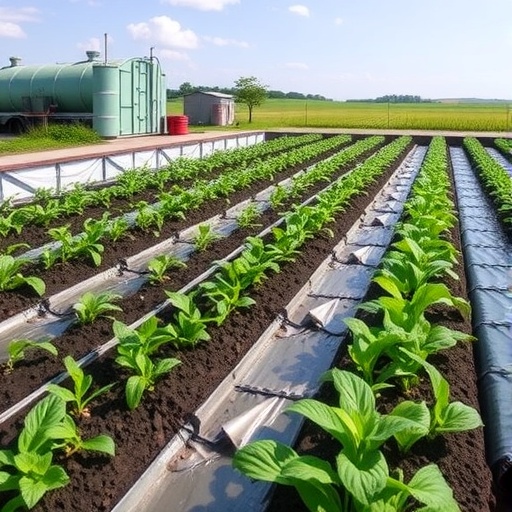
Researchers in Brazil have demonstrated that a hybrid advanced oxidation process can transform pharmaceutical-laden wastewater into an effluent that is dramatically safer for plants, earthworms, onion root cells, and beneficial microorganisms, offering a rigorous ecotoxicological case for reusing treated sewage in agriculture. The study, published in Environmental Science and Pollution Research, addresses a long-standing blind spot in water treatment: proving that a chemically “clean” effluent is also biologically compatible.
Conventional wastewater treatment plants were never designed to strip out recalcitrant organic micropollutants such as pharmaceuticals, and trace amounts routinely slip through into receiving waters. Advanced oxidation processes (AOPs) attack these stubborn compounds by generating highly reactive free radicals that fragment contaminant molecules. But chemical degradation alone does not guarantee safety. As contaminants break down, they spawn transformation products (TPs) that can, in some cases, be as toxic as—or more toxic than—the parent compounds. The research team, led by Lucas Gustavo da Costa and Alam Gustavo Trovó of the Federal University of Uberlândia, together with collaborators at the Oswaldo Cruz Institute, set out to answer a deceptively simple question: does measurable chemical removal of micropollutants actually translate into reduced biological harm?
The centerpiece of their work is the H₂O₂/S₂O₈²⁻/UVC process, a hybrid system that combines hydrogen peroxide and persulfate with short-wave ultraviolet C radiation. UVC photons cleave both oxidants simultaneously, generating hydroxyl radicals (HO•) and sulfate radicals (SO₄•⁻) in the same reaction volume. This dual-radical strategy outperforms systems relying on either oxidant alone, or on peroxymonosulfate (HSO₅⁻), which is costlier and demands more energy for activation. The hybrid route also resists interference from inorganic species commonly found in real effluents, making it an economically attractive candidate for deployment at full-scale treatment plants. The process had already been chemically optimized in the team’s earlier work using multivariate mixture design and rotatable central composite design experiments; the new study is its first integrated biological stress test.
The experiments used real municipal effluent from a wastewater treatment plant in Uberlândia, Minas Gerais, sampled after the plant’s final tertiary treatment stage of coagulation-flocculation with ferric chloride and flotation. The effluent was enriched with three pharmaceuticals representing different therapeutic classes: colchicine (COL, an antimitotic agent), nitazoxanide (NTZ, an antiparasitic), and sulfamethoxazole (SMX, a widely detected antibiotic), each at 325 nmol L⁻¹—equivalent to 130, 100, and 82 micrograms per liter, respectively. That concentration was deliberately chosen as high enough for direct HPLC–DAD analysis without preconcentration, yet low enough to be environmentally representative. Treatment was carried out in an amber glass reactor irradiated by two 8-watt UVC mercury lamps emitting at 254 nm, with a measured irradiance of 4.9 W m⁻². Residual oxidants were neutralized with sodium thiosulfate before any biological testing, ensuring that observed effects could not be attributed to leftover peroxide chemistry.
The ecotoxicological battery spanned multiple trophic levels and levels of biological organization. Oxidative stress was assessed in the earthworm Eisenia andrei by measuring malondialdehyde (MDA), a marker of lipid peroxidation, and protein carbonylation, an irreversible oxidative modification of proteins. Phytotoxicity was evaluated using lettuce (Lactuca sativa) seeds and a growth index combining germination rate and root elongation. Cytotoxicity and genotoxicity were quantified in onion (Allium cepa) root meristems through the mitotic index and the frequency of chromosomal and nuclear aberrations—micronuclei, chromosome breaks, stickiness, bridges, and nuclear buds—across 5,000 cells per sample. Finally, growth inhibition was tested in two environmentally relevant microbes: Azospirillum brasilense, a plant growth-promoting bacterium used in soybean cultivation, and Saccharomyces cerevisiae, a yeast that persists in soils and fermentative niches.
The untreated enriched effluent told a worrying story. It exhibited substantial genotoxicity in onion cells—21%, approaching the 24% seen with the positive control, methyl methanesulfonate—and severe phytotoxicity, with lettuce growth indices far below the 80% threshold that signals absence of toxicity. Even the unspiked effluent itself suppressed lettuce growth, achieving a growth index of only 47%, evidence that bioactive compounds survive conventional treatment. In earthworms, individual aqueous solutions of NTZ and SMX raised MDA levels by 37.2% and 23.5% respectively, while the three-compound mixture increased lipid peroxidation by 38.0%, pointing to additive or synergistic oxidative stress mechanisms involving reactive oxygen species and Fenton-type chemistry within cells.
The picture changed decisively after oxidation. Following 10 minutes of UVC-driven treatment—the point at which 80% chemical degradation had been achieved, matching the minimum removal target proposed in the European Union’s COM(2022)541 directive—genotoxicity fell to 10%, and after 20 minutes, corresponding to the limit of quantification for the parent compounds, it dropped further to 6%, a statistically significant reduction. The plant growth index climbed above 80%, crossing from toxic territory into biocompatibility. The mitotic index in onion cells remained statistically indistinguishable from the deionized-water control (around 39–40% versus 40%), demonstrating that the process generated no cytotoxic byproducts capable of arresting cell division. And crucially for agricultural applications, neither the treated effluent nor its transformation products inhibited growth of A. brasilense or S. cerevisiae.
The mechanistic details are instructive. In the untreated enriched effluent, micronuclei—membrane-bound DNA fragments expelled from the nucleus during flawed cell division—were among the most frequent aberrations, indicating clastogenic and aneugenic damage. Colchicine exposure predictably produced C-metaphase accumulation, a signature of its tubulin-binding, spindle-disrupting mechanism first described in Allium nearly a century ago. SMX depressed the mitotic index and induced chromosomal damage, consistent with prior findings in Vicia faba. NTZ, whose genotoxicity had never before been reported, produced chromosome breaks, stickiness, and nuclear buds. After oxidation, the overall aberration burden fell sharply, particularly micronuclei and stickiness, although a few bridges and polyploid cells persisted even at 20 minutes—a reminder that some transformation products or resistant residuals may linger.
The microbial results came with a subtlety. Reduced A. brasilense growth after treatment initially looked like a red flag, but the team attributes it to depletion of assimilable organic matter, which serves as radical scavenger during oxidation and as a nutrient source afterward—not to toxicity. The negative control likewise grew slowly. This distinction matters because AOPs are designed to mineralize organic carbon, and a nutrient-poorer medium should not be misread as a more toxic one. For S. cerevisiae, no inhibition occurred at any stage of treatment, although NTZ alone significantly depressed yeast optical density, reinforcing the compound’s cell-cycle interference potential even at nanomolar-scale exposures.
The study’s broader significance lies in its methodological stance. By adopting an “effect-driven approach,” the team evaluated the toxicity of whole reaction mixtures without needing to isolate and identify individual transformation products—an impractical task given that many degradation byproducts are not commercially available. Their findings align with a growing consensus that treatment efficacy must be judged not merely by parent-compound removal but by the nature and reactivity of the resulting transformation products. Biochemical biomarkers such as MDA and protein carbonylation detected sublethal disturbances that mortality-based endpoints would have missed entirely, providing early warnings of cellular distress at environmentally relevant concentrations.
One caveat deserves attention: while lipid peroxidation declined after treatment, protein carbonylation rose slightly—1.05-fold above control—suggesting some transformation products may still provoke protein oxidation even as lipid damage subsides. The authors flag this discrepancy and call for future identification of the specific TPs responsible, alongside expanded organism panels, longer-term exposure studies, and pilot-scale validation across different environmental matrices.
The regulatory context sharpens the urgency. The EU’s proposed urban wastewater treatment directive mandates at least 80% removal of specified organic micropollutants and microbiological control for agricultural reuse, yet it conspicuously omits eco-compatibility assessment of the treated water itself. This study supplies exactly that missing dimension, showing that a process satisfying the chemical benchmark also delivers measurable biological benefit—lower genotoxicity, restored plant growth, intact cell division, and unharmed beneficial microbes. As water scarcity intensifies globally and reuse becomes less optional, the Brazilian team’s integrated bioassay framework offers a template for ensuring that the water farmers irrigate with is not merely chemically compliant, but genuinely ecologically safe.
Cite Scienmag News
Violet Maxwell. (September 10, 2026). Advanced oxidation process reduces micropollutant toxicity in wastewater for agricultural reuse. Scienmag. https://scienmag.com/advanced-oxidation-process-reduces-micropollutant-toxicity-in-wastewater-for-agricultural-reuse/
Violet Maxwell. "Advanced oxidation process reduces micropollutant toxicity in wastewater for agricultural reuse." Scienmag, 10 September 2026, https://scienmag.com/advanced-oxidation-process-reduces-micropollutant-toxicity-in-wastewater-for-agricultural-reuse/. Accessed 10 September 2026.
Violet Maxwell. "Advanced oxidation process reduces micropollutant toxicity in wastewater for agricultural reuse." Scienmag. September 10, 2026. https://scienmag.com/advanced-oxidation-process-reduces-micropollutant-toxicity-in-wastewater-for-agricultural-reuse/


