

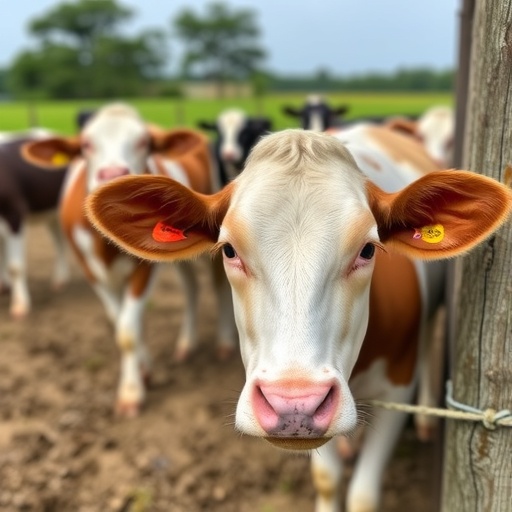
The University of Tennessee Institute of Agriculture has once again solidified its commitment to advancing the dairy industry with a significant infusion of $3.45 million to support the Southeast Dairy Business Innovation Initiative (SDBII). Under the leadership of Associate Professor Elizabeth Eckelkamp from the Department of Animal Science, this initiative is uniquely positioned to enhance regional dairy production, processing, and marketing efforts, driven by comprehensive scientific research and community engagement.
Since its inception in 2019, funded through the Agricultural Marketing Service of the U.S. Department of Agriculture via the 2018 Farm Bill, SDBII has rapidly evolved into a major force for innovation and economic development in southeastern dairy sectors. The new funding marks a continued vote of confidence in the program’s successful multi-institutional approach, which involves collaboration with North Carolina State University, the University of Kentucky, and partner industry organizations such as the Kentucky Dairy Development Council.
SDBII’s strategy is deeply rooted in fostering sustainability and resilience across dairy business models. This approach entails providing targeted educational resources, leadership training, and technical assistance tailored to dairy producers and processors. The program’s landmark achievement to date is the disbursement of more than $21 million in grant funding, supporting over 229 projects dedicated to expanding technological capacity, improving production methods, and upgrading infrastructure throughout the region’s dairy farms.
Associate Professor Eckelkamp points to the initiative’s extensive team of 46 subject matter experts sweeping across disciplines—from animal science and agricultural economics to food science and marketing strategy—as a crucial driver behind the initiative’s success. These specialists continuously evaluate project outcomes with rigorous data analysis and stakeholder feedback to optimize program efficacy and adapt to emerging dairy industry trends.
One of the more groundbreaking extensions of this latest funding cycle is the development and deployment of a dairy-specific Segmentation, Targeting, and Positioning (STP) toolkit. This scientifically designed marketing instrument aims to empower dairy businesses to more effectively identify niche consumer segments and tailor their product branding to meet nuanced regional demands. By integrating behavioral data analytics and market research, this framework aspires to elevate the competitiveness of southeastern dairy products within both local and broader marketplaces.
SDBII’s integrated research-to-practice model also highlights the importance of community engagement and network-building. Collaborative synergies with industry associations and regional agricultural agencies enhance the reach of training programs, which range from innovation incubation workshops to advanced processing technique seminars. This ecosystem approach ensures that industry advancements are not siloed but instead disseminated rapidly, driving collective sector-wide growth.
A noteworthy component of the initiative’s impact is its contribution to workforce development through internships and experiential learning opportunities. These programs are designed to cultivate future dairy industry leaders who possess a deep understanding of both production science and industry economics. By infusing the workforce pipeline with well-trained, innovative talent, SDBII supports the long-term vitality of the dairy sector in the Southeast.
Scientific rigor underpins all facets of SDBII’s activities, with a particular emphasis on integrating cutting-edge dairy science research with applicability on the farm and in processing facilities. Innovative approaches to dairy product quality improvement, through enhanced microbiological control and novel processing technologies, are studied and transferred to business practices within the network. This transdisciplinary knowledge transfer accelerates industry adoption of scientifically validated improvements.
Recognizing the complex challenges posed by climate change and economic volatility, SDBII places high priority on sustainable agriculture principles. Research focal points include optimizing feed efficiency, reducing environmental footprints, and promoting adaptive farm management practices. These efforts align closely with broader agricultural policy goals aimed at ensuring food security while protecting natural resources, thereby reinforcing the sustainability of southeastern dairy communities.
The initiative’s measurable outcomes reflect a significant multiplier effect: initial investments in research and innovation spawn a cascade of entrepreneurial development, technology adoption, and market expansion. The continuous cycle of grant distribution, program evaluation, and strategy refinement ensures adaptability and relevance in a rapidly evolving dairy landscape marked by fluctuating consumer preferences and regulatory dynamics.
At the core of SDBII’s impact story lies an unwavering dedication to regional empowerment. By focusing on place-based strategies that consider specific environmental, cultural, and economic contexts, the initiative transcends generic agricultural programming. This approach yields customized solutions tailored to the unique needs and resources of southeast dairy producers and processors, enhancing both profitability and community well-being.
Looking ahead, the University of Tennessee and its partners envision the continued expansion of SDBII’s influence not only through additional funding but also via strategic partnerships and increased integration of digital technologies. The program’s agile framework is well-positioned to embrace innovations such as precision dairy farming, blockchain for supply chain transparency, and data-driven consumer insights, all promising to elevate the sophistication and sustainability of regional dairy industries.
Through this latest federal investment, the Southeast Dairy Business Innovation Initiative continues to exemplify the power of collaborative, science-driven efforts to stimulate rural economic growth and support agricultural sustainability. As dairy stakeholders across the Southeast harness these resources and insights, the initiative serves as a model for how targeted funding combined with robust research can catalyze transformative change in food systems.
Subject of Research:
Advancement and sustainability of dairy production, processing, and marketing in the southeastern United States.
Article Title:
University of Tennessee’s Southeast Dairy Business Innovation Initiative Secures $3.45 Million to Cultivate Regional Dairy Industry Sustainability and Innovation.
News Publication Date:
Not explicitly provided in the source content.
Web References:
https://sdbii.tennessee.edu/
https://utia.tennessee.edu/
References:
Not explicitly provided in the source content.
Image Credits:
Photo courtesy UTIA.
Keywords:
Farming, Sustainable Agriculture, Agricultural Policy


