

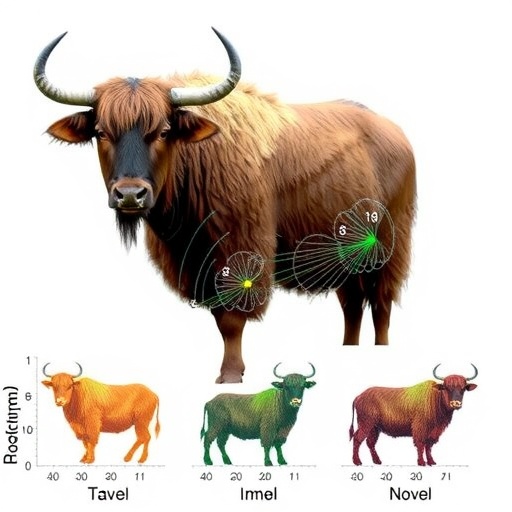
In a groundbreaking study published in BMC Genomics, researchers led by Ahmad et al. delve into the genetic intricacies of the Indian yak populations. Utilizing double digest Restriction site Associated DNA (ddRAD) sequencing, the team successfully identifies and characterizes polymorphic microsatellite loci across diverse yak populations adapted to varying climatic conditions. This research is particularly timely, as it bridges the gap between genetic diversity and environmental adaptability, highlighting the crucial role of genetics in the survival of species within shifting ecosystems.
The Indian yak, scientifically known as Bos grunniens, is a domesticated livestock species primarily found in the mountainous regions of India, Nepal, and Tibet. These animals exhibit unique adaptations to high-altitude environments, where oxygen levels are low and temperatures can plummet dramatically. Understanding the genetic basis of these adaptations not only aids in the conservation of the species but also has broader implications for livestock management and agricultural strategies in similar ecologies worldwide.
Through the ddRAD sequencing approach, the researchers were able to generate a comprehensive genomic library that provided insights into the allelic variations present within and among the populations of Indian yaks. This technique is particularly advantageous due to its high-resolution capabilities, allowing for the discovery of numerous microsatellite markers that are crucial for understanding genetic diversity. The polymorphic nature of these markers is essential for evaluating the evolutionary responses of yaks to their changing habitats.
The research identified significant variations in microsatellite loci, which are short repeated sequences of DNA that can vary in number between individuals. These loci serve as valuable genomic markers for studies involving genetic diversity, population structure, and mating systems. By analyzing these microsatellite loci, the researchers could uncover patterns of genetic diversity that reflect the adaptability of yak populations to their respective climatic conditions.
Moreover, the study emphasizes the importance of maintaining genetic diversity within yak populations to ensure their resilience against climatic fluctuations and environmental stresses. With climate change posing unprecedented challenges, maintaining a robust genetic reservoir is critical for the survival of this iconic species. The findings suggest that yak populations that exhibit higher genetic diversity are more likely to withstand the pressures of changing environmental conditions, thereby contributing to their long-term viability.
The implications of this research extend beyond the confines of yak genetics. By drawing parallels between the genetic adaptations of yaks and other livestock species, such insights could inform breeding strategies aimed at enhancing resilience to climate change. This is particularly relevant in the context of global agricultural policies, which are increasingly prioritizing sustainable and adaptive practices in livestock management.
Additionally, the researchers’ findings may foster a deeper understanding of the evolutionary processes that shape species resilience. The adaptation mechanisms identified in yaks could serve as a framework for studying other species inhabiting similar ecological niches. Such comparative studies may yield significant insights into the genetic factors that enable species to thrive under extreme conditions, potentially guiding conservation efforts for a wide array of fauna facing habitat loss and climatic shifts.
The study also presents a remarkable opportunity for future research in the field of genomics. The comprehensive data set generated through ddRAD sequencing provides a rich resource for exploring additional genomic traits that may be relevant to other functional aspects of yak biology, such as disease resistance and reproductive success. Researchers can leverage this data to investigate the genetic underpinnings of traits that contribute to yak productivity and adaptiveness, further enhancing the understanding of their agricultural importance.
As the scientific community continues to explore the vast genetic landscapes of various species, studies like this one provide crucial tools for addressing global challenges. The ability to map genetic diversity and understand its implications for adaptability will be instrumental in developing targeted conservation strategies. Such approaches are essential for ensuring that genetic variation is preserved, allowing species like the Indian yak not only to survive but thrive in a rapidly changing world.
In conclusion, the work carried out by Ahmad and colleagues represents a significant step forward in the understanding of genetic diversity within Indian yak populations. Their findings not only illuminate the intricate relationship between genetics and environmental adaptability but also underscore the importance of genetic research in addressing the challenges posed by climate change. This work raises awareness of the need for comprehensive strategies to conserve genetic diversity and protect valuable livestock species that have evolved to thrive in extreme environments.
Overall, this research not only contributes to the existing body of knowledge but opens up new avenues for exploring genetic diversity in other species as well. By promoting a greater understanding of these genetic factors, we can support efforts aimed at maintaining biodiversity and ensuring the survival of species essential for both ecological health and human livelihoods.
The publication of this study is anticipated to resonate across the scientific community and beyond, as it emphasizes the pressing need for integrating genetic research into conservation strategies. The bridges built between genetics, environmental science, and agricultural practices may serve to bolster the resilience of not only the Indian yak but also other livestock species critical to the livelihoods of communities that depend on them. This research, with its innovative methodologies and significant findings, sets a precedent for future studies aimed at unraveling the complex relationships between genetics and environmental adaptation in an era marked by rapid climate change.
Subject of Research: Genetic diversity of Indian yak populations adapted to diverse climatic conditions through ddRAD sequencing.
Article Title: Polymorphic microsatellite loci from ddRAD sequencing data in different Indian yak populations adapted to diverse climatic conditions.
Article References: Ahmad, S., Chand, R., Gangwar, M. et al. Polymorphic microsatellite loci from ddRAD sequencing data in different Indian yak populations adapted to diverse climatic conditions. BMC Genomics (2025). https://doi.org/10.1186/s12864-025-12368-1
Image Credits: AI Generated
DOI: 10.1186/s12864-025-12368-1
Keywords: Indian yak, genetic diversity, microsatellite loci, ddRAD sequencing, climate adaptability, livestock management, evolutionary biology, conservation strategies.


