


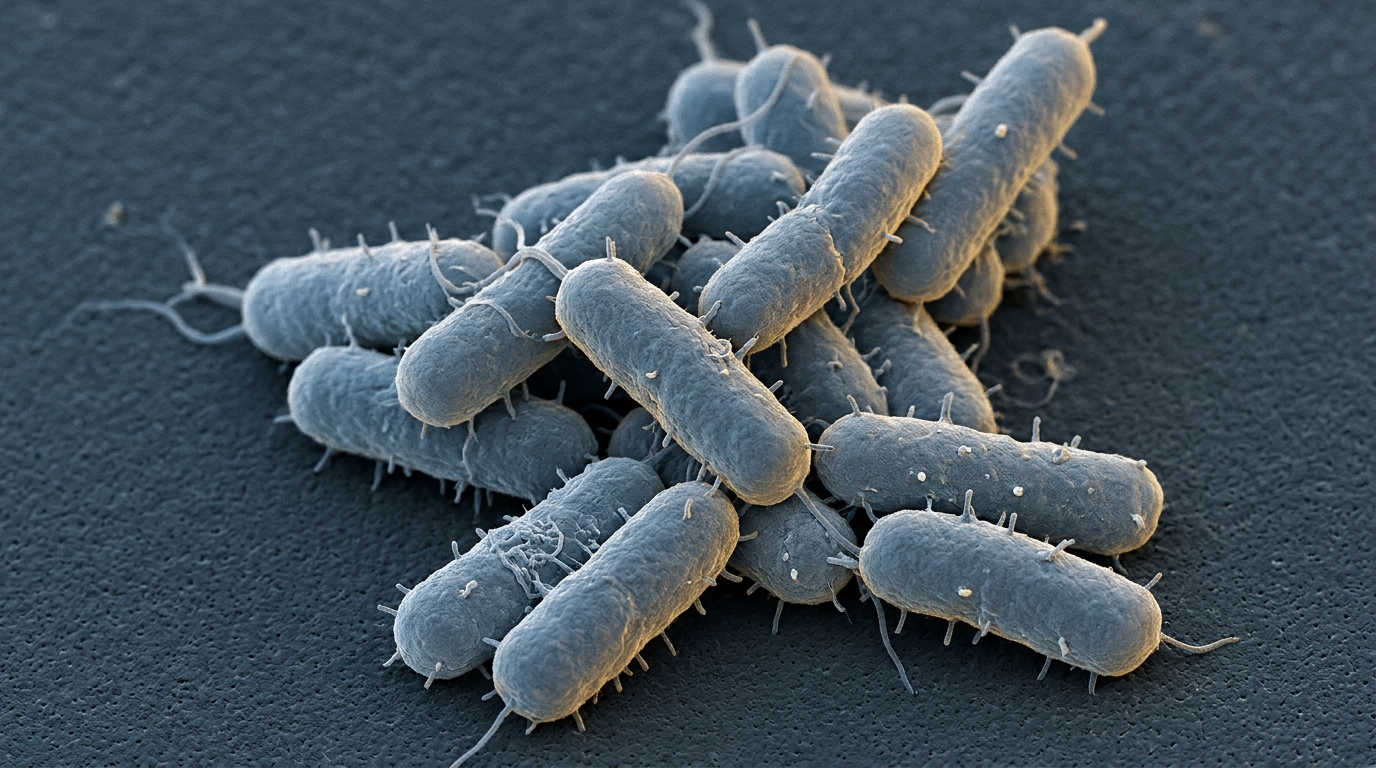
Adaptive laboratory evolution has enabled the optimization of arsenite whole-cell microbial biosensors in Escherichia coli, providing a viable alternative to conventional library screening methods. By cultivating bacterial populations under progressively escalating arsenite stress, researchers isolated evolved strains harboring regulatory mutations that significantly improved downstream transcriptional activity. When introduced into biosensor reporter circuits, these adaptive mutations yielded engineered sensor strains that exhibited up to a sixfold increase in induced fluorescence alongside reduced basal leakage compared to the original wild-type construct.
Whole-cell microbial biosensors provide a portable and cost-effective technological platform for monitoring toxic metal and metalloid contaminants in environmental settings. Many existing microbial metal sensors have previously achieved high analytical sensitivity as well as strong reporter outputs. However, conventional engineering strategies for discovering and further optimizing such sensing elements typically depend on the construction and extensive screening of mutant libraries. To overcome these screening dependencies, the investigation applied adaptive laboratory evolution as an efficient candidate-discovery strategy to generate arsenite-resistant strains of Escherichia coli.
The evolutionary selection process was conducted through the serial passage of Escherichia coli strain MC4100 under progressively increasing arsenite stress. Through this iterative selective exposure, the experimental procedure produced five independently evolved resistant strains, designated AsR1, AsR2, AsR3, AsR4, and AsR5. To uncover the molecular mechanisms underlying the acquired arsenite resistance, the researchers performed whole-genome resequencing across the evolved lineages, which identified specific mutations in both the arsenite-permeable channel gene glpF and the ars operon promoter, Pars.
Subsequent mechanistic analyses demonstrated distinct physiological consequences resulting from the identified genetic changes. Overexpression of the arsenite-permeable channel GlpF increased intracellular arsenic accumulation within the host bacterium, yet this elevated internal concentration did not translate into an improvement in reporter fluorescence. In contrast, genetic alterations located within the Pars promoter region markedly elevated downstream transcription, indicating that promoter remodeling rather than increased transport flux was responsible for enhancing reporter gene expression.
Detailed sequence characterization revealed two key promoter substitutions responsible for this heightened transcriptional output: a −30G > T mutation located within the −10 promoter element and a −54T > C mutation located immediately upstream of the −35 promoter element. To confirm the significance of these specific positions, the authors performed site-saturation mutagenesis, which established that the G30T and T54C variants were among the highest-output configurations identified across the tested mutant promoter library.
The reconstructed reporter strains, designated G30T and T54C, demonstrated substantial performance improvements when evaluated as analytical biosensors. In addition to delivering up to a sixfold increase in induced fluorescence with reduced basal leakage relative to the wild-type sensor, both optimized biosensors maintained high analytical specificity for arsenite over other metal and metalloid ions. The sensors displayed a linear response across arsenite concentrations ranging from 0.1 to 16 µM and achieved limits of detection of 66.7 nM and 57.9 nM, respectively. These results validate adaptive laboratory evolution as an effective candidate-discovery platform for identifying adaptive regulatory variants that can subsequently be reconstructed in reporter circuits for biosensor optimization.
Subject of Research: Optimization of arsenite whole-cell biosensors using adaptive laboratory evolution
Article Title: Adaptive laboratory evolution enables optimization of arsenite whole-cell biosensors
Article References: Wu, Y., Zhang, L., Zhu, Y., Bao, Y., Liang, T., Qiu, Y., Zhang, Y., Feng, J., Shen, N., Li, J., Zhang, L., Tan, G., & Wang, W. (2026). Adaptive laboratory evolution enables optimization of arsenite whole-cell biosensors. AMB Express. https://doi.org/10.1186/s13568-026-02135-0
Image Credits: AI Generated
DOI: 10.1186/s13568-026-02135-0
Keywords: adaptive laboratory evolution, whole-cell biosensors, arsenite detection, Escherichia coli, promoter engineering, environmental monitoring, synthetic biology, bacterial genetics, Adaptive, laboratory, evolution, enables
Cite Scienmag News
Gavin Prescott. (November 7, 2026). Adaptive Laboratory Evolution Optimizes Microbial Biosensors for Environmental Arsenite Detection. Scienmag. https://scienmag.com/adaptive-laboratory-evolution-optimizes-microbial-biosensors-for-environmental-arsenite-detection/
Gavin Prescott. "Adaptive Laboratory Evolution Optimizes Microbial Biosensors for Environmental Arsenite Detection." Scienmag, 7 November 2026, https://scienmag.com/adaptive-laboratory-evolution-optimizes-microbial-biosensors-for-environmental-arsenite-detection/. Accessed 20 November 2026.
Gavin Prescott. "Adaptive Laboratory Evolution Optimizes Microbial Biosensors for Environmental Arsenite Detection." Scienmag. November 7, 2026. https://scienmag.com/adaptive-laboratory-evolution-optimizes-microbial-biosensors-for-environmental-arsenite-detection/




