

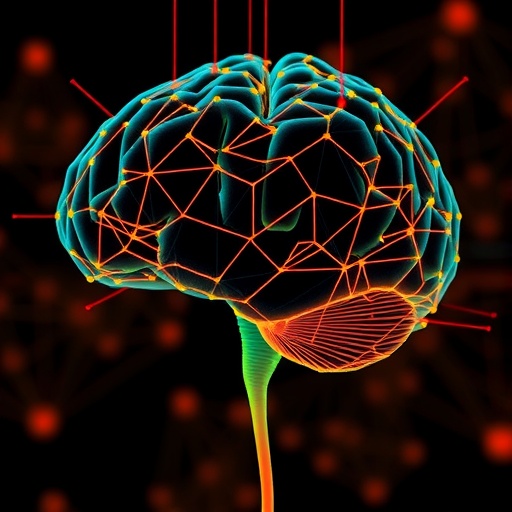
Researchers in the field of neuroengineering have recently unveiled groundbreaking advancements in the recalibration of cursor-based intracortical brain–computer interfaces (BCIs). The innovative work performed by Wilson, Stein, Kamdar, and others focuses on leveraging a hidden Markov model to achieve long-term, unsupervised recalibration of these complex systems. This novel approach could transform how individuals with motor disabilities interact with technology, enhancing their quality of life while possibly reshaping therapeutic strategies for rehabilitation.
Brain-computer interfaces represent a significant leap in bridging the gap between human cognition and machine responsiveness. By interpreting neural signals, BCIs allow users to control devices and interact with their environment through thought alone. However, a persistent challenge with these systems is the drift in signal quality and accuracy over time, often due to changes in the user’s neural signals or electrode reliability. Proper and timely recalibration is crucial for maintaining optimal performance, and that’s where the innovative hidden Markov model comes into play.
The hidden Markov model (HMM) is a statistical tool that captures the underlying processes governing the observed data – in this case, neural signals. Unlike traditional methods that necessitate substantial user input, the recent approach developed by this research team is notably unsupervised. This signifies that the system can autonomously adjust to the user’s changing neural patterns, thereby minimizing the need for active recalibration sessions. This is particularly beneficial as it reduces the cognitive load on the user, allowing them to focus more on their tasks rather than on maintenance of the interface itself.
In their study, the researchers conducted extensive testing on both simulated models and real-life applications using primates. The results indicated that the unsupervised calibration mechanism demonstrated high accuracy in translating neural signals into cursor movements over prolonged periods. Such promising results underscore the potential for this technology to be applied in human trials, paving the way for innovative therapies that integrate seamlessly into daily living for users with significant mobility limitations.
An exceptional aspect of this research lies in its adaptability. The hidden Markov model is not a one-size-fits-all solution; it can be customized according to individual user profiles. This capability opens doors not only for personalized BCI experiences but also for accommodating diverse neurological conditions, thus broadening the accessibility of BCIs across various patient demographics. It challenges the notion that BCIs require constant human intervention and marks a significant step towards fully autonomous systems.
The implications of this work extend beyond personal convenience; they hint at potential breakthroughs in neurorehabilitation. Patients recovering from strokes or traumatic brain injuries often experience alterations in their neural activity patterns as they relearn motor skills. An adaptive BCI that recalibrates autonomously may offer them a more intuitive means of interacting with their rehabilitation environments, as well as promote better engagement and outcomes as they regain motor function.
While the technology is promising, the research team emphasizes that extensive clinical trials and further refinement are necessary before these systems can be widely implemented in clinical settings. Ethical considerations surrounding the use of such technology are also paramount, as the disruption of neural interfaces could have unintended consequences. Hence, rigorous protocols must be established to ensure user safety and welfare throughout the research and application phases.
Moreover, the researchers have made strides in enhancing the robustness of the model against environmental and physiological noise that typically affects BCI performance. Their laboratory has incorporated advanced noise-cancellation techniques, thereby ensuring that the recalibration process is not only effective but also reliable under various conditions. This focus on addressing practical challenges fortifies the model’s viability in real-world applications, setting a precedent for future BCI developments.
As we look forward, the potential commercialization of long-term unsupervised BCIs could disrupt current assistive technology markets. With over one billion people globally living with some form of disability, innovations such as these hold the promise of empowerment and independence. Companies that invest in the research and development of advanced BCIs will likely find new avenues for growth and impact, while users may benefit from richer, more intuitive interactions with technology.
The team’s publication in Nature Biomedical Engineering heralds not just a scientific achievement but also a call to action for researchers, practitioners, and industry stakeholders to explore the implications of such technologies. They urge collaboration among various fields, including neuroscience, engineering, and rehabilitation sciences, to further refine these BCIs and broaden their applicability.
In summary, Wilson and colleagues’ work on the recalibration of cursor-based intracortical brain–computer interfaces via hidden Markov models represents a leap forward in the integration of technology and human cognition. The concept of an unsupervised, self-calibrating BCI presents exciting new opportunities, not just for those with motor disabilities, but for the future of human-computer interaction as a whole. This ongoing research sheds light on how advances in machine learning can augment human capabilities, sparking conversations around the ethical use of such technology and its potential societal benefits.
This marks a pivotal point in the journey towards more adaptive, user-friendly BCIs and inspires anticipation for the next phase of developments. As these technologies continue to evolve, they may usher in a new paradigm where people can interact with their environment through thought, further enhancing the possibilities of human-machine synergy.
Subject of Research: Long-term unsupervised recalibration of cursor-based intracortical brain–computer interfaces using a hidden Markov model.
Article Title: Long-term unsupervised recalibration of cursor-based intracortical brain–computer interfaces using a hidden Markov model.
Article References:
Wilson, G.H., Stein, E.A., Kamdar, F. et al. Long-term unsupervised recalibration of cursor-based intracortical brain–computer interfaces using a hidden Markov model.
Nat. Biomed. Eng (2025). https://doi.org/10.1038/s41551-025-01536-z
Image Credits: AI Generated
DOI: https://doi.org/10.1038/s41551-025-01536-z
Keywords: Brain-computer interface, recalibration, hidden Markov model, neuroengineering, rehabilitation, usability, adaptive technology, machine learning.


