


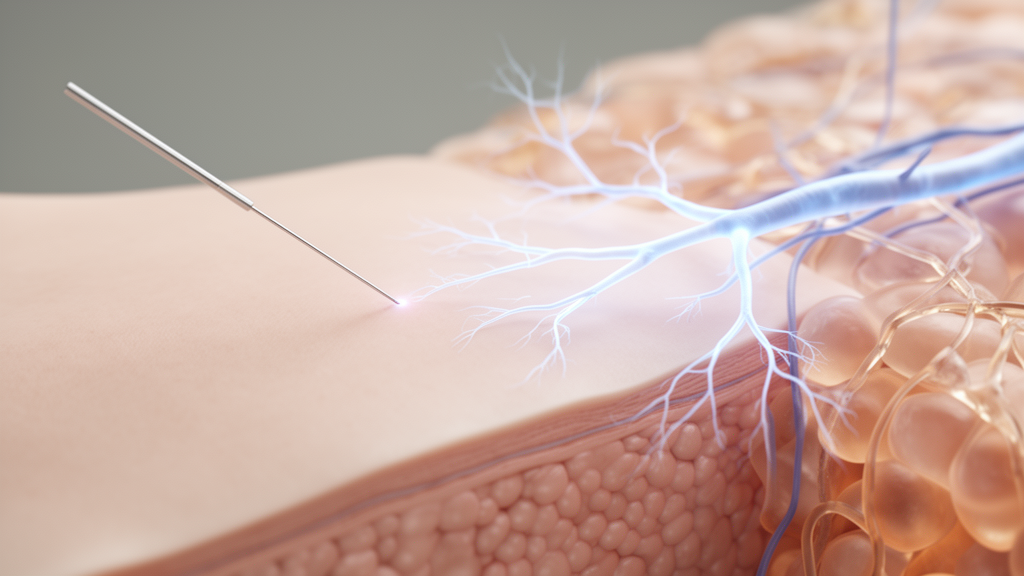
When a nerve is crushed, stretched, or severed in an accident, the body faces a repair problem that modern medicine has never fully solved. Traumatic peripheral nerve injuries are surprisingly common, accounting for between one and four percent of all new trauma cases, and they leave patients with weakness, numbness, and loss of function that can persist for months or years. Because surgical repair and rehabilitation only go so far, researchers have long searched for adjunct therapies that might accelerate regeneration. A new systematic review and meta-analysis, published in Frontiers in Neurology, has now pooled the results of 36 randomized controlled trials to test whether acupuncture, one of the most widely used adjunct therapies in rehabilitation, actually produces measurable effects on nerve recovery.
The research team, led by Wanjia Jia and colleagues at the First Affiliated Hospital of Henan University of Chinese Medicine, screened eight international databases and manually searched reference lists to identify every randomized controlled trial comparing acupuncture-based interventions with non-acupuncture therapies. After removing duplicates and screening titles, abstracts, and full texts, they included 36 trials, all published in Chinese, with a combined total of 3,282 patients. The trials covered a wide range of injuries, including brachial plexus injuries, radial nerve palsy, median nerve damage, sciatic nerve injury, and common peroneal nerve palsy. The interventions included manual acupuncture, electroacupuncture, warm needling, and acupoint injection, while the control groups received medication, rehabilitation training, physical therapy, or biofeedback.
The researchers evaluated five outcomes. The primary outcome was the clinical effective rate, a composite measure of symptom improvement and functional recovery. The secondary outcomes included the distal motor latency, the compound muscle action potential, the sensory nerve conduction velocity, and adverse reactions. When the data were pooled, the results were striking. The clinical effective rate was significantly higher in the acupuncture groups, with a relative risk of 1.24 and a 95 percent confidence interval of 1.19 to 1.30. The distal motor latency was significantly shorter, the compound muscle action potential was significantly larger, and the sensory nerve conduction velocity was significantly faster in the acupuncture groups compared with the controls.
These electrophysiological findings are particularly noteworthy because they are objective measures rather than subjective symptom reports. A shorter distal motor latency indicates that electrical signals are traveling more quickly from the stimulation site to the target muscle, which suggests that the nerve is conducting impulses more efficiently. A larger compound muscle action potential indicates that more muscle fibers are being recruited, which suggests that more motor units are functioning. A faster sensory nerve conduction velocity indicates that sensory signals are traveling more quickly, which suggests that the sensory pathways are recovering. Taken together, these measures suggest that acupuncture may be doing more than simply masking symptoms; it may be producing measurable changes in nerve function.
The subgroup analyses added further nuance. When the researchers stratified the data by injury type, the effects were consistent across brachial plexus injuries, radial nerve palsy, median nerve injuries, sciatic nerve injuries, and common peroneal nerve palsy. When they stratified by intervention type, the effects were consistent across manual acupuncture, electroacupuncture, warm needling, and acupoint injection. When they stratified by treatment duration, the effects were consistent across short-term and long-term treatment. This consistency suggests that the effects are not limited to a specific injury, intervention, or treatment duration, which strengthens the case that acupuncture may be producing genuine effects on nerve regeneration.
However, the researchers also identified significant limitations. The methodological quality of the included trials was generally low. Only a minority of trials reported adequate randomization procedures, and almost none reported allocation concealment, blinding, or preregistered protocols. The risk of bias was high across most domains, and the certainty of the evidence was low to very low for all outcomes. The researchers also noted that all 36 trials were published in Chinese, which raises questions about publication bias and the generalizability of the findings to other populations.
The researchers also performed a trial sequential analysis, a statistical method that estimates whether the accumulated evidence is sufficient to support a conclusion. The results showed that the accumulated sample size had not yet reached the required information size for most outcomes, which means that the evidence is not yet conclusive. In other words, while the pooled results are statistically significant, the accumulated evidence is not yet sufficient to rule out the possibility that the findings are due to chance or bias.
The researchers also noted that the trials used a wide range of acupuncture techniques, acupoints, and treatment durations, which makes it difficult to determine which specific approach is most effective. The control groups also received a wide range of non-acupuncture therapies, which makes it difficult to determine whether the effects are due to acupuncture itself or to the additional attention and contact that acupuncture patients receive. Almost none of the trials used sham acupuncture controls, which means that the placebo effect cannot be ruled out.
Despite these limitations, the researchers concluded that acupuncture may be a useful adjunct therapy for traumatic peripheral nerve injuries. The pooled results suggest that acupuncture produces measurable improvements in both subjective symptom reports and objective electrophysiological measures, and the consistency of the effects across injury types, intervention types, and treatment durations strengthens the case that these effects are genuine. However, the low methodological quality of the included trials, the high risk of bias, and the insufficient accumulated evidence mean that the findings should be interpreted with caution.
The researchers called for larger, better-designed randomized controlled trials with adequate randomization procedures, allocation concealment, blinding, and preregistered protocols. They also called for trials that use sham acupuncture controls to isolate the specific effects of acupuncture from the placebo effect, and for trials that use standardized acupuncture techniques to determine which specific approach is most effective. They also called for trials that include patients from other countries and populations to determine whether the findings are generalizable. Until such trials are conducted, the question of whether acupuncture actually accelerates nerve regeneration remains open, and the answer will depend on the quality of the evidence rather than the enthusiasm of the researchers.
Subject of Research: Clinical effects of acupuncture for traumatic peripheral nerve injury: a meta-analysis of randomized controlled trials
Article Title: Clinical effects of acupuncture for traumatic peripheral nerve injury: a meta-analysis of randomized controlled trials
Article References: Jia, W., Liang, R., Duan, Y., Xu, Y., Ran, X., Wang, Y., Li, C., Guo, Y., & Zhang, M. (2026). Clinical effects of acupuncture for traumatic peripheral nerve injury: a meta-analysis of randomized controlled trials. Frontiers in Neurology, 17, Article 1852669. https://doi.org/10.3389/fneur.2026.1852669
Image Credits: AI Generated
DOI: 10.3389/fneur.2026.1852669
Keywords: acupuncture, peripheral nerve injury, nerve regeneration, meta-analysis, evidence-based medicine, neurorehabilitation, Clinical, effects, traumatic, peripheral, nerve, injury
Cite Scienmag News
Ophelia Keating. (October 17, 2026). Acupuncture Shows Measurable Effects on Nerve Regeneration, but the Evidence Is Not Yet Solid. Scienmag. https://scienmag.com/acupuncture-shows-measurable-effects-on-nerve-regeneration-but-the-evidence-is-not-yet-solid/
Ophelia Keating. "Acupuncture Shows Measurable Effects on Nerve Regeneration, but the Evidence Is Not Yet Solid." Scienmag, 17 October 2026, https://scienmag.com/acupuncture-shows-measurable-effects-on-nerve-regeneration-but-the-evidence-is-not-yet-solid/. Accessed 17 October 2026.
Ophelia Keating. "Acupuncture Shows Measurable Effects on Nerve Regeneration, but the Evidence Is Not Yet Solid." Scienmag. October 17, 2026. https://scienmag.com/acupuncture-shows-measurable-effects-on-nerve-regeneration-but-the-evidence-is-not-yet-solid/


