

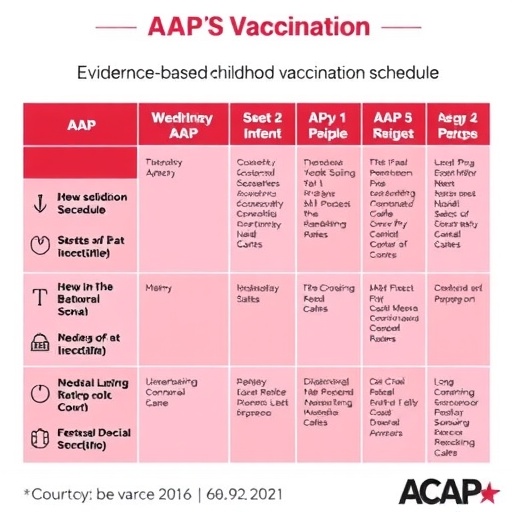
The landscape of childhood vaccination in the United States is facing significant scrutiny as the American College of Physicians (ACP) publicly voices its concerns over recent federal changes aimed at adopting a new, more limited immunization schedule. These changes hinge on the Danish childhood vaccine schedule, a model which, according to ACP, departs from longstanding, evidence-based standards that have historically ensured robust protection against infectious diseases from infancy onward. ACP’s stance fully supports the independently developed 2026 vaccine schedule authored by the American Academy of Pediatrics (AAP), asserting that this schedule is more closely aligned with current scientific evidence, addressing efficacy, safety, and the evolving epidemiology of childhood illnesses.
The core of ACP’s argument is a preservation of science-driven immunization policies amid shifts that potentially jeopardize population health. The Immunization Committee at ACP undertook a meticulous evaluation of the AAP’s 2026 schedule and found it to embody a more comprehensive and nuanced understanding of childhood disease prevention. Their assessment reveals that the AAP’s framework not only enhances infant protection strategies but also adapts to emerging public health challenges, an essential factor given the increasing complexity of infectious disease patterns.
Among the pivotal areas where the AAP’s recommendations diverge constructively from the CDC’s new guidance is in the expanded array of options for mitigating respiratory syncytial virus (RSV) infections in infants — a respiratory pathogen that remains a leading cause of hospitalization in this vulnerable age group. Importantly, ACP highlights the targeted COVID-19 vaccination strategy embedded in the new schedule, tailored to updated risk profiles rather than blanket application, optimizing both resource allocation and individualized patient benefit.
Another crucial advancement in the schedule is the earlier initiation of human papillomavirus (HPV) vaccination. Scientific data has underscored the advantages of immunizing children at a younger age, priming immune responses for more durable and effective protection against strains of HPV responsible for various cancers. This proactive measure exemplifies the schedule’s forward-looking approach grounded in rigorous clinical trial findings and epidemiological insights.
This debate on vaccination guidelines transcends pediatrics, pressing internal medicine physicians to engage actively with childhood immunization issues. Adults frequently seek counsel from their physicians regarding their children’s health, and well-vaccinated youth constitute a cornerstone of achieving herd immunity, thereby mitigating disease ripple effects that can impact broader community health dynamics. ACP’s public endorsement serves as a critical bridge reinforcing the continuum of care between pediatric and adult medicine spheres.
Parallel to immunization policy discussions, recent research published in Annals of Internal Medicine sheds light on evolving patterns of firearm acquisition in the post-pandemic United States. Survey data collected from over 4,000 firearm owners between 2021 and 2024 reveals a striking increase, with nearly 30 million adults acquiring firearms during this period. Significantly, more than 11 million of these individuals were first-time gun owners, marking a substantial demographic shift in firearm ownership.
The implications of this surge extend beyond mere statistics. Many of these new gun owners introduced firearms into previously gun-free households, exposing approximately 9 million adults and 6.6 million children to firearms for the first time within their homes. This newly exposed population faces increased risk of firearm-related accidents and violence, issues well documented in public health literature. Notably, the demographic breakdown of these new owners challenges traditional stereotypes: women constitute nearly half of first-time buyers, and Hispanic individuals and people of color represent a similarly substantial portion. This distribution suggests a diversification of firearm ownership that warrants nuanced policy and safety considerations moving forward.
The research team, comprised of experts from Northeastern University and the Harvard T.H. Chan School of Public Health, emphasizes the imperative for ongoing surveillance and contextual understanding of firearm exposure trends. Given the established correlation between household firearm presence and violent death risk, this demographic and epidemiologic shift underscores an urgent public health priority.
In a third significant study, researchers dissected the 2025 updates to the American Heart Association/American College of Cardiology (AHA/ACC) hypertension guidelines which notably deviate from former age-centric frameworks that uniformly recommended medication for all adults over 65 with stage I hypertension. The new guidelines employ a cardiovascular risk prediction model to identify candidates for pharmacotherapy, emphasizing personalized medicine principles.
Analyses using national health survey data from 2013–2020 reveal that approximately 11% of adults aged 65 to 79 previously categorized as hypertensive and candidates for medication now fall below the risk threshold warranting treatment. This subset primarily includes healthy women in their mid-60s with low overall cardiovascular risk, illustrating a strategic avoidance of overtreatment and associated burdens for those less likely to derive significant benefit.
By reconceptualizing hypertension management to focus on aggregate cardiovascular risk rather than a fixed blood pressure cutoff, these guidelines reflect an evolution towards individualized treatment plans that balance benefits, harms, and patient preferences. This shift may improve medication adherence, reduce adverse drug events, and optimize healthcare resource utilization, especially in a population segment with diverse comorbidities and physiological resilience.
These various high-impact policy and research developments collectively illustrate a broader trend within medicine and public health — the embrace of dynamic, evidence-based, population-specific strategies. From childhood immunization schedules to firearm ownership patterns and hypertension management, the integration of granular, data-driven insights into decision-making underscores a commitment to safeguarding health while acknowledging changing societal and biomedical landscapes.
The publications highlighted in Annals of Internal Medicine provide clinicians, policymakers, and researchers with meticulously curated evidence bases to inform practice and policy. The active involvement of professional organizations such as ACP and AAP in these discourses reinforces the critical need for multidisciplinary collaboration and advocacy in navigating through complex, and sometimes contentious, health challenges.
As scientific understanding and epidemiological realities evolve, so too must the protocols and policies that govern clinical practice. The rigor and transparency exemplified in these studies serve as templates for future research and guideline implementation, fostering an adaptive healthcare ecosystem capable of meeting contemporary and emerging health threats with precision and foresight.
Ultimately, these findings emphasize the interdependence of individual clinical decisions and population-level health outcomes, affirming the role of sustained scholarship and clinical vigilance in advancing public health agendas grounded in equity, efficacy, and safety.
Subject of Research: People
Article Title: The Importance of the Childhood Immunization Schedule for Internal Medicine
News Publication Date: 17-Mar-2026
Web References: http://dx.doi.org/10.7326/ANNALS-26-00773
Keywords: Vaccination, Children, Infectious diseases


