

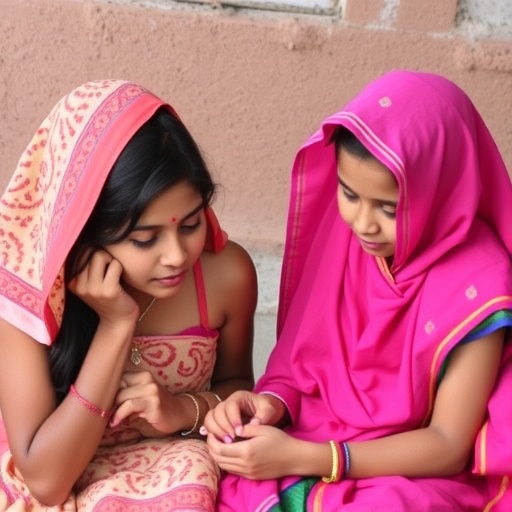
In recent years, the increasing focus on physical activity among adolescents has highlighted the differences in participation rates across various ethnic groups. Specifically, a group of researchers has shed light on South Asian female adolescents in the United States, a demographic that has not received enough attention in public health discussions. This insightful investigation, spearheaded by Kwon et al., probes the intricate relationship between acculturation, social support, and physical activity levels, delivering results that hold profound implications for health interventions targeting this population.
Acculturation, a process where individuals adopt the cultural traits or social patterns of another group, can significantly affect lifestyle choices, including exercise habits. For South Asian female adolescents navigating life in the United States, this cultural transition can bring both challenges and opportunities. The transition is often accompanied by a complex interplay of cultural retention and adaptation, which the study meticulously examines. Researchers underscore that understanding this phenomenon is crucial for developing tailored health strategies that resonate with the specific cultural context of these young women.
The study highlights the pivotal role social support plays in enhancing physical activity among South Asian girls. Social support can manifest in various forms, such as encouragement from family, camaraderie among peers, and broader community engagement. The researchers found that strong social networks positively correlate with increased physical activity levels. This finding is particularly pertinent, as it suggests that fostering supportive environments may be an effective pathway to boost exercise among this demographic.
One of the standout features of the research is its methodological rigor. Kwon and colleagues employed a comprehensive approach, utilizing surveys and interviews to gather qualitative and quantitative data. By capturing both statistical trends and personal narratives, the researchers provide a nuanced view of how acculturation and social support intersect to influence physical activity. Such thoroughness ensures that the findings resonate with the lived experiences of South Asian female adolescents, making the research highly relevant for policymakers and health educators alike.
Furthermore, the participants shared personal stories that illuminated the everyday challenges South Asian girls face when engaging in physical activities. Many participants expressed feelings of isolation or intimidation in environments like gyms or public sports facilities, which were often perceived as inaccessible or unfriendly. This insight exposes a critical barrier that interventions must address if they are to foster greater inclusivity and encourage regular physical activity among these young women.
Interestingly, the study also uncovered varying levels of acculturation and their relationship with physical activity. The researchers found that those who embraced aspects of American culture while maintaining strong ties to their South Asian roots exhibited higher levels of physical activity. This finding illustrates that a balanced approach to acculturation may promote healthier lifestyles, providing a roadmap for programs aiming to engage South Asian adolescent girls in physical activity.
Yet, the research does not shy away from addressing the challenges that social and cultural expectations can impose on these young women. Participants highlighted the pressure to conform to traditional roles that often prioritize academic achievement over physical well-being. This societal expectation can discourage active participation in sports or exercise, revealing a complex layer of cultural dynamics that health initiatives must navigate.
The implications of this research extend beyond academia and into real-world applications. Health professionals can leverage these insights to design outreach programs that celebrate cultural heritage while encouraging active lifestyles. By integrating culturally-relevant themes and supportive social networks into their programming, practitioners can foster environments where South Asian female adolescents feel empowered to engage in physical activity.
Moreover, community organizations are pivotal in ensuring that social support structures are robust. Initiatives that create inclusive spaces for physical activity, such as girls-only exercise programs or culturally specific sports leagues, can make a significant difference. By emphasizing the power of community and connection, these organizations can help dismantle barriers to physical activity that these young women often face.
The researchers advocate for further exploration of how digital platforms can facilitate social support and reduce feelings of isolation. In an increasingly virtual world, the potential of online communities and social media can be harnessed to create subcultures that encourage physical activity among South Asian female adolescents. This potential for digital engagement opens new avenues for sustaining motivation and connection, even when traditional forms of social support may be lacking.
It is essential to consider how schools can play a role in this equation. By incorporating culturally sensitive physical education programs and promoting sports that resonate with South Asian traditions, educators can contribute to a more inclusive landscape for physical activity. Creating partnerships between schools and local communities can further enhance access to resources, paving the way for increased participation among these girls.
In conclusion, this groundbreaking research by Kwon et al. underscores the urgent need to recognize and address the unique factors affecting physical activity among South Asian female adolescents in the United States. By embracing both acculturation and social support, the study provides a foundation for impactful public health strategies aimed at promoting active lifestyles in this underserved community. As the landscape of youth physical activity continues to evolve, the lessons gleaned from this research will undoubtedly inform and inspire future interventions aimed at fostering health and well-being among all adolescents.
In light of these findings, there is a clarion call for a collective effort—researchers, policymakers, educators, and community leaders must come together to support South Asian female adolescents in their journey towards achieving and maintaining active lifestyles.
Subject of Research: Associations of acculturation and social support with physical activity among South Asian female adolescents in the United States.
Article Title: Associations of acculturation and social support with physical activity among South Asian female adolescents in the United States.
Article References:
Kwon, S., Shah, N.S., Tandon, P.S. et al. Associations of acculturation and social support with physical activity among South Asian female adolescents in the United States.
BMC Pediatr (2025). https://doi.org/10.1186/s12887-025-06442-6
Image Credits: AI Generated
DOI: 10.1186/s12887-025-06442-6
Keywords: Acculturation, Social Support, Physical Activity, South Asian Adolescents, Cultural Dynamics, Health Interventions.


