


A carbapenem-resistant superbug outbreak can smolder silently inside an intensive care unit for weeks before anyone notices, especially in hospitals where the nearest microbiology laboratory is hours away. Researchers in Vietnam now report that a screening method simple enough to be performed at a patient’s bedside, by nurses rather than laboratory scientists, and for less than one US dollar per test, matched the results of a fully equipped reference laboratory with perfect accuracy. The findings, published in PLOS Global Public Health, suggest that the fight against one of modern medicine’s most feared groups of drug-resistant bacteria may not require expensive infrastructure after all.
The bacteria in question, carbapenem-resistant Enterobacteriaceae, or CRE, are a family of gut-dwelling organisms that have acquired the ability to survive treatment with carbapenems, a class of last-resort antibiotics reserved for the most serious infections. When these organisms colonize a patient’s intestinal tract without causing symptoms, they can spread from hand to hand among patients and healthcare workers, later erupting as bloodstream infections, pneumonias, or wound infections that are extraordinarily difficult to treat. In intensive care units, where patients carry catheters and breathing tubes that give bacteria direct routes into the body, silent gastrointestinal carriage is the engine that drives outbreaks.
In high-income countries, hospitals routinely screen ICU admissions for CRE by collecting rectal swabs and sending them to a central microbiology laboratory, where technicians culture the samples on selective media and run confirmatory tests. That pipeline depends on centrifuges, incubators, biosafety cabinets, trained microbiologists, and reliable supply chains. In many low- and middle-income countries, peripheral and rural facilities have none of these. The consequence, the researchers note, is a double bind: clinicians cannot identify which patients carry resistant organisms, so they fall back on empirical broad-spectrum antibiotic therapy, which itself fuels further resistance, while undetected transmission continues in the background.
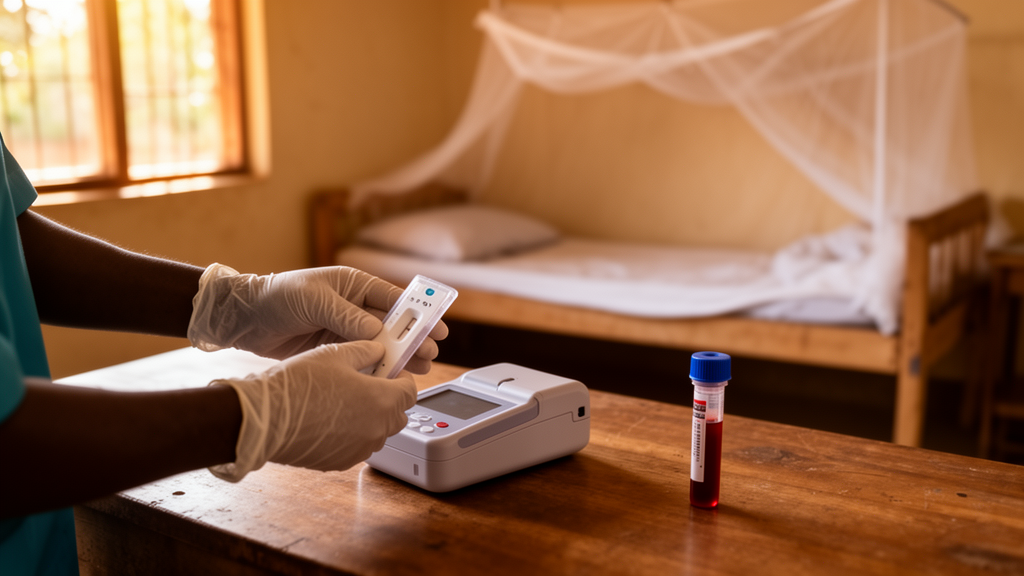
The study, led by The Anh Ngo and colleagues at Viet Tiep Hospital in Vietnam, tested whether the laboratory could, in effect, be brought to the bedside. The team designed a decentralized screening protocol built around two inexpensive components: pre-formulated selective chromogenic agar plates, which change color when carbapenem-resistant organisms grow, and a low-cost portable incubator that can hold plates at the correct temperature without a full laboratory setup. Frontline nursing staff, not microbiologists, performed the entire procedure, from swab collection to direct plate inoculation to point-of-care incubation, in the non-sterile environment of a working ICU.
To evaluate the method rigorously, the researchers enrolled 220 ICU patients and collected dual rectal swabs from each. One swab from every patient was processed through the standard centralized laboratory pathway and served as the reference method, the benchmark against which any new diagnostic must be judged. The parallel swab was processed at the bedside using the simplified protocol. The team then compared the two sets of results, measuring diagnostic agreement, the consistency of readings between different observers, the rate of procedural contamination, and the practical feasibility of the workflow as performed by ordinary nursing staff under real-world conditions.
The results were striking. Gastrointestinal CRE carriage was identified in 26 of the 220 patients, a prevalence of 11.8 percent, and the KESC group of organisms, which includes Klebsiella, Enterobacter, Serratia, and Citrobacter species, accounted for 76.9 percent of the positive cases. Against the reference laboratory results, the bedside protocol achieved 100 percent phenotypic concordance, with sensitivity, specificity, positive predictive value, and negative predictive value all at 100 percent. In other words, the bedside method missed no carriers and produced no false alarms, matching the central laboratory in every single case.
Equally important were the safeguards against error. When observers who did not know the origin of the plates assessed the results independently, they agreed completely, with a Cohen’s kappa coefficient of 1.0, the statistical maximum for inter-reader reliability. The researchers also checked for environmental cross-contamination by examining plates that should have been CRE-negative; none showed growth, yielding a contamination rate of 0.0 percent with a 95 percent confidence interval of 0 to 4.1 percent. These findings address the central objection to bedside microbiology: that performing cultures outside a controlled laboratory environment would introduce contamination or inconsistent interpretation. In this study, at least, it did not.
The chromogenic agar plates work through a combination of selectivity and colorimetry. The medium contains nutrients that support the growth of Enterobacteriaceae alongside compounds that suppress most other organisms, and it incorporates a carbapenem antibiotic that only resistant strains can survive. A chromogenic substrate in the agar is cleaved by bacterial enzymes, producing a distinctive color change that makes resistant colonies visually identifiable without microscopy or biochemical confirmation. Because the plates are pre-formulated and ready to use, the bedside protocol requires no media preparation, no sterilization equipment, and no specialized training beyond the inoculation and reading steps that frontline nurses could master in this study.
The economics of the approach may prove as consequential as its accuracy. At less than one US dollar per test, the cost is orders of magnitude below the molecular panels and automated culture systems that dominate CRE detection in wealthy countries. For a rural hospital deciding whether surveillance is affordable at all, that threshold changes the calculus entirely. The authors argue that the decentralized model may provide an affordable alternative for CRE surveillance in resource-limited healthcare facilities where centralized microbiology laboratory infrastructure is unavailable, allowing peripheral hospitals to detect silent transmission before it becomes an outbreak rather than discovering it after patients have already developed untreatable infections.
The implications extend beyond Vietnam. Carbapenem resistance is spreading globally, and the World Health Organization has ranked CRE among the critical-priority pathogens in its bacterial priority pathogens list, the organisms for which new antibiotics are most urgently needed. Yet new drugs alone cannot solve the problem if hospitals in the regions where resistance is expanding fastest cannot even identify carriers. A screening method that costs a dollar, fits in a portable incubator, and can be run by the nursing staff already caring for the patient offers a way to extend the basic tools of infection control, isolation of carriers, targeted hygiene measures, and rational antibiotic use, to the facilities that have historically been left out. The Vietnamese team’s perfect concordance figures come from a single-center study of 220 patients, and wider validation across different hospitals, prevalence settings, and bacterial populations will be needed before the protocol can be recommended as a universal standard. But as a proof of concept, the study makes a forceful case that the infrastructure gap between rich and poor hospitals, long treated as an unavoidable barrier to superbug surveillance, can be bridged with a plate of agar, a portable incubator, and the nurses already standing at the bedside.
Subject of Research: Bedside screening of carbapenem-resistant Enterobacteriaceae using selective agar plates in a Vietnamese ICU
Article Title: Bedside screening of carbapenem-resistant Enterobacteriaceae using selective agar plates: A low-cost, laboratory-independent approach for rural healthcare facilities
Article References: Bedside screening of carbapenem-resistant Enterobacteriaceae using selective agar plates: A low-cost, laboratory-independent approach for rural healthcare facilities. (n.d.). https://doi.org/10.1371/journal.pgph.0007479
Image Credits: AI Generated
DOI: 10.1371/journal.pgph.0007479
Keywords: carbapenem-resistant Enterobacteriaceae, CRE, antimicrobial resistance, bedside diagnostics, chromogenic agar, ICU surveillance, Vietnam, rural healthcare, infection control, point-of-care testing, Bedside, screening
Cite Scienmag News
Kristina Jarvis. (October 16, 2026). A One-Dollar Bedside Test Catches Deadly Superbugs in Rural Hospitals. Scienmag. https://scienmag.com/a-one-dollar-bedside-test-catches-deadly-superbugs-in-rural-hospitals/
Kristina Jarvis. "A One-Dollar Bedside Test Catches Deadly Superbugs in Rural Hospitals." Scienmag, 16 October 2026, https://scienmag.com/a-one-dollar-bedside-test-catches-deadly-superbugs-in-rural-hospitals/. Accessed 16 October 2026.
Kristina Jarvis. "A One-Dollar Bedside Test Catches Deadly Superbugs in Rural Hospitals." Scienmag. October 16, 2026. https://scienmag.com/a-one-dollar-bedside-test-catches-deadly-superbugs-in-rural-hospitals/


