

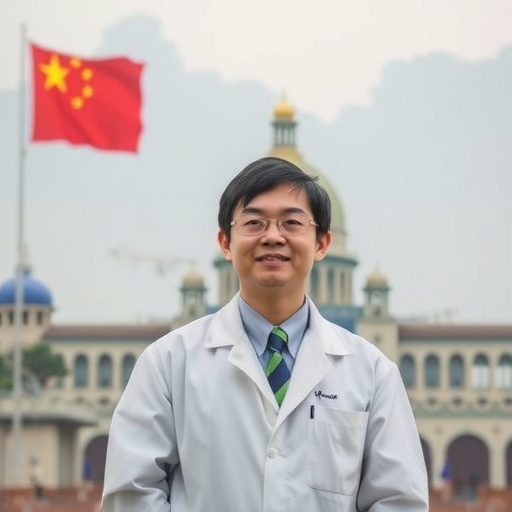
In the evolving landscape of global academia, the interplay between national policies, institutional structures, and researcher identities has become increasingly complex. A seminal paper titled “Navigating institutional complexity in Chinese academia: researcher agency, identity, and international collaboration amid geopolitical tensions” by Shih, Zhao, and Schwaag Serger delves into these intricacies, offering a unique lens through which the challenges and opportunities faced by Chinese researchers can be examined. As geopolitical tensions rise and international collaborations become more fraught, this study is particularly timely, seeking to address how researcher agency and identity are influenced by fluctuating institutional policies and global relations.
The research landscape in China is characterized by a unique set of institutional dynamics that significantly impact the direction and outcomes of scholarly activity. The authors highlight that the foundations of academic research in China are influenced by various factors, including government regulations, institutional hierarchies, and the necessity for compliance with international standards. This multi-layered context creates an environment where researchers often navigate intricate approvals and bureaucratic processes, testing their resilience and adaptability in the face of institutional demands.
Moreover, the interaction between geopolitical factors and academic research cannot be overlooked. With increasing tensions between global powers, Chinese researchers often find themselves balancing the desire for international collaboration with the realities of nationalistic pressures and concerns about academic freedom. The study argues that these geopolitical realities fundamentally shape the identities of researchers, influencing not just their work but also their visibility and participation on the global stage. As a result, the authors suggest that understanding the implications of these tensions is crucial for any meaningful discourse on international academic collaboration.
The paper also emphasizes the concept of researcher agency, asserting that within these institutional frameworks, individuals have varying degrees of autonomy. The authors depict how researchers exercise their agency in response to institutional constraints, creatively maneuvering through systems that may otherwise limit their scholarly pursuits. This dynamic is essential to understand as it reveals how researchers locate their personal identities amid external pressures, often leading to innovative practices and resilience in face of systematic challenges.
In addition, the research explores how identity is constructed within the context of institutional complexity. Researchers in China, according to the article, must often reconcile their academic ambitions with imposed identities shaped by external perceptions and institutional affiliations. This negotiation process not only affects individual researchers’ pathways but also influences broader research agendas, contributing to the ever-evolving identity of Chinese academia.
Furthermore, the authors draw on case studies illustrating how researchers engage in international collaborations, examining both successful and challenging instances. These examples underscore the role of institutional support or lack thereof, demonstrating how varying levels of encouragement from institutions can affect the outcomes of research partnerships. The paper illustrates the delicate balance researchers must maintain, playing the dual roles of both national representatives and global collaborators in their endeavors.
Additionally, the implications of this research extend beyond the borders of China. As scholars worldwide observe the intricate relationship between national policies and academic freedom, lessons learned from the Chinese experience may inspire broader discussions about the challenges of academic collaboration in politically charged environments. The findings from this study could thus serve as a pathway for other nations grappling with similar issues in their academic landscapes.
The paper’s conclusions urge stakeholders to acknowledge the complexities at play in academia, particularly in environments marked by geopolitical tensions. It advocates for creating supportive frameworks that empower researchers to foster innovation while navigating institutional hurdles. By facilitating collaborative networks and promoting academic freedom, the potential for impactful research can be maximized, benefiting not only national interests but also the global academic community as a whole.
In summary, Shih, Zhao, and Schwaag Serger provide a thorough examination of the challenges faced by researchers within the intricate framework of Chinese academia. Their exploration of researcher agency, identity, and the influence of geopolitical tensions offers vital insights into the future of academic collaboration. The study posits that a nuanced understanding of these elements is essential for fostering an environment where researchers can thrive, contributing significantly to both national and international academic discourse.
As the world moves forward, the relationship between institutional frameworks and academic research will continue to evolve. The findings of this paper call for ongoing dialogue and reflection on how best to support researchers navigating these complex terrains. With globalization exerting its influence on academia, fostering environments that prioritize innovation, collaboration, and academic freedom will be paramount for future generations of scholars, particularly in regions facing similar challenges as China.
Ultimately, the research by Shih, Zhao, and Schwaag Serger sheds light on the crucial intersections of agency, identity, and geopolitical factors within academic institutions, offering a mirror to the global academic community as it grapples with its own complexities.
Subject of Research: Navigating institutional complexity in Chinese academia
Article Title: Navigating institutional complexity in Chinese academia: researcher agency, identity, and international collaboration amid geopolitical tensions.
Article References:
Shih, T., Zhao, L. & Schwaag Serger, S. Navigating institutional complexity in Chinese academia: researcher agency, identity, and international collaboration amid geopolitical tensions.
High Educ (2025). https://doi.org/10.1007/s10734-025-01561-6
Image Credits: AI Generated
DOI:
Keywords: Researcher agency, Geopolitical tensions, Institutional complexity, Chinese academia, International collaboration.


