


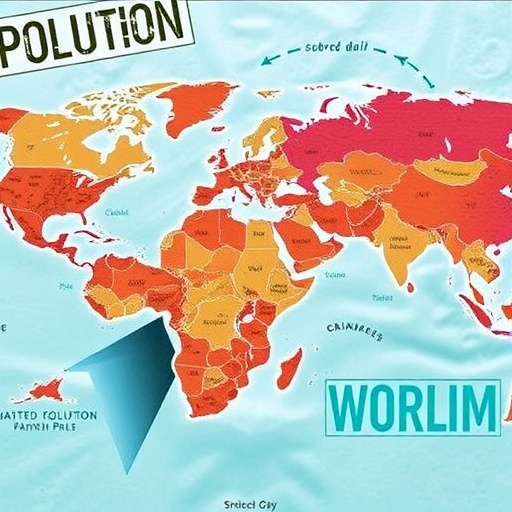
The relationship between tourism and environmental pollution is an increasingly important topic in today’s interconnected world. With an ever-growing global emphasis on sustainable practices, researchers are beginning to rigorously examine how the burgeoning tourism industry impacts environmental health across various regions. A recent study by Akpa, Agnoun, and Bonou-Gbo sheds light on this issue by providing a comparative analysis among sub-Saharan African, European, and Asian countries, specifically exploring the lagged effects of tourism on environmental pollution.
Tourism acts as a double-edged sword; while it significantly boosts economic activity, it often leads to adverse environmental consequences. The research highlights the complexities involved in this dynamic, illustrating that excessive tourism can overwhelm local ecosystems, degrade natural resources, and contribute to heightened pollution levels. With countries worldwide striving for a balanced approach to development, understanding the lagged effects of tourism on environmental quality is of paramount importance.
One of the core findings of the study reveals that sub-Saharan African countries exhibit a unique profile in terms of how tourism affects pollution levels over time. In these regions, increased visitor footfalls often correlate with an immediate rise in waste generation, air pollution, and other environmental stressors. However, over the long term, the study demonstrates an interesting lag effect where initial increases in tourism may not translate to immediate and sustained pollution spikes, but rather manifest in cumulative impacts that surface as tourism continues to grow.
In contrast, European nations show a markedly different pattern. Here, the infrastructure and regulatory frameworks surrounding tourism are often more robust, allowing for effective waste management and pollution control. The research indicates that while pollution levels may increase initially with rising tourist numbers, these nations are better equipped to manage those impacts, thus mitigating the long-term detrimental effects on environmental health. Interestingly, this finding emphasizes the importance of governance and policy-making in managing tourism-related pollution.
Asian countries present yet another dynamic in this comparative analysis. As some of the world’s most popular tourist destinations, such as Thailand, India, and Japan, continue to attract vast numbers of visitors, the strain on local environments is palpable. The study highlights that while tourism is vital for economic growth in these regions, the accompanying increase in pollution underscores the urgent need for sustainable practices. In many cases, the lagged effects of this pollution can lead to long-lasting environmental degradation that threatens both natural ecosystems and human health.
The research further delves into the nature of pollution itself, categorizing it into various forms such as air, water, and soil contamination, each influenced by tourism in distinct ways. Air pollution, often resulting from increased vehicular traffic and aviation emissions linked to tourism, has emerged as a critical concern in urban tourist hotspots. Similarly, water pollution locally generated from tourist activities—be it through improper waste disposal or increased boating on waterways—pose significant threats to marine and freshwater ecosystems.
The implications of these findings are significant for policymakers aiming to promote sustainable tourism practices. It is vital to implement strategic measures that can help counterbalance the adverse effects of tourism on the environment. The study advocates for more stringent regulations, increased investment in eco-friendly infrastructure, and public awareness campaigns focused on environmental responsibility among tourists. By fostering a culture of sustainability within the tourism sector, the potential for mitigating pollution and preserving ecosystems is greatly enhanced.
Another fascinating dimension explored in the research is the local communities’ role in managing the environmental impacts of tourism. Empowering local residents and stakeholders to engage in sustainable tourism practices can create a shared sense of responsibility for the natural surroundings. Moreover, involving local communities can also lead to the development of eco-tourism initiatives, which can cater to environmentally conscious travelers while fostering economic development through a sustainable lens.
As debates around climate change and environmental sustainability gain traction globally, the findings of this research become even more pertinent. The insights gained from the comparative analysis among sub-Saharan African, European, and Asian countries underscore the need for a collaborative approach to combat environmental degradation exacerbated by tourism. International cooperation and shared best practices can enable countries to learn from each other’s experiences and successes in managing tourism-related pollution.
Future research endeavors should aim to extend this analysis further, delving deeper into the long-term ecological impacts of tourism across various localities. In addition, examining how emerging trends such as virtual tourism, eco-travel, and sustainable accommodations can reshape the relationship between tourism and environmental pollution would be valuable. By adapting to the evolving demands of travelers, the tourism industry has the opportunity to pivot toward more sustainable practices that prioritize environmental stewardship.
The significance of the findings cannot be overstated, as they provide a foundational understanding of the complexities surrounding tourism and environmental health. The research’s contributions are crucial for academics, policymakers, and industry stakeholders who are committed to fostering sustainable tourism methodologies. Through a deeper understanding of lagged effects, the potential for developing innovative solutions that harmonize tourism growth with environmental preservation becomes ever more tangible.
In conclusion, as tourism continues to flourish, it is imperative that stakeholders recognize and address the environmental implications that accompany increased visitor numbers. By fostering a commitment to sustainable practices, investing in green infrastructure, and empowering local communities, there is the potential to mitigate the adverse effects of tourism on environmental pollution. This comprehensive analysis serves as a critical starting point for broader discussions and actions aimed at preserving our planet for future generations while still enjoying the cultural and economic benefits of global travel.
Akpa, A.F., Agnoun, O.R.C. & Bonou-Gbo, H. Lagged effect of tourism on environmental pollution: a comparative analysis among sub-Saharan African, European and Asian countries.
Discov Sustain 6, 1186 (2025). https://doi.org/10.1007/s43621-025-02058-z
Cite Scienmag News
Russell Cooper. (October 31, 2025). Tourism’s Delayed Impact on Pollution Across Continents. Scienmag. https://scienmag.com/tourisms-delayed-impact-on-pollution-across-continents/
Russell Cooper. "Tourism’s Delayed Impact on Pollution Across Continents." Scienmag, 31 October 2025, https://scienmag.com/tourisms-delayed-impact-on-pollution-across-continents/. Accessed 6 September 2026.
Russell Cooper. "Tourism’s Delayed Impact on Pollution Across Continents." Scienmag. October 31, 2025. https://scienmag.com/tourisms-delayed-impact-on-pollution-across-continents/


