


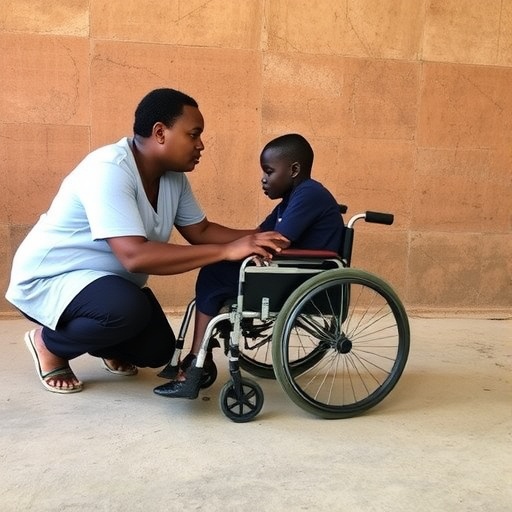
As the global pandemic of COVID-19 continues to redefine public health policies worldwide, an often-overlooked aspect remains the inclusion of disabled populations in government responses. Recent research spearheaded by Seketi, Scherer, Anitha Menon, and colleagues shines a critical light on Zambia’s approach to COVID-19 policy-making, specifically investigating how disability rights and inclusion were integrated within the government’s strategic framework. This article unpacks their framework analysis, elucidating the strengths and gaps in Zambia’s policies, and delves into the essential technical considerations that underpinned their findings.
In confronting the unprecedented challenge posed by COVID-19, governments had to swiftly design and implement interventions that would minimize viral spread, safeguard vulnerable populations, and sustain essential services. Disability inclusion in these policies was vital because persons with disabilities face unique barriers—ranging from limited access to healthcare and information to increased risks associated with underlying health conditions. Seketi et al. offer a comprehensive qualitative evaluation of the Zambian government’s COVID-19 policies, using a structured framework analysis methodology to unravel whether considerations for disability rights were meaningfully embedded.
The process of framework analysis utilized in the study is a qualitative research method designed for applied policy evaluation. It allows researchers to systematically categorize qualitative data, often including policy documents, to identify themes and assess correspondences against predefined inclusion criteria. By applying this rigor, Seketi and colleagues could dissect the policy text for explicit and implicit acknowledgments of disability inclusion, delivering an empirical measure of policy comprehensiveness and equity.
At the core of Zambia’s government response were several declarations and policy instruments encompassing public health safety protocols, social protection initiatives, and economic support measures. Nevertheless, the framework analysis revealed that while initial policy drafts acknowledged the general risks faced by vulnerable groups, including persons with disabilities, subsequent versions sometimes diluted explicit disability-focused strategies. This finding suggests fluctuating prioritization, emphasizing the unpredictable nature of policymaking during crises where competing interests vie for attention.
One technical element assessed was communication accessibility in the dissemination of COVID-19 information. Government communications are critical vectors for public compliance, yet inaccessible messaging can exacerbate disparities for those with hearing, visual, intellectual, or multiple disabilities. Seketi et al. found that despite some efforts to provide information in sign language and braille, these adaptations were inconsistently applied across the national media channels. The absence of widespread, systematic accessibility measures potentially rendered segments of the disabled population vulnerable to misinformation or ignorance about protective measures.
Social protection programs were integral to Zambia’s pandemic response; however, their design often lacked nuanced mechanisms tailored to disabled persons’ distinct needs. For instance, economic relief packages, while broadly disseminated, frequently excluded considerations for structural barriers that inhibit disabled individuals’ access to registration processes or financial services. The study illuminated that these procedural obstacles, unaddressed in policy articulation, contribute to the perpetuation of economic vulnerability among disabled populations during public health emergencies.
Healthcare access constituted another critical domain scrutinized. The intersecting vulnerabilities of disability and infectious disease pandemics heighten the necessity for equitable healthcare provision. Yet, Seketi et al. identified that protocols relating to priority testing, treatment facilities, and vaccination rollouts insufficiently prioritized persons with disabilities. This omission signals a systemic oversight with profound implications for morbidity and mortality within this group.
The policy analysis also explored the existence of consultation mechanisms between policymakers and disability advocacy groups. Inclusion of disabled persons’ organizations (DPOs) in policy formulation not only enhances relevance but ensures that lived experiences inform decision-making. Zambia’s government demonstrated sporadic engagement with DPOs, lacking institutionalized channels for their consistent input. This gap reflects a broader challenge in embedding participatory governance principles within emergency response frameworks.
A compelling dimension of the study was the recognition of intersectionality—the interplay between disability status and other social determinants such as gender, socioeconomic status, and rural residency. The research authors argued that Zambia’s policies insufficiently addressed how these intersecting identities compound vulnerability during the pandemic. Without intersectional tailoring, health inequality deepens, hampering equitable outcomes.
Technological innovations, pivotal in pandemic control, presented paradoxical challenges and opportunities for disabled communities. The digital pivot to telemedicine, online learning, and e-governance platforms presupposed technological accessibility. However, the absence of targeted policy provisions ensuring accessible digital tools and internet infrastructure for disabled individuals undermined these potential benefits, as revealed through the framework analysis.
This critical research does not merely critique deficiencies but offers valuable policy recommendations. Among them is the urgent necessity to mainstream disability considerations in all stages of pandemic preparedness and response—ranging from inclusive data collection and disaggregated reporting to targeted funding and enforcement of accessibility standards. Establishing a legislative backbone that codifies these frameworks ensures sustainability beyond episodic emergencies.
Moreover, the authors advocate for institutional capacity building within government entities to foster disability-inclusive policy literacy. This includes training policymakers on the social model of disability, human rights frameworks, and practical modalities to implement inclusion. Enhanced capacity directly translates into more responsive, adaptive, and equitable public health interventions.
Internationally, this study situates Zambia as a pivotal case highlighting the global challenge of disability inclusion amidst health crises. While some high-income countries faced similar hurdles, resource-constrained contexts demonstrate amplified vulnerabilities and systemic inequities. Therefore, global health governance must prioritize support mechanisms and technical assistance to empower such nations in embedding disability-inclusive approaches.
The COVID-19 pandemic exposed many fissures in social protection and healthcare systems globally. Seketi and colleagues’ framework analysis is emblematic of a growing research imperative to critically interrogate policy architectures through a disability lens. Their rigorous methodological approach and empirical findings offer a roadmap for scholars, advocates, and policymakers aiming to safeguard disabled populations in future public health emergencies.
In essence, this research pushes forward the narrative that disability inclusion is not merely an ethical imperative but a pragmatic necessity, elevating the overall efficacy and fairness of pandemic responses. As Zambia, like other nations, charts a post-pandemic recovery path, the integration of disability rights into policy frameworks promises to foster resilience and social justice.
The intricate interplay of technical policy design, implementation challenges, and lived experience underscores the complexity of disability inclusion. Seketi et al.’s contribution advances the scientific discourse and provides an evidence-based foundation for more inclusive governance models that should be replicated in diverse geopolitical contexts.
Ultimately, their study exemplifies how rigorous, methodologically sound analyses can drive transformative policy reforms, ensuring that no member of society is left behind in times of crisis. The COVID-19 pandemic, while devastating, also offers a unique inflection point to recalibrate public policy toward inclusivity and equity—a mission that must encompass the rights and dignity of persons with disabilities.
Cite Scienmag News
Courtney Benton. (October 31, 2025). Disability Inclusion in Zambia’s COVID-19 Policies Analyzed. Scienmag. https://scienmag.com/disability-inclusion-in-zambias-covid-19-policies-analyzed/
Courtney Benton. "Disability Inclusion in Zambia’s COVID-19 Policies Analyzed." Scienmag, 31 October 2025, https://scienmag.com/disability-inclusion-in-zambias-covid-19-policies-analyzed/. Accessed 1 September 2026.
Courtney Benton. "Disability Inclusion in Zambia’s COVID-19 Policies Analyzed." Scienmag. October 31, 2025. https://scienmag.com/disability-inclusion-in-zambias-covid-19-policies-analyzed/


