


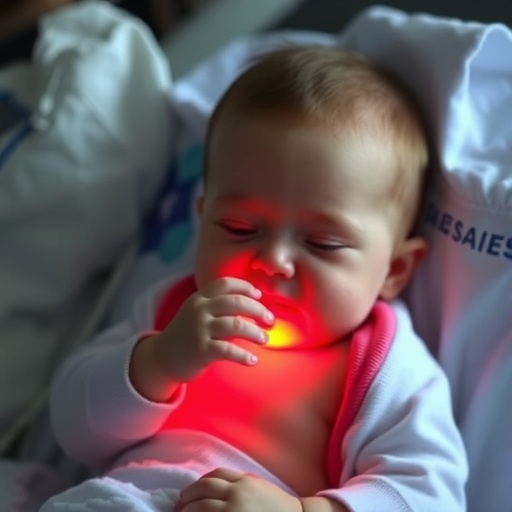
In a groundbreaking study led by researchers at National Jewish Health, new insights have emerged detailing the complex interactions between various viral species and the severity of lower respiratory tract illnesses (LRIs) in infants. This comprehensive investigation, published recently in the Journal of Infection, builds upon data from the Puerto Rican Infant Metagenomic and Epidemiologic Study of Respiratory Outcomes (PRIMERO), which meticulously tracked over 2,000 children from birth to two years of age between 2020 and 2024. The findings illuminate the multifaceted roles that individual viruses and their interactions play in determining the clinical outcomes of respiratory infections during early life.
Dr. Max A. Seibold, PhD, director of the Regenerative Medicine and Genome Editing Program at National Jewish Health, spearheaded the research team that embarked on this in-depth analysis of early-life viral infections. Their study distinguishes itself by examining the independent and combinatorial effects of multiple viral pathogens on the risk of developing severe lower respiratory disease, a critical factor influencing both immediate infant health and potential long-term respiratory conditions such as asthma.
The research reveals that not all viruses affect the lower respiratory tract uniformly. Respiratory syncytial virus (RSV), a well-recognized pathogen, was confirmed as the predominant agent linked to severe lower respiratory illness in infants. Infants infected with RSV showed nearly a ninefold increase in the likelihood of developing serious respiratory complications. Complementary viruses such as metapneumovirus, parainfluenza viruses, and certain endemic coronaviruses were also associated with elevated risks but to lesser extents compared to RSV.
In contrast to these high-risk viruses, rhinovirus and bocavirus, despite being the most commonly detected pathogens in both mild and severe cases, displayed a unique pattern. Individually, these viruses often caused mild upper respiratory infections analogous to the common cold. However, the study uncovered that when these two viruses co-infect an infant simultaneously, the risk for a severe lower respiratory tract infection substantially increases, nearly tripling the odds relative to single-virus infections. This synergy suggests complex viral-viral interactions that may potentiate pathogenicity through mechanisms still to be fully elucidated.
Interestingly, SARS-CoV-2, the pandemic coronavirus, manifested unexpected dynamics in this young cohort. Unlike its severe respiratory impact in adults, SARS-CoV-2 infections in infants correlated with a comparatively lower risk of progressing to severe disease. This phenomenon supports emerging evidence that infants’ innate and adaptive immune responses differ markedly from adults, potentially conferring protective effects against severe COVID-19 manifestations during early development.
The study leveraged extensive metagenomic sequencing and epidemiologic surveillance, enabling researchers to map precise viral profiles and their temporal dynamics within the nasopharynx and lower airways. This high-resolution approach allowed for disentangling the independent contributions of each viral species and their co-infection frameworks. Such detailed characterization is critical in understanding how viral ecology shapes disease severity and progression in infancy.
National Jewish Health researchers emphasize that the results have significant clinical implications. Identifying high-risk viruses and viral combinations can guide preventative strategies, including timely vaccination protocols and heightened clinical surveillance for infants exhibiting co-infections. Tailored approaches could mitigate the burden of severe respiratory diseases during this vulnerable developmental window and potentially reduce the incidence of chronic respiratory disorders later in life.
Furthermore, these findings underscore the importance of comprehensive viral monitoring, particularly in populations such as Puerto Rican infants who experience disproportionately elevated rates of asthma and respiratory morbidities. By elucidating the viral determinants of illness severity, healthcare providers can better allocate resources and interventions towards groups most at risk.
The study also sets a foundation for future research into host-pathogen interactions, exploring how viral pathogenic mechanisms and host immune responses coalesce to dictate health outcomes. Unraveling these complex interactions offers promise for novel therapeutic targets and precision medicine interventions aimed at mitigating viral respiratory disease severity.
National Jewish Health remains at the forefront of respiratory health research, integrating cutting-edge molecular techniques with clinical expertise to pioneer advances in understanding and treating respiratory illnesses across the lifespan. As respiratory viruses continue to evolve and challenge public health, studies like this provide essential knowledge to adapt and improve preventive and therapeutic measures for young children worldwide.
Continued vigilance and investment in virologic and immunologic research are paramount, especially in the context of global respiratory pathogens whose impacts extend far beyond infancy. The insights gleaned from this study illuminate pathways to protect the youngest and often most vulnerable members of the population, ensuring healthier respiratory futures.
News Publication Date: 20-Oct-2025
Web References:
10.1016/j.jinf.2025.106616 (DOI link)
Cite Scienmag News
Kristina Jarvis. (October 24, 2025). New Study Reveals Viral Co-Infections That Increase Risk of Severe Respiratory Illnesses in Infants. Scienmag. https://scienmag.com/new-study-reveals-viral-co-infections-that-increase-risk-of-severe-respiratory-illnesses-in-infants/
Kristina Jarvis. "New Study Reveals Viral Co-Infections That Increase Risk of Severe Respiratory Illnesses in Infants." Scienmag, 24 October 2025, https://scienmag.com/new-study-reveals-viral-co-infections-that-increase-risk-of-severe-respiratory-illnesses-in-infants/. Accessed 1 September 2026.
Kristina Jarvis. "New Study Reveals Viral Co-Infections That Increase Risk of Severe Respiratory Illnesses in Infants." Scienmag. October 24, 2025. https://scienmag.com/new-study-reveals-viral-co-infections-that-increase-risk-of-severe-respiratory-illnesses-in-infants/


