


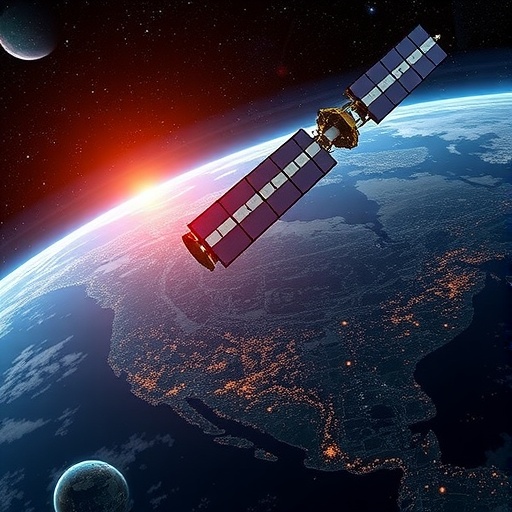
With the rapid convergence of advanced telecommunications and aerospace technology, the focus on satellite-terrestrial integrated networks (STINs) is intensifying, particularly in the contexts of fifth-generation (5G) and the emerging sixth-generation (6G) systems. This comprehensive examination finds roots in the pressing need for integrated global networks that can seamlessly combine terrestrial and satellite assets to meet the soaring demands for data transmission and connectivity across diverse applications. As societies increasingly depend on high-speed connectivity, STINs shine as an promising solution poised to revolutionize communications.
The architecture of STINs lays a robust groundwork, intertwining the intricacies of terrestrial networks with the extensive coverage offered by satellite systems. In the contemporary landscape, features such as multiplexing, error correction, and dynamic bandwidth allocation become vital, especially in environments where network reliability and resilience are non-negotiable. Given the scale of demand for bandwidth driven by streaming services, IoT devices, and real-time applications, the strategic integration of satellites stands as not just beneficial, but essential.
As researchers delve deeper into STIN technologies within the foundational structures of 6G, numerous dimensions unfold. Issues of topology maintenance emerge as key focus areas; ensuring that network structures remain optimized against disruptions is crucial. This involves developing algorithms capable of recalibrating connections in real-time, accommodating shifts in user demands as well as environmental factors. Such adaptive methodologies promise not only enhanced performance but also a more user-centric approach to connectivity.
Forward-thinking routing protocols are also gaining traction as networks strive for efficiency. The unique challenge presented by STINs lies in their hybrid nature, incorporating both satellite and terrestrial nodes. Researchers are investigating multi-layered routing techniques that allow data to traverse the best possible paths available at any point in time. By leveraging machine learning and AI-based forecasting models, these protocols can predict traffic loads and automatically reroute data, optimizing latency and reducing congestion.
The orchestration of transmission across disparate networks is another crucial area of exploration. As 6G moves towards fluid and flexible paradigms, ensuring that data flows effortlessly between terrestrial and satellite channels requires advanced orchestration techniques. Here, engineers explore concepts like network slicing and dynamic resource allocation to grant users enhanced control over their connectivity experiences. The idea is to enable a multi-faceted access framework that seamlessly integrates various network technologies while serving applications that may have drastically different requirements for speed and reliability.
In parallel with technological advancements in STINs, researchers also spotlight the latest developments in satellite networks themselves. Innovative satellite platforms are being developed, designed to facilitate a variety of operational scenarios — from low Earth orbit constellations offering enhanced latency to geostationary satellites providing widespread coverage. Each platform is crafted to address specific market needs, reflecting a profound understanding of the diverse applications that modern users demand.
Simulators, too, are emerging as vital tools for researchers and developers venturing into the intricate world of STINs. They provide a sandbox for testing and validating new theories about network behavior and performance without the risks associated with real-world implementations. Modelling various transmission scenarios, these simulators allow for the identification of potential bottlenecks and failure points in the network architecture, serving as a comprehensive training ground for optimizing designs before deployment.
As we venture into a future underscored by high-performance demands, the role of STINs and their associated technologies becomes ever more pronounced. With their ability to unify disparate communication modalities, STINs promote resilience and versatility in a rapidly evolving digital landscape. Moreover, the potential for adapting to unforeseen challenges emphasizes the necessity for continued research and development in this area.
Emerging use cases for STIN technologies span numerous sectors, from telecommunications to disaster recovery operations, demonstrating their versatility. The agricultural sector could see revolutionized data collection from remote sensors, enhancing precision in farming practices. Overall, the landscape of telecommunications is on the brink of a transformation fueled by the synergies between satellite networks and terrestrial infrastructure, underscoring a pivotal moment in connectivity history.
In conclusion, the fusion of STINs with 6G concepts heralds a future where connectivity knows no bounds. Each advancement brings us closer to an ecosystem where user experiences are prioritized, and access to information is democratized. Ensuring that this dream becomes a reality will require ongoing innovation and collaboration among researchers, engineers, and industry stakeholders alike.
As this exciting field unfolds, the implications reach far beyond mere technological advancements. They speak to a way of life that prioritizes accessibility, responsiveness, and inclusivity in communication. The coordinated effort in overcoming the challenges associated with hybrid networks will pave the way for a future where connectivity is universal, equitable, and transformative for society at large.
Integration of terrestrial and satellite technologies is not just a technical challenge; it is a pathway towards inclusivity in the digital age. Science and technology have historically played roles in bridging gaps between communities and enhancing human connections. The future of STINs and their contributions will undoubtedly reflect this legacy, weaving a tapestry of shared knowledge and innovation that benefits all.
Keywords
Cite Scienmag News
Denise Maddox. (October 24, 2025). Exploring the Future: A Deep Dive into Satellite-Terrestrial Integrated Networks and Their Technological Advancements. Scienmag. https://scienmag.com/exploring-the-future-a-deep-dive-into-satellite-terrestrial-integrated-networks-and-their-technological-advancements/
Denise Maddox. "Exploring the Future: A Deep Dive into Satellite-Terrestrial Integrated Networks and Their Technological Advancements." Scienmag, 24 October 2025, https://scienmag.com/exploring-the-future-a-deep-dive-into-satellite-terrestrial-integrated-networks-and-their-technological-advancements/. Accessed 2 September 2026.
Denise Maddox. "Exploring the Future: A Deep Dive into Satellite-Terrestrial Integrated Networks and Their Technological Advancements." Scienmag. October 24, 2025. https://scienmag.com/exploring-the-future-a-deep-dive-into-satellite-terrestrial-integrated-networks-and-their-technological-advancements/


