

Saturday, July 11, 2026
Science
No Result
View All Result
  • Login
  • HOME
  • SCIENCE NEWS
  • CONTACT US
  • HOME
  • SCIENCE NEWS
  • CONTACT US
No Result
View All Result
Scienmag
No Result
View All Result
Home Science News Cancer

New advances in cancer viral immunotherapy

May 24, 2024
in Cancer
Reading Time: 3 mins read
0
New advances in cancer viral immunotherapy
67
SHARES
606
VIEWS
Share on FacebookShare on Twitter
ADVERTISEMENT

Vaccinia viruses are therapeutic tools with different biomedical applications depending on the susceptibility characteristics. For example, the strain called MVA (modified vaccinia Ankara), which is unable to replicate in mammalian cells, triggers a potent immune system response and is used to develop vaccines against COVID-19 or AIDS. In contrast, other strains such as Western Reserve (WR) or Copenhagen (Cop), which replicate efficiently in tumour cells, are used to develop cancer treatments. For this reason, they are called immune-oncolytic viruses and are the basis of viral immunotherapy.

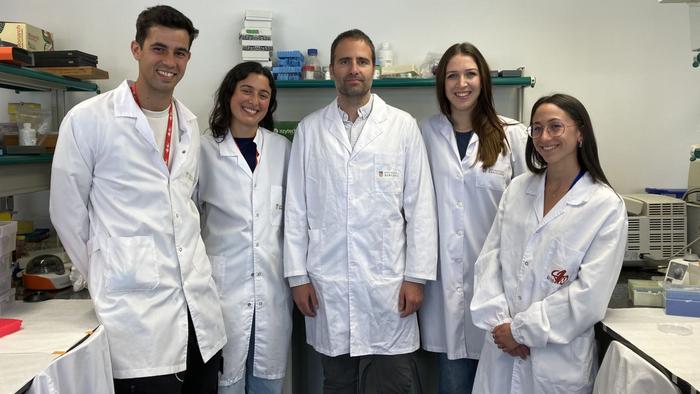
New advances in cancer viral immunotherapy

Credit: UNIVERSITY OF BARCELONA (UB) – BELLVITGE BIOMEDICAL RESEARCH INSTITUTE (IDIBELL)

Vaccinia viruses are therapeutic tools with different biomedical applications depending on the susceptibility characteristics. For example, the strain called MVA (modified vaccinia Ankara), which is unable to replicate in mammalian cells, triggers a potent immune system response and is used to develop vaccines against COVID-19 or AIDS. In contrast, other strains such as Western Reserve (WR) or Copenhagen (Cop), which replicate efficiently in tumour cells, are used to develop cancer treatments. For this reason, they are called immune-oncolytic viruses and are the basis of viral immunotherapy.

However, these viral strains have reduced immunogenicity, which makes them less effective in activating patients’ immune responses against tumours.

Now, a study led by the University of Barcelona, the Bellvitge Biomedical Research Institute (IBIDELL) and the University of Munich (Germany) has developed a new strain of vaccinia virus, which can replicate in tumour cells while maintaining increased immunogenicity. Specifically, it can to induce so-called immunogenic cell death in tumour cells.

The study, published in the journal Molecular Therapy, has been carried out with the support of the Spanish Association Against Cancer (AECC) and the collaboration of the State Research Agency (AEI). The new therapeutic tool, which has been tested in a wide variety of mouse models, has been shown to have reduced toxicity and a high capacity and efficiency to activate immune responses against tumours. The virus is also effective in different cancer treatments, such as melanoma, colon and kidney cancer.

“In addition, we achieved the total disappearance of tumours in a very significant way when we administered the virus repeatedly”, notes expert Juan J. Rojas, first author of the study and principal investigator of the Immunity, Inflammation and Cancer group of the Faculty of Medicine and Health Sciences of the UB and IBIDELL.

The discovery of this new viral strain represents a significant advance in viral immunotherapy research and demonstrates its therapeutic potential for treating cancer patients.
​​​​​​​


Journal

Molecular Therapy

DOI

10.1016/j.ymthe.2024.05.014

Method of Research

Experimental study

Subject of Research

Cells

Article Title

A new MVA ancestor-derived oncolytic vaccinia virus induces immunogenic tumor cell death and robust antitumor immune responses

Article Publication Date

10-May-2024

Share27Tweet17
Previous Post

Sociodemographic heterogeneity in the associations of social isolation with mortality

Next Post

Euclid space mission releases first scientific results and new images of the cosmos

Related Posts

UCSF Study Finds Rapid Rise in Breast Cancer Among Asian American Women
Cancer

UCSF Study Finds Rapid Rise in Breast Cancer Among Asian American Women

July 10, 2026
Radiation Therapy Clinic Closures May Widen US Cancer Care Disparities
Cancer

Radiation Therapy Clinic Closures May Widen US Cancer Care Disparities

July 10, 2026
New Nanotechnology Switch Halts Cancer Growth and Boosts Immune Attack
Cancer

New Nanotechnology Switch Halts Cancer Growth and Boosts Immune Attack

July 10, 2026
Advances and Challenges in Targeting BET Proteins in Solid Tumors
Cancer

Advances and Challenges in Targeting BET Proteins in Solid Tumors

July 10, 2026
Machine Learning Speeds Radiopharmaceutical Discovery and Personalizes Dosimetry
Cancer

Machine Learning Speeds Radiopharmaceutical Discovery and Personalizes Dosimetry

July 10, 2026
Urolithin A Improves Heart Health by Boosting Mitophagy and Gut-Ceramide Axis
Cancer

Urolithin A Improves Heart Health by Boosting Mitophagy and Gut-Ceramide Axis

July 10, 2026
Next Post
Euclid space mission releases first scientific results and new images

Euclid space mission releases first scientific results and new images of the cosmos

  • Mothers who receive childcare support from maternal grandparents show more

    Mothers who receive childcare support from maternal grandparents show more parental warmth, finds NTU Singapore study

    27656 shares
    Share 11059 Tweet 6912
  • University of Seville Breaks 120-Year-Old Mystery, Revises a Key Einstein Concept

    1061 shares
    Share 424 Tweet 265
  • Bee body mass, pathogens and local climate influence heat tolerance

    682 shares
    Share 273 Tweet 171
  • Researchers record first-ever images and data of a shark experiencing a boat strike

    546 shares
    Share 218 Tweet 137
  • Groundbreaking Clinical Trial Reveals Lubiprostone Enhances Kidney Function

    531 shares
    Share 212 Tweet 133
Science

Embark on a thrilling journey of discovery with Scienmag.com—your ultimate source for cutting-edge breakthroughs. Immerse yourself in a world where curiosity knows no limits and tomorrow’s possibilities become today’s reality!

RECENT NEWS

  • Widespread Nitrous Oxide Undersaturation Found in U.S. Lakes This Summer
  • Long-Term Home Deep Sleep Modulation Shows Promise in Parkinson’s Disease
  • Multi-Omics Reveal DNA Methylation Changes in Obesity Rat Model
  • Plasma pTau217 and pTau231 Forecast Dementia Progression in Parkinson’s Disease

Categories

  • Agriculture
  • Anthropology
  • Archaeology
  • Athmospheric
  • Biology
  • Biotechnology
  • Blog
  • Bussines
  • Cancer
  • Chemistry
  • Climate
  • Earth Science
  • Editorial Policy
  • Marine
  • Mathematics
  • Medicine
  • Pediatry
  • Policy
  • Psychology & Psychiatry
  • Science Education
  • Social Science
  • Space
  • Technology and Engineering

Subscribe to Blog via Email

Enter your email address to subscribe to this blog and receive notifications of new posts by email.

Join 5,146 other subscribers

© 2025 Scienmag - Science Magazine

Welcome Back!

Login to your account below

Forgotten Password?

Retrieve your password

Please enter your username or email address to reset your password.

Log In
No Result
View All Result
  • HOME
  • SCIENCE NEWS
  • CONTACT US

© 2025 Scienmag - Science Magazine

Discover more from Science

Subscribe now to keep reading and get access to the full archive.

Continue reading
