


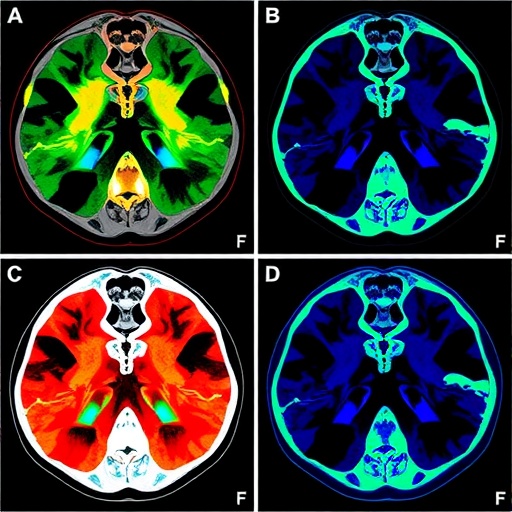
In a groundbreaking study, researchers have ventured into the realm of artificial intelligence to enhance the predictive capabilities in cancer diagnosis, particularly focusing on esophageal adenocarcinoma. The integration of artificial neural networks (ANNs) with hyperspectral imaging offers a futuristic prognostic tool that holds remarkable potential for pretherapeutic histopathological specimens. This innovative approach not only represents a leap forward in cancer diagnostics but also highlights the burgeoning intersection between technology and healthcare.
Hyperspectral imaging technology captures a wide spectrum of light from the sample, allowing for the detailed examination of tissue characteristics at a molecular level. Unlike conventional imaging techniques, hyperspectral imaging can analyze numerous wavelengths simultaneously, revealing subtle variations in chemical composition and cellular structure that are often imperceptible to the naked eye. The data generated from this technique is multidimensional, creating a rich dataset that requires advanced analytical methods for interpretation.
The study, spearheaded by Trifone and colleagues, leverages the power of artificial neural networks to sift through the complex data generated by hyperspectral imaging. ANNs are modeled after the human brain’s neural networks and are capable of learning from vast amounts of information. The researchers trained these networks with labeled data from histopathological specimens, enabling the ANN to recognize patterns and make predictions about patient outcomes with impressive accuracy.
Following this innovative methodology, the team utilized a variety of statistical and machine learning techniques to optimize the predictive capabilities of the ANN. The model was subjected to rigorous validation to ensure its reliability and accuracy. This process included cross-validation techniques, where multiple subsets of the data were used to both train and test the model, resulting in a robust and generalizable predictive tool for esophageal adenocarcinoma prognosis.
One of the significant challenges in cancer diagnosis is the variability in tumors due to the heterogeneity of cancer cells. Each tumor might behave differently and respond to treatment in varied ways. The integration of ANNs with hyperspectral imaging allows for the quantification of this heterogeneity, providing a more nuanced understanding of the tumor microenvironment. By recognizing these complex patterns, the ANN could potentially predict how a tumor may respond to specific therapeutic interventions, paving the way for personalized cancer treatment strategies.
Moreover, the results demonstrated that the ANN could effectively classify histopathological samples based on their spectral signatures. This classification ability is paramount in differentiating between various grades of tumors and determining the appropriate therapeutic approach. The findings underscore the potential of hyperspectral imaging combined with machine learning as a revolutionary diagnostic tool, possibly transforming conventional biopsy techniques into more efficient and reliable processes.
The researchers highlighted the significance of collaboration between oncologists, pathologists, data scientists, and imaging specialists in realizing the full potential of this technology. Interdisciplinary teamwork is essential to bridge the gap between advanced algorithm development and clinical application, ensuring that insights derived from data can be effectively integrated into real-world medical practices.
As the landscape of cancer research evolves, the role of artificial intelligence continues to become increasingly prominent. This study not only serves as a case in point for the potential applications of machine learning in oncology but also sets the groundwork for future investigations into the use of similar technologies across various cancer types. The research opens doors to a new frontier in oncology, where predictive analytics could facilitate early intervention and tailored treatment plans, ultimately leading to improved patient outcomes.
Furthermore, the ethical ramifications of employing AI in healthcare cannot be overlooked. While the promise of enhanced prognostic tools is enticing, there are important considerations regarding patient data privacy, algorithmic bias, and the need for transparency in how these models make predictions. As the technology matures, ongoing discussions will be necessary to ensure that advancements in AI do not outpace the ethical frameworks governing their use in clinical settings.
The novelty of this research lies in its comprehensive approach to harnessing the synergy between advanced imaging techniques and artificial intelligence. With continued support from the scientific community and investments in technology, the pathway toward more refined diagnostic capabilities looks increasingly bright. Future studies may expand upon this work by incorporating additional data sources, including genetic and clinical information, further enhancing the specificity and accuracy of predictions for various cancer types.
Overall, as we move forward in an era characterized by rapid technological advancements, the integration of artificial neural networks with hyperspectral imaging represents a crucial turning point in cancer diagnostics. The implications of this research could usher in a new age of precision medicine, where treatments are no longer one-size-fits-all but instead tailored to the unique characteristics of each patient’s cancer. As these methodologies become clinical realities, there is hope that we will see more lives saved and a marked improvement in the quality of cancer care worldwide.
To ensure the effectiveness and clinical relevance of such technologies, ongoing research will be essential. This includes longitudinal studies that track patient outcomes over time, assessing both the accuracy of ANN predictions and the real-world impacts of personalized treatment plans based on these predictions. The ultimate goal of such transformative research is to realize a future where cancer prognosis is not dictated solely by historical data, but by nuanced, predictive analytics that consider the individual patient’s cancer biology, leading to optimized therapeutic outcomes.
In conclusion, as artificial intelligence continues to permeate various sectors of healthcare, the implications of this research highlight a revolution in how we understand, diagnose, and treat one of humanity’s most formidable challenges—cancer. The integration of artificial neural networks with hyperspectral imaging is a testament to the relentless pursuit of innovative solutions that could redefine patient care and catalyze the next generation of cancer diagnostics.
Trifone, C.T., Maktabi, M., Bischoff, P. et al. Artificial neural networks as a prognostic tool using hyperspectral imaging on pretherapeutic histopathological specimens of esophageal adenocarcinoma.
J Cancer Res Clin Oncol 151, 274 (2025). https://doi.org/10.1007/s00432-025-06340-5
Cite Scienmag News
Nathaniel Bowman. (October 4, 2025). AI Enhances Prognosis in Esophageal Adenocarcinoma via Hyperspectral Imaging. Scienmag. https://scienmag.com/ai-enhances-prognosis-in-esophageal-adenocarcinoma-via-hyperspectral-imaging/
Nathaniel Bowman. "AI Enhances Prognosis in Esophageal Adenocarcinoma via Hyperspectral Imaging." Scienmag, 4 October 2025, https://scienmag.com/ai-enhances-prognosis-in-esophageal-adenocarcinoma-via-hyperspectral-imaging/. Accessed 1 September 2026.
Nathaniel Bowman. "AI Enhances Prognosis in Esophageal Adenocarcinoma via Hyperspectral Imaging." Scienmag. October 4, 2025. https://scienmag.com/ai-enhances-prognosis-in-esophageal-adenocarcinoma-via-hyperspectral-imaging/


