


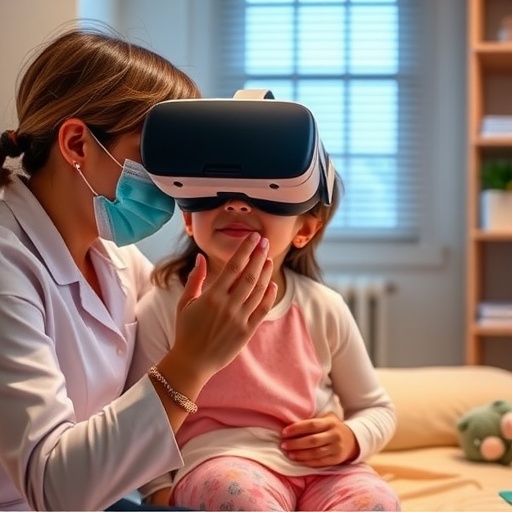
In an innovative approach to enhance the wellbeing of healthcare providers working in pediatric palliative care, a recent study has unveiled the potential of virtual reality (VR) as a transformative tool. As practitioners navigate the emotionally charged landscape of treating critically ill children, incorporating immersive technologies like VR may offer a refreshing avenue for emotional respite and mental rejuvenation. This groundbreaking research highlights how integrating VR can not only improve the mental health of caregivers but also optimize their capacity to deliver compassionate care.
The study, conducted by a team of researchers including Marinetto, De Tommasi, and Rosa, sheds light on the often-overlooked impact of caregiver well-being on patient outcomes. Pediatric palliative care providers experience significant emotional strain as they frequently encounter the end-of-life scenarios and the challenges of managing complex symptomatology in young patients. This study posits that using VR as a therapeutic tool could mitigate stress, providing healthcare professionals with a much-needed escape from their daily challenges.
Virtual reality, once regarded primarily as an entertainment medium, has found a variety of applications across multiple sectors, including healthcare. Hospitals have started to utilize VR for various purposes, including patient pain management, anxiety reduction, and enhancing overall treatment experiences. By creating a simulated environment that can distract patients or provide relaxation, VR has opened up new horizons, and now, this research takes it a step further by focusing on the caregivers themselves.
The essence of the study revolves around the implementation of VR experiences tailored specifically for healthcare providers. By exposing caregivers to calming environments such as serene beaches or tranquil forests, the researchers aim to foster a sense of peace and mindfulness. The controlled settings allow healthcare professionals to disconnect from the emotional tax associated with their roles, which is paramount in an industry that often faces a high risk of burnout.
Preliminary findings from the study suggest that even short interventions involving VR experiences can lead to significant improvements in mood and reductions in stress levels. When participants engaged in these virtual environments, they reported increased feelings of relaxation and reduced anxiety. Such outcomes are crucial in sustaining the emotional health of those dedicating their careers to pediatric palliative care, where compassion fatigue is a significant concern.
Moreover, the research introduces a compelling perspective on the correlation between caregiver wellbeing and patient outcomes. It’s well-established that healthcare providers who tend to their own mental and emotional health can deliver better care. Reduced stress levels among providers translate to enhanced interactions with patients and families, ultimately facilitating comfort and compassion during difficult times. Therefore, promoting wellbeing among caregivers becomes not just a personal oasis, but a professional necessity.
The potential scalability of VR therapy provides exciting implications for pediatric palliative care practices around the globe. Unlike traditional interventions, which may require extensive time commitments and resources, VR can be tailored into routine breaks during shifts, making it an accessible option for healthcare environments. As the field continues to evolve, the integration of technology like VR could become a standard feature of palliative care programs.
However, while the promise of VR as a therapeutic tool is evident, it’s essential to consider factors such as accessibility and cost. Not all healthcare facilities may have the resources to invest in VR equipment or training. Therefore, further research and collaboration with technology developers and healthcare providers will be essential in finding feasible solutions to implement this promising tool on a wider scale.
As the findings from this study garner attention, they bring with them a renewed focus on the importance of mental health support for those who care for the most vulnerable patients. The findings work to combat the stigma surrounding self-care within the healthcare profession, reinforcing the notion that caring for caregivers is as important as caring for patients. This progressive approach champions an inclusive understanding of health, encompassing both physical and mental wellness.
In conclusion, as healthcare systems continue to grapple with the demands of providing tailored care in pediatric palliative settings, innovative solutions such as virtual reality offer a glimpse into the future. The study by Marinetto et al. encourages institutions to explore novel ways to foster wellbeing among their practitioners, demonstrating that investing in caregiver wellbeing is crucial for nurturing the holistic health of both providers and patients alike. As this research unfolds, it could pave the way for a transformation in how palliative care teams approach their own emotional health amid the challenges they face daily.
The intersection of technology and compassionate care presents a compelling narrative that resonates with healthcare professionals. This is not just about utilizing advanced methods to elevate care standards; it’s about acknowledging the very human aspect of caregiving. The collective mission to alleviate suffering should also extend to those tirelessly working to make a difference. As the healthcare community continues to innovate, VR could very well serve as a beacon for hopeful futures, not only for patients but also for the dedicated caregivers standing steadfast by their sides.
As we move forward, the implications of this research might encourage further studies and discussions surrounding the integration of innovative technologies in healthcare practices around the world. By taking proactive measures to support healthcare providers, we create a healthier, more sustainable environment where compassion can flourish, ultimately leading to better holistic care for everyone involved.
Marinetto, A., De Tommasi, V., Rosa, M. et al. Virtual reality as a tool to promote healthcare providers wellbeing in pediatric palliative care.
BMC Health Serv Res 25, 1295 (2025). https://doi.org/10.1186/s12913-025-13253-z
Cite Scienmag News
Harold Sullivan. (October 3, 2025). Enhancing Pediatric Palliative Care: VR for Provider Wellbeing. Scienmag. https://scienmag.com/enhancing-pediatric-palliative-care-vr-for-provider-wellbeing/
Harold Sullivan. "Enhancing Pediatric Palliative Care: VR for Provider Wellbeing." Scienmag, 3 October 2025, https://scienmag.com/enhancing-pediatric-palliative-care-vr-for-provider-wellbeing/. Accessed 5 September 2026.
Harold Sullivan. "Enhancing Pediatric Palliative Care: VR for Provider Wellbeing." Scienmag. October 3, 2025. https://scienmag.com/enhancing-pediatric-palliative-care-vr-for-provider-wellbeing/


