


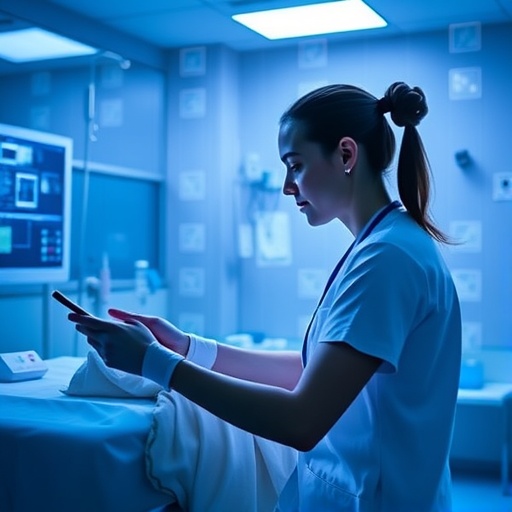
In an era where technology is reshaping various facets of education, the field of nursing has not been left untouched. The integration of novel educational methodologies, notably those leveraging advanced simulations, promises to transform how nursing students acquire crucial skills and knowledge. A recent groundbreaking study by Kang and Lee sheds light on the efficacy of HoloPatient-based simulation education, which aims to enhance learning motivation and foster a more positive attitude among nursing students. The implications of their findings could ripple through the educational landscape.
The study was conducted against the backdrop of an ever-evolving healthcare environment, one that increasingly demands proficient and adaptable nursing professionals. The researchers employed a mixed methods approach, balancing quantitative data with qualitative insights. This dual methodology not only facilitated a robust examination of the educational intervention but also allowed for a nuanced understanding of students’ lived experiences and reactions to the new teaching method. The incorporation of HoloPatient technology represented a stride toward creating more engaging, realistic, and interactive learning scenarios that traditional methods were unable to provide.
HoloPatient technology, which utilizes augmented reality and interactive simulations, places students in lifelike scenarios where they can practice their clinical skills in a safe environment. This approach enables students to engage with virtual patients, providing them the opportunity to apply theoretical knowledge practically without the immediate risks associated with real-life patient interactions. As students navigate through various clinical scenarios, they develop critical thinking and problem-solving skills that are essential in patient care.
One of the primary objectives of the study was to assess how this innovative approach could influence nursing students’ motivation to learn. Motivation is a key driver in academic success, particularly in rigorous fields such as nursing. The researchers employed validated tools to measure changes in motivation levels before and after the implementation of HoloPatient simulation. Early results indicated a significant uptick in motivation among participants, suggesting that students were more engaged and enthusiastic about their learning processes compared to traditional instructional methods.
Moreover, the study delved into the impact of the HoloPatient simulations on students’ attitudes towards nursing as a profession. Attitude plays a crucial role in shaping a student’s commitment to their chosen field. Those who participated in the HoloPatient interventions reported feeling more confident and prepared for clinical practice, which may ultimately influence their career trajectories and professional satisfaction. The positive feedback from students underscores the potential of such technology to reshape perceptions about nursing education.
The qualitative aspect of the study gathered detailed feedback from participants through focus groups and interviews. Students expressed feelings of excitement and empowerment when utilizing HoloPatient technology. They relayed how the immersive experience boosted their confidence and reduced the anxiety often associated with clinical placements. The ability to practice in a controlled environment where mistakes were viewed as learning opportunities fostered a growth mindset among the nursing students involved in the study.
Additionally, the results of the study contribute valuable insights into the pedagogical implications of integrating technology into nursing education. Traditional teaching methods often emphasize rote memorization and passive learning, which can limit students’ engagement and retention of critical concepts. In contrast, HoloPatient simulation allows for active participation and hands-on experience, making the learning process more effective and enjoyable. This shift from passive to active learning is crucial in developing the competencies required for modern nursing practice.
Furthermore, as healthcare systems around the globe continue to embrace technological advancements, nursing education must keep pace with these changes. The findings from Kang and Lee’s study exemplify how adopting innovative educational tools can lead to better-prepared healthcare professionals. By embracing simulation technologies, nursing programs can enhance the educational experience, ultimately leading to improved patient care outcomes.
Educational institutions now face the challenge of integrating such technology into their existing curricula. As Kang and Lee’s research highlights, the transition to HoloPatient-based education requires careful planning and support from faculty members. Educators must be adequately trained to facilitate and assess the use of these advanced simulations, ensuring that their full potential is realized within the classroom. The long-term success of such strategies depends largely on faculty buy-in and institutional commitment to professional development.
In examining the broader implications, the study raises important questions about the future of nursing education. As the healthcare landscape continues to evolve, will traditional teaching methods still hold their ground? Or will innovative approaches like HoloPatient simulations become the norm? The success of this study may serve as a catalyst for further research and development of similar educational technologies, paving the way for a paradigm shift in how nursing education is approached.
As this research gains traction, it is likely to influence stakeholders within the educational sector, including policymakers, curriculum designers, and accreditation bodies. These groups will need to recognize the value of integrating advanced simulation technologies to enhance nursing education. While the path forward may be fraught with challenges, the potential benefits for students and, ultimately, the healthcare system, are undeniable.
In conclusion, Kang and Lee’s mixed methods study offers a compelling glimpse into the future of nursing education through the lens of HoloPatient simulation technology. The findings support the notion that technology can enhance educational experiences, leading to motivated and confident nursing practitioners. As the nursing profession navigates the myriad challenges posed by a rapidly changing healthcare landscape, embracing innovative educational approaches will be essential in preparing the next generation of nurses.
A transformation is underway in nursing education, one driven by necessity and innovation. The study by Kang and Lee serves as a beacon, illuminating the path toward a more engaged, prepared, and confident nursing workforce. The future of nursing education seems brighter, supported by the promise of technological advancements that will ultimately shape not just how students learn, but how they care for patients in an increasingly complex world.
Cite Scienmag News
Courtney Benton. (October 3, 2025). Enhancing Nursing Students’ Motivation Through HoloPatient Simulations. Scienmag. https://scienmag.com/enhancing-nursing-students-motivation-through-holopatient-simulations/
Courtney Benton. "Enhancing Nursing Students’ Motivation Through HoloPatient Simulations." Scienmag, 3 October 2025, https://scienmag.com/enhancing-nursing-students-motivation-through-holopatient-simulations/. Accessed 9 September 2026.
Courtney Benton. "Enhancing Nursing Students’ Motivation Through HoloPatient Simulations." Scienmag. October 3, 2025. https://scienmag.com/enhancing-nursing-students-motivation-through-holopatient-simulations/


