


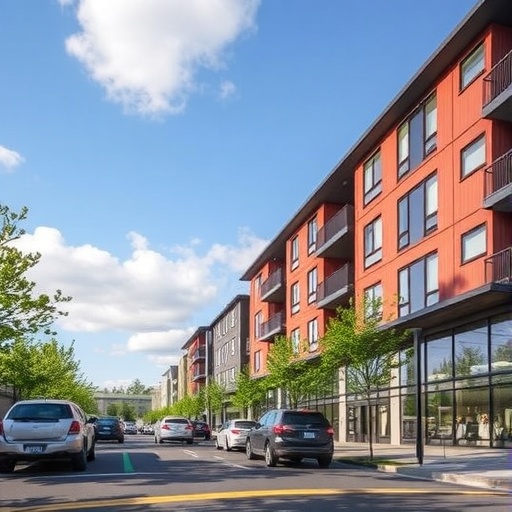
New research unveiled by Portland State University’s Transportation Research and Education Center (TREC) sheds light on the dynamics of transit-oriented development (TOD) in the Portland metropolitan area. The study reveals a startling fact: these developments generate drastically fewer car trips than previously anticipated. This trend is particularly evident in areas that prioritize affordable housing, challenging conventional wisdom about transit usage and car dependency. The findings are a part of an expansive project evaluating TODs that have emerged since 2005, culminating in the latest resident survey conducted in 2024. The significance of this research lies in its potential to reshape future urban planning and transportation infrastructure development.
The report, titled “Portland Metro Transit-Oriented Developments (TODs): 2024 Resident Survey Findings,” highlights a compelling shift in travel behavior among residents living in TODs since the onset of the pandemic. Researchers surveyed residents living in multifamily units constructed between 2018 and 2023 across eight cities in Oregon, including Portland, Beaverton, and Milwaukie, among others. These urban experiments represent the intersection of public transportation access and residential development, with profound implications for sustainability and urban living norms.
This latest survey builds upon two decades of data collection, examining the lived experiences of residents within these transit-centric spaces. Unlike previous studies, the current research focuses significantly on developments that are explicitly designed to accommodate households earning 30% to 80% of the area median income. Notably, a substantial portion of the surveyed sites—28 out of 36—were identified as affordable housing projects, marking a significant emphasis on inclusivity and accessibility in urban planning.
Among its major revelations, the study indicates that TOD residents engage in significantly lower levels of car travel compared to standard expectations. Particularly within affordable housing sectors, vehicle trips are reported to be only a quarter to two-fifths of anticipated rates. This is a radical departure from traditional car-centric urban development paradigms, suggesting that communities with robust public transit access inherently foster more sustainable travel behaviors.
The survey revealed that the reliance on personal vehicles among residents has diminished notably, with less than half of journeys made by car. Instead, the data reflects a remarkable shift towards greater utilization of public transit, which accounts for 28% of trips, complemented by a strong preference for pedestrian travel at 19% and a smaller percentage for cycling at 2%. Particularly striking is the finding that 41% of residents commute via transit, a figure that vastly exceeds the Portland area average of 7%.
Moreover, the research illustrates a burgeoning trend: among residents residing primarily in affordable housing developments, a staggering half do not own a car. Consequently, these residents actually undertake more trips using transit, walking, and biking than their car-owning counterparts. This evidence supports the notion that accessible transit networks integrated with affordable housing not only alleviate car dependency but also promote healthier and more active lifestyle choices among urban populations.
Perhaps one of the most significant takeaways from the survey is the shift in behavior following the move to a TOD. Many participants reported that since relocating, they have decreased their car usage while increasing their reliance on walking and public transportation. In fact, approximately 20% of respondents indicated that they have either parted ways with a vehicle or are contemplating doing so, largely owing to the walkable and transit-friendly designs of their neighborhoods.
The study further uncovers divergences in housing priorities among different resident demographics. Individuals in affordable housing prioritize cost efficiency and accessibility to transit, while those in market-rate units tend to emphasize high-end amenities, overall neighborhood quality, and parking availability. This disparity emphasizes the diverse needs that urban planners and developers must consider in creating equitable and effective housing solutions.
In addition to these findings, the TREC study also identifies several viable strategies to further enhance transit usage within TODs. Suggestions include the expansion of reduced-fare public transit passes tailored for eligible low-income residents and the improved integration of affordable housing sites with existing light rail services. These recommendations not only promise to advance equitable transit accessibility but also hold immense potential in shaping the urban landscape of Portland and beyond.
Portland State University’s Transportation Research and Education Center serves as a pioneering institution that fosters innovative techniques in transportation research and policy. TREC champions a multidisciplinary approach addressing core issues within transportation, dedicating efforts to produce actionable insights and tools for decision-makers. Its commitment to diversity, research collaboration, and educational outreach reflects a deep-rooted goal to shape transportation practices that engage both current and future generations.
In conclusion, the findings from TREC’s latest report offer a pivotal opportunity to rethink the role of transportation in urban environments. As metropolitan areas expand and evolve, understanding the relationship between residential development, transit accessibility, and sustainable travel behaviors becomes increasingly critical. The implications of this research extend far beyond Portland, providing valuable lessons for cities worldwide striving to cultivate more eco-friendly urban settings.
The insights gathered from this extensive research not only demonstrate the effectiveness of TODs in promoting sustainable travel patterns but also underscore the importance of integrating affordable housing into the transit framework. With cities worldwide facing similar challenges of congestion, pollution, and urban sprawl, the findings from Portland’s experience could serve as a roadmap for reshaping urban transportation and planning policies in the years to come.
Moreover, the study reflects a growing awareness of the need for inclusive urban spaces that cater to a spectrum of income levels, ensuring that all residents benefit from accessible and efficient transportation networks. As we move forward, it is essential to leverage these insights to influence future developments, encourage broader community engagement, and ultimately foster a more sustainable urban evolution.
Keywords
Mass transit, Transportation, Transportation infrastructure, Transportation engineering, Traffic engineering, Automobile traffic, Roads, Streets, Vehicles, Railway trains
Cite Scienmag News
Denise Maddox. (September 25, 2025). PSU Study Reveals Transit-Oriented Developments in Portland Decrease Car Usage, Particularly in Affordable Housing Areas. Scienmag. https://scienmag.com/psu-study-reveals-transit-oriented-developments-in-portland-decrease-car-usage-particularly-in-affordable-housing-areas/
Denise Maddox. "PSU Study Reveals Transit-Oriented Developments in Portland Decrease Car Usage, Particularly in Affordable Housing Areas." Scienmag, 25 September 2025, https://scienmag.com/psu-study-reveals-transit-oriented-developments-in-portland-decrease-car-usage-particularly-in-affordable-housing-areas/. Accessed 4 September 2026.
Denise Maddox. "PSU Study Reveals Transit-Oriented Developments in Portland Decrease Car Usage, Particularly in Affordable Housing Areas." Scienmag. September 25, 2025. https://scienmag.com/psu-study-reveals-transit-oriented-developments-in-portland-decrease-car-usage-particularly-in-affordable-housing-areas/


