

Friday, August 28, 2026
Science
No Result
View All Result
  • Login
  • HOME
  • SCIENCE NEWS
  • CONTACT US
  • HOME
  • SCIENCE NEWS
  • CONTACT US
No Result
View All Result
Scienmag
No Result
View All Result
Home Science News Earth Science

Dinosaur Extinction Linked to Continental Facies Changes

September 15, 2025
in Earth Science
Eleanor Cresswell
By Eleanor Cresswell Earth, Ocean & Natural Hazards
Reading Time: 3 mins read
0
Dinosaur Extinction Linked to Continental Facies Changes
67
SHARES
610
VIEWS
Share on FacebookShare on Twitter
ADVERTISEMENT

In a groundbreaking study that promises to reshape our understanding of the Cretaceous-Paleogene boundary, researchers have uncovered a compelling connection between the mass extinction of dinosaurs and significant continental facies shifts. This study not only offers new insights into the events surrounding the extinction of these magnificent creatures but also highlights the profound impact they had on global ecosystems. The findings challenge existing narratives, suggesting a more complex interplay between extinction events and geological changes.

As we delve into the intricate details of this research, it is essential to understand what the Cretaceous-Paleogene boundary represents. Approximately 66 million years ago, this geological boundary marked a profound transition in Earth’s history, characterized by the abrupt disappearance of a vast majority of species, including the non-avian dinosaurs. This rich tapestry of life was suddenly altered, giving rise to new ecological dynamics. The research led by Weaver and colleagues identifies how this extinction event can elucidate changes in continental facies, or sedimentary environments, which are now being closely examined through the lens of modern geology.

The significance of understanding facies shifts cannot be understated. Facies are essentially the distinct characteristics of a rock unit that reflect specific environments of deposition, ranging from deep marine settings to deltaic or fluvial systems. These shifts are crucial for reconstructing past environments and understanding the climatic and tectonic events that may have influenced them. The study posits that the extinction of dinosaurs fundamentally altered the biota in these environments, striking a delicate balance that dictated sedimentation patterns and ecological trajectories for millions of years to come.

Traditional views have often relegated the role of dinosaurs in these sedimentary processes to the background. However, the new findings suggest that the loss of these terrestrial giants drastically modified the landscape and, in turn, the facies that developed during the immediate aftermath of their extinction. This relationship between biological extinction and geological transformation opens up a new dialogue within earth sciences, urging geologists to consider biological factors more prominently in their models and theories.

The authors deployed an interdisciplinary approach, utilizing paleontological data alongside sedimentological analysis to bridge the gap between life and geology. Their comprehensive research methodology involved examining stratigraphic records across various locations globally affected by the mass extinction event. By correlating these records with the fossil evidence of dinosaurs and other terrestrial fauna, the researchers were able to illustrate a timeline of ecological shifts that coincided with notable geological changes.

One of the remarkable aspects of this study is its emphasis on the temporal aspects associated with extinction and facies changes. While it is widely accepted that the asteroid impact is a significant factor in the global extinction event, the authors suggest that the immediate aftermath also plays a critical role in the redevelopment of ecosystems. Over time, the decimation of biodiversity led to alterations in sediment dynamics, influencing not only the local environments but also the global geological record.

Moreover, this research challenges certain assumptions regarding resilience and recovery in ancient ecosystems. While scientists have often perceived the recovery following mass extinctions as a linear process, this new perspective argues for a more multifaceted approach. The interplay between the loss of dominant species like dinosaurs and the emergence of new faunal groups generated a complex, non-linear recovery trajectory marked by varying degrees of environmental and biological stress.

In addition to providing a fresh take on ancient environments, the findings of this research have profound implications for contemporary issues surrounding biodiversity loss. By examining the past through the lens of extinction events, we might glean insights into how current species declines and habitat degradation could shape future sedimentary environments. The echoes of history could serve as a cautionary tale for today’s biodiversity crisis, reiterating the importance of understanding the intricate link between species health and global geological processes.

The study also delves into the intricate ways in which geomorphology and sediment transport can be influenced by biological factors. As species went extinct, the composition of vegetation and microbial life underwent fundamental shifts, leading to new sediment erosion and deposition patterns. The dynamic interplay between life and geology thus becomes a central theme, further supporting the hypothesis that

Subject of Research: Earth Science

Article Title: Dinosaur Extinction Linked to Continental Facies Changes

Article References: Weaver, L. N., Tobin, T. S., Sprain, C. J., Wilson Deibel, P. K., Korasidis, V. A., Carvalho, M. R., Kaskes, P., & Fendley, I. M. (2025). Dinosaur extinction can explain continental facies shifts at the Cretaceous-Paleogene boundary. Communications Earth & Environment, 6(1), Article 712. https://doi.org/10.1038/s43247-025-02673-8

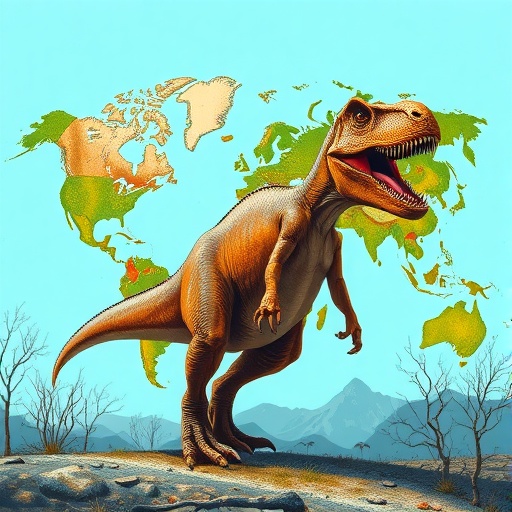
Image Credits: AI Generated

DOI: 10.1038/s43247-025-02673-8

Keywords: complex interplay between extinction and geology, continental facies shifts explained, Cretaceous-Paleogene boundary research, dinosaur extinction events, ecological dynamics after mass extinction, impact of geological changes on ecosystems, insights into ancient ecosystems, modern geology and extinction studies, non-avian dinosaurs disappearance, sedimentary environments and extinction, significance of facies in geology, Weaver research on extinction

Cite Scienmag News

Eleanor Cresswell. (September 15, 2025). Dinosaur Extinction Linked to Continental Facies Changes. Scienmag. https://scienmag.com/dinosaur-extinction-linked-to-continental-facies-changes/

Eleanor Cresswell. "Dinosaur Extinction Linked to Continental Facies Changes." Scienmag, 15 September 2025, https://scienmag.com/dinosaur-extinction-linked-to-continental-facies-changes/. Accessed 28 August 2026.

Eleanor Cresswell. "Dinosaur Extinction Linked to Continental Facies Changes." Scienmag. September 15, 2025. https://scienmag.com/dinosaur-extinction-linked-to-continental-facies-changes/


Tags: complex interplay between extinction and geologycontinental facies shifts explainedCretaceous-Paleogene boundary researchdinosaur extinction eventsecological dynamics after mass extinctionimpact of geological changes on ecosystemsinsights into ancient ecosystemsmodern geology and extinction studiesnon-avian dinosaurs disappearancesedimentary environments and extinctionsignificance of facies in geologyWeaver research on extinction
Share27Tweet17
Previous Post

Innovative Digital Cognitive Test Enhances Alzheimer’s Disease Diagnosis

Next Post

f(R) Gravity: Loop Corrections, Cosmic Acceleration

Related Posts

New study reveals how soil moisture drives worsening droughts in Brahmaputra Valley
Earth Science

New study reveals how soil moisture drives worsening droughts in Brahmaputra Valley

August 28, 2026
New Learning Method Improves Robust Ship Detection Across Coastal SAR Conditions
Earth Science

New Learning Method Improves Robust Ship Detection Across Coastal SAR Conditions

August 28, 2026
Do Kilometer-Scale Weather Models Still Need Orographic Gravity-Wave Drag Parameterization?
Earth Science

Do Kilometer-Scale Weather Models Still Need Orographic Gravity-Wave Drag Parameterization?

August 28, 2026
Alkali Brines Gradually Destroy Refractory Stardust on Asteroid Bennu
Earth Science

Alkali Brines Gradually Destroy Refractory Stardust on Asteroid Bennu

August 27, 2026
Ghana’s Sunyani West Maps Groundwater Recharge Potential and Contamination Risks
Earth Science

Ghana’s Sunyani West Maps Groundwater Recharge Potential and Contamination Risks

August 27, 2026
Central Pacific El Niño Teleconnections Boost North Atlantic Oscillation Predictability
Earth Science

Central Pacific El Niño Teleconnections Boost North Atlantic Oscillation Predictability

August 27, 2026
Next Post
f(R) Gravity: Loop Corrections, Cosmic Acceleration

f(R) Gravity: Loop Corrections, Cosmic Acceleration

  • Mothers who receive childcare support from maternal grandparents show more optimized

    Mothers who receive childcare support from maternal grandparents show more parental warmth, finds NTU Singapore study

    27656 shares
    Share 11059 Tweet 6912
  • University of Seville Breaks 120-Year-Old Mystery, Revises a Key Einstein Concept

    1061 shares
    Share 424 Tweet 265
  • Bee body mass, pathogens and local climate influence heat tolerance

    682 shares
    Share 273 Tweet 171
  • Researchers record first-ever images and data of a shark experiencing a boat strike

    546 shares
    Share 218 Tweet 137
  • Groundbreaking Clinical Trial Reveals Lubiprostone Enhances Kidney Function

    531 shares
    Share 212 Tweet 133
Science

Embark on a thrilling journey of discovery with Scienmag.com—your ultimate source for cutting-edge breakthroughs. Immerse yourself in a world where curiosity knows no limits and tomorrow’s possibilities become today’s reality!

RECENT NEWS

  • Electrothermal Strategy Boosts Toluene Oxidation Using Manganese-Cobalt Composite Oxide Monolith
  • Retraction: Study Examining Graphene Oxide/Nanozirconia Effects on Geopolymer Concrete Strength and Durability
  • Mitochondria-Targeted Therapy Shows Promise Against Intervertebral Disc Degeneration
  • Correction: Magnetic fields shape two-stream instability around Moon during solar wind interaction

Categories

  • Agriculture
  • Anthropology
  • Archaeology
  • Athmospheric
  • Biology
  • Biotechnology
  • Blog
  • Bussines
  • Cancer
  • Chemistry
  • Climate
  • Earth Science
  • Editorial Policy
  • Marine
  • Mathematics
  • Medicine
  • Pediatry
  • Policy
  • Psychology & Psychiatry
  • Science Education
  • Social Science
  • Space
  • Technology and Engineering

Subscribe to Blog via Email

Enter your email address to subscribe to this blog and receive notifications of new posts by email.

Join 5,150 other subscribers

© 2025 Scienmag - Science Magazine

Welcome Back!

Login to your account below

Forgotten Password?

Retrieve your password

Please enter your username or email address to reset your password.

Log In
No Result
View All Result
  • HOME
  • SCIENCE NEWS
  • CONTACT US

© 2025 Scienmag - Science Magazine

Discover more from Science

Subscribe now to keep reading and get access to the full archive.

Continue reading