


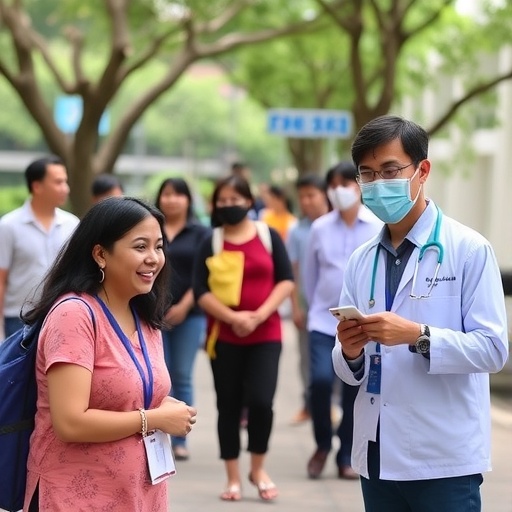
Singapore’s healthcare landscape is facing unprecedented challenges driven by escalating costs, demographic shifts, particularly population aging, and an increasing prevalence of chronic diseases. In response, Duke-NUS Medical School has strategically retuned its focus towards leveraging population health sciences and technologically enabled research, crystallized in the rebranding of its Health Services Research and Population Health (HSRPH) Programme. This initiative aims to synergize academic research with national healthcare policies to catalyze patient-centric innovations that optimize outcomes while streamlining expenditure in health service delivery.
The HSRPH programme exemplifies a paradigm shift towards scalable, data-informed health interventions designed for broad public health impact. A flagship project involves modeling a nationwide hypertension control strategy capable of delivery at a remarkably low cost of approximately S$20 per patient per month. This initiative integrates algorithm-driven clinical decision support systems for medication prescribing with proactive behavioral interventions—namely motivational follow-up conducted by nurses via telecommunication. Such approaches reveal a synthesis of precision and preventive medicine by not only improving blood pressure control but also attenuating cardiovascular morbidity, thereby exemplifying cost-efficient disease management.
Another pioneering endeavor under the HSRPH umbrella is the collaborative evaluation of a 4-Dimensional Disease Outbreak Surveillance System (4D-DOSS), developed in partnership with SingHealth. This digital twin system operates as a real-time “hospital infection radar,” charting the spatiotemporal trajectories of infectious agents within clinical wards. By creating an interconnected virtual replica of hospital environments, 4D-DOSS enables enhanced outbreak detection and containment through sophisticated computational epidemiology and network analysis techniques. The positive cost-effectiveness outcomes from this project have influenced operational decisions at Singapore General Hospital, with imminent expansion plans to Changi General Hospital and other institutions, indicating a growing systemic adoption of digital epidemiological tools.
Education lies at the crux of HSRPH’s strategy to proliferate expertise in population health. Recognizing the urgent need for a specialized workforce adept at interpreting complex health data and translating findings into policy, Duke-NUS is preparing to launch innovative postgraduate programmes. These curriculum offerings are designed to enhance clinicians’ and health professionals’ proficiency in advanced quantitative methodologies, health technology assessment, and economic evaluation, thus equipping them to excel in emerging roles where health informatics, biostatistics, and policy intersect.
Driving this academic evolution, Professor Marcus Ong, Director of HSRPH, emphasizes the necessity of actionable research that transcends theory to deliver pragmatic, scalable solutions adaptable across diverse healthcare settings. His vision stresses technology-driven inquiry into health services and population health as integral to formulating evidence-based policies that render healthcare more accessible and financially sustainable.
Complementing this, the Deputy Director Professor Nicholas Graves highlights the program’s commitment to cultivating a new cadre of health science professionals. These individuals will be trained not only in cutting-edge data sciences but will also hone interdisciplinary collaboration and innovation skills, facilitating smooth integration into complex health systems. Such human capital development is pivotal to supporting Singapore’s growing population health demands and in propelling translational research that directly impacts policy and care delivery.
A core component of HSRPH’s mission is to deepen ties with SingHealth, the nation’s largest healthcare cluster, thereby leveraging institutional synergies to optimize resource utilization, promote collaborative research, and accelerate translational activities. This partnership situates HSRPH to contribute substantively towards the national agenda embodied by ‘Healthier SG,’ a comprehensive government initiative emphasizing preventive health measures aimed at curbing disease onset and progression.
Dean Thomas Coffman articulates this strategic alignment, underscoring Duke-NUS’s proactive role in adapting to Singapore’s evolving healthcare priorities through the recalibration of HSRPH. The programme’s repositioning is explicitly intended to fortify Singapore’s capabilities in population health research, thereby delivering policy-relevant insights at a time when healthcare systems globally grapple with sustainability issues amidst demographic pressures.
As ‘Healthier SG’ actively reshapes healthcare delivery models, Duke-NUS’s sharpened research focus ensures that decision-makers have access to rigorously validated, technology-enabled interventions scalable across varying population cohorts and clinical contexts. This alignment reflects a forward-looking paradigm that synergizes clinical innovation, economic prudence, and system-wide health promotion.
The collective output of the HSRPH programme pioneers solutions designed to be viable in real-world healthcare operational frameworks rather than purely academic exercises. By integrating multidisciplinary expertise and state-of-the-art technological platforms, these efforts manifest the transformative potential of population health sciences to improve long-term health outcomes while ensuring economic viability.
In summation, Duke-NUS’s reinvigorated commitment through the HSRPH programme exemplifies how academic medical institutions can proactively address systemic healthcare challenges. By fostering innovation in health services research, education, and collaborative practice, HSRPH aims to elevate Singapore’s health system resilience, enhance policy responsiveness, and ultimately, improve the quality of life for its citizens.
Cite Scienmag News
Evelyn A. (September 5, 2025). Duke-NUS Enhances Population Health Strategies to Tackle Escalating Healthcare Costs and Chronic Disease Challenges. Scienmag. https://scienmag.com/duke-nus-enhances-population-health-strategies-to-tackle-escalating-healthcare-costs-and-chronic-disease-challenges/
Evelyn A. "Duke-NUS Enhances Population Health Strategies to Tackle Escalating Healthcare Costs and Chronic Disease Challenges." Scienmag, 5 September 2025, https://scienmag.com/duke-nus-enhances-population-health-strategies-to-tackle-escalating-healthcare-costs-and-chronic-disease-challenges/. Accessed 28 August 2026.
Evelyn A. "Duke-NUS Enhances Population Health Strategies to Tackle Escalating Healthcare Costs and Chronic Disease Challenges." Scienmag. September 5, 2025. https://scienmag.com/duke-nus-enhances-population-health-strategies-to-tackle-escalating-healthcare-costs-and-chronic-disease-challenges/


