


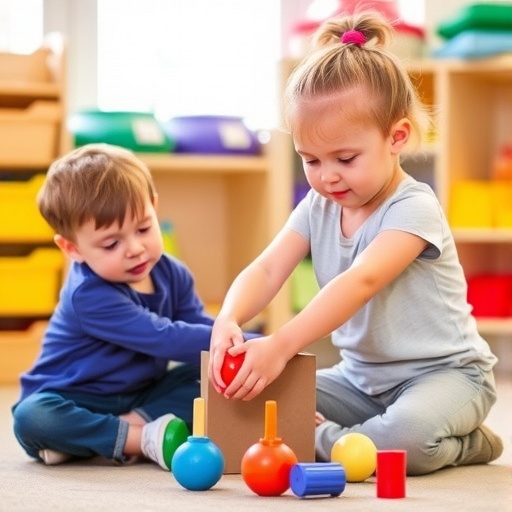
In the realm of childhood development, skill acquisition is a critical area of study that has profound implications for both physical health and cognitive growth. A groundbreaking research study led by Orangi, Ghorbanzadeh, and Basereh seeks to revolutionize the way we understand and facilitate motor skills in children. Their article, titled “A New Idea in Skill Acquisition of Children: Coordinating Motor Competence with Motor Learning Strategies,” was published in BMC Pediatrics and signifies a paradigm shift in educational and developmental strategies aimed at children.
Motor competence encompasses the development of physical skills that enable children to perform tasks ranging from basic movements like running and jumping to more complex actions like playing sports or dancing. The researchers assert that the traditional methods of teaching these skills often fall short by not integrating effective motor learning strategies. Through their innovative approach, the study examines how aligning motor competence with structured learning techniques can enhance overall skill acquisition in children.
One of the core hypotheses presented in the study is that effective motor learning strategies can accelerate the development of motor competence. The researchers investigated various training methods that encourage children to engage with their physical environment creatively and purposefully. By applying these methods, children not only learn how to perform motor tasks but also develop a deeper understanding of their body’s capabilities. This dual approach promotes both physical performance and cognitive awareness, fostering a holistic development model.
The importance of this research extends beyond mere physical education. The coordination of motor competence with learning strategies can significantly impact a child’s self-esteem and confidence. When children successfully master a new skill using effective learning strategies, they experience a boost in self-efficacy. This newfound confidence can translate into other areas of their lives, encouraging them to tackle challenges head-on and nurture a growth mindset.
With the rise of digital learning tools and educational apps, the integration of technology into physical skill training has become a focal point of contemporary research. The study highlights how incorporating technology can enhance motor learning experiences. For instance, digital platforms can provide instant feedback, allowing children to correct their movements in real-time. Such tools can serve as both a motivator and a teacher, offering a multifaceted approach that aligns with modern learning preferences.
Moreover, the study emphasizes the role of educators and parents in facilitating this transformative process. Educators are encouraged to adopt these innovative learning strategies within their curricula, thus creating an environment where children can thrive. By actively participating in the skill acquisition journey, parents can reinforce their children’s learning while also fostering stronger family connections through shared activities and challenges.
The findings of this research also bear implications for the broader educational community. Classroom environments can be adapted to include more physical activity, merging academic lessons with movement-based tasks. This approach aligns with daily learning goals while promoting motor competence. Schools that embrace this holistic method of teaching can expect improved engagement and physical health among their students, potentially leading to lower obesity rates and improved academic performance.
As the study gathers attention from educational policymakers, it raises essential questions about traditional educational systems. Is it time for a complete re-evaluation of how physical education is structured in schools? The research advocates for comprehensive training for teachers, enabling them to utilize the motor learning strategies proposed in the study effectively. Such initiatives could reshape physical education into a more dynamic, inclusive, and effective component of the curriculum.
In light of the current emphasis on mental health and well-being in schools, the research also draws connections between motor competence and emotional wellness. Engaging in physical activity is known to positively impact mental health, and by effectively acquiring motor skills, children can experience reduced anxiety and improved mood. Thus, promoting motor competence not only enhances physical ability but also contributes positively to emotional regulation among children.
The importance of community involvement in promoting motor competence cannot be overstated. Local initiatives that provide children with access to recreational activities, sports teams, and movement-based programs play a vital role in reinforcing the strategies proposed by the study. When communities come together to support children’s physical development, they create an enriched environment that fosters learning, growth, and resilience.
As the research unfolds in the academic community, further studies will undoubtedly seek to validate and expand upon its findings. Collaborative efforts among researchers, educators, and health professionals will be crucial in implementing these strategies on a broader scale. This research not only opens the door to new insights into motor learning but also invites global conversations about the future of childhood education and skill acquisition.
Ultimately, the study led by Orangi, Ghorbanzadeh, and Basereh presents a compelling case for redefining our approach to childhood skill acquisition. By aligning motor competence with innovative learning strategies, there is an opportunity to transform the developmental landscape for children everywhere. As these techniques gain traction, the potential for positive change in children’s physical and cognitive development will undoubtedly reverberate across generations.
In conclusion, this research heralds a new era of understanding in skill acquisition for children. By integrating motor competence with proactive learning strategies, we can forge a path toward a healthier, more active generation. This shift not only enhances physical capabilities but also nurtures emotional and cognitive development, paving the way for holistic growth in children.
Orangi, B.M., Ghorbanzadeh, B. & Basereh, A. A new idea in skill acquisition of children: coordinating motor competence with motor learning strategies.
BMC Pediatr 25, 640 (2025). https://doi.org/10.1186/s12887-025-06019-3
Cite Scienmag News
Ophelia Keating. (September 4, 2025). Enhancing Children’s Skills: Coordinating Motor Competence and Learning. Scienmag. https://scienmag.com/enhancing-childrens-skills-coordinating-motor-competence-and-learning/
Ophelia Keating. "Enhancing Children’s Skills: Coordinating Motor Competence and Learning." Scienmag, 4 September 2025, https://scienmag.com/enhancing-childrens-skills-coordinating-motor-competence-and-learning/. Accessed 1 September 2026.
Ophelia Keating. "Enhancing Children’s Skills: Coordinating Motor Competence and Learning." Scienmag. September 4, 2025. https://scienmag.com/enhancing-childrens-skills-coordinating-motor-competence-and-learning/


