


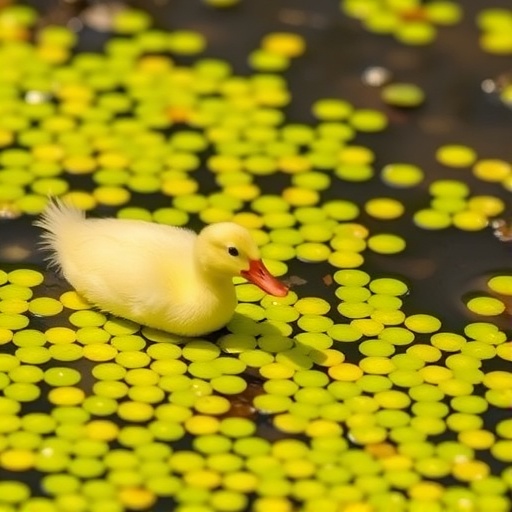
In a groundbreaking study, researchers have turned their attention to the promising potential of duckweed in the field of phytomining, particularly concerning the extraction of precious metals from gold mine tailings. The research conducted by Yusuf, Finaldin, and Putri offers a fresh perspective on a dual objective: not only recovering gold from mine waste but also exploring the viability of producing gold nanoparticles. This novel approach harnesses the remarkable abilities of duckweed, an aquatic plant known for its resilience and rapid growth, to serve as a bioindicator and a bioaccumulator.
Gold mining has long been associated with significant environmental consequences, particularly when it comes to tailings—waste materials that remain after gold extraction. These tailings are often laden with heavy metals and other toxic substances, necessitating effective remediation strategies. The research team posits that employing duckweed could be an innovative solution to address the pressing issue of environmental pollution while simultaneously tapping into the lucrative commodity of gold. This study thus embarks on a journey to reconcile the economic benefits of gold mining with the urgent need for sustainable practices.
Duckweed, belonging to the family Lemnaceae, consists of small, floating plants that thrive in freshwater ecosystems. Their rapid growth rates and efficient nutrient uptake make them ideal candidates for environmental applications, particularly in phytoremediation and phytomining. The researchers have meticulously observed the capacity of duckweed to absorb gold ions from its surrounding environment, offering insights into how these plants could be effectively integrated into mining operations as a greener alternative to conventional mining techniques.
One of the most intriguing aspects of this study is the methodology adopted by the researchers. They utilized a series of controlled experiments to assess the efficiency with which duckweed can uptake gold from mine tailings. By varying environmental parameters such as pH levels, nutrient concentration, and exposure time, the team was able to identify optimal conditions for gold recovery. The findings showcase an impressive ability of duckweed not only to thrive in contaminated environments but also to facilitate the extraction of precious metals in an environmentally conscious manner.
Moreover, the research delves into the mechanistic processes that enable duckweed to bioaccumulate gold. Investigating the physiological and biochemical responses of the plant when exposed to gold-rich media offered valuable insights into its potential applications for sustainable mining practices. These findings could pave the way for enhanced techniques in bioremediation, allowing for the restoration of polluted areas while reaping economic benefits from gold recovery.
In tandem with the extraction capabilities, the study also explores the potential for synthesizing gold nanoparticles from the gold accumulated in duckweed. Nanoparticles have gained significant traction in various fields, including medicine, electronics, and environmental science due to their unique properties and functionalities. By highlighting the possibility of generating gold nanoparticles through a biogenic process, the researchers are opening up new avenues for research and application in materials science and nanotechnology.
The implications of this research extend well beyond the realm of mining. The successful utilization of duckweed for gold recovery presents a unique opportunity for industries grappling with waste management and pollution. Economic benefits derived from gold recovery could incentivize mining companies to adopt environmentally sustainable practices, thereby fostering an industry-wide shift towards greener methodologies. This study illuminating the multifaceted benefits of duckweed could serve as a catalyst for further innovative practices in both mining and environmental conservation.
Furthermore, the research findings could spur interdisciplinary collaborations, uniting botanists, environmental scientists, and mining engineers in a common goal. By working together, these professionals can develop and implement systems that not only enhance efficiency in gold recovery but also prioritize the health of ecosystems affected by mining activities. This collaboration could potentially yield transformative results that benefit both the environment and the economy.
While the findings are promising, the researchers caution that further study is vital to comprehend the full extent of duckweed’s capabilities in phytomining. Long-term field trials are necessary to validate the results obtained in controlled settings. Such studies would provide a clearer understanding of how duckweed can function in real-world mining environments, addressing potential challenges such as plant growth conditions, scalability of operations, and interactions with other species in the ecosystem.
Moreover, the researchers highlight the importance of public awareness and education regarding sustainable mining practices. Engaging local communities, stakeholders, and policymakers can foster support for innovative solutions like phytomining with duckweed. This engagement will be crucial for adopting practices that align with environmental standards and securing funding for further research initiatives.
In conclusion, Yusuf, Finaldin, and Putri’s research represents a pivotal step towards revolutionizing the mining industry through the integration of sustainable practices. The potential of duckweed in phytomining not only offers a method for gold extraction from mine tailings but also positions this resilient aquatic plant as a key player in the future of environmentally conscious mining. As this study gains attention, it is likely to inspire further inquiry into bioremediation strategies, paving the way for a more sustainable future where ecological health and economic viability coexist.
In a world increasingly aware of the environmental impacts of traditional mining practices, this research stands as a beacon of hope, demonstrating that innovative solutions can emerge from nature itself. Through the effective utilization of seemingly humble plants like duckweed, the mining industry may well embrace a new era characterized by responsible resource extraction.
This groundbreaking study holds great promise, not only in facilitating gold recovery but also serving as a model for integrating sustainability into resource management practices globally. As researchers continue to investigate the myriad possibilities within the field of phytomining, a future where environmental stewardship and economic prosperity are equally prioritized could very well be within reach.
Cite Scienmag News
Violet Maxwell. (August 31, 2025). Duckweed: A Novel Approach to Gold Recovery. Scienmag. https://scienmag.com/duckweed-a-novel-approach-to-gold-recovery/
Violet Maxwell. "Duckweed: A Novel Approach to Gold Recovery." Scienmag, 31 August 2025, https://scienmag.com/duckweed-a-novel-approach-to-gold-recovery/. Accessed 1 September 2026.
Violet Maxwell. "Duckweed: A Novel Approach to Gold Recovery." Scienmag. August 31, 2025. https://scienmag.com/duckweed-a-novel-approach-to-gold-recovery/


