


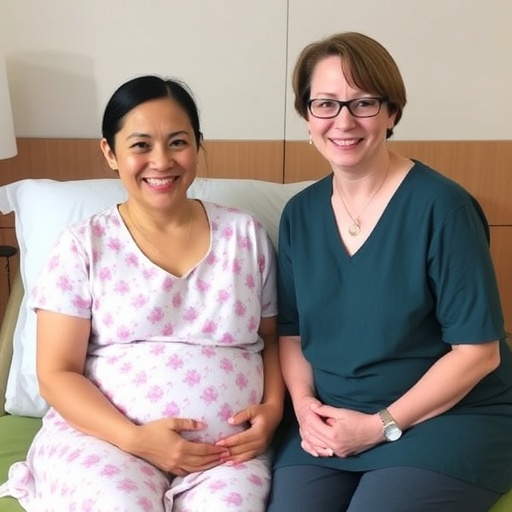
In a groundbreaking development in reproductive medicine, a recent study has reported a second clinical pregnancy following repeat ovarian tissue transplantation in a survivor of acute leukemia. This remarkable case highlights not only the advances in fertility preservation techniques for patients with cancer but also the intricate biological mechanisms that contribute to success in such procedures. The case, detailed by Sönmezer et al., represents the first documented instance of this nature, shedding light on the potential for motherhood even after severe medical challenges.
Ovarian tissue transplantation has emerged as a significant tool in fertility preservation, particularly for young women undergoing chemotherapy or radiotherapy for cancer. The procedure involves harvesting ovarian tissue, which can later be re-implanted post-treatment, thereby restoring hormonal function and enabling natural conception. The implications of this technology are profound as they offer hope to cancer survivors who wish to start families.
The patient in this landmark case had undergone initial ovarian tissue removal prior to her cancer treatment. Following successful treatment and a period of recovery, she received a transplantation of the preserved ovarian tissue. The success of this initial procedure was a precursor to the recent pregnancy, marking a significant milestone in her reproductive journey. This illustrates the potential of ovarian tissue banking as a fertility-preserving strategy for women facing similar diagnoses.
What makes this case especially noteworthy is the complexity surrounding repeat tissue transplantation. In most traditional scenarios, success rates after the first transplantation often vary significantly based on factors like age, health status, and, crucially, the timing of the surgery in relation to cancer treatment. However, the case presented by Sönmezer emphasizes that, under the right circumstances, a repeat transplantation can lead to successful pregnancies, thereby expanding the horizon of reproductive possibilities.
The biological mechanisms that underpin this success remain a crucial area of research. The hormones, growth factors, and the ovarian microenvironment play pivotal roles in the viability of transplanted tissues. In this context, understanding how ovarian tissue can respond to hormonal cues at different stages of recovery could unlock further advancements in fertility treatments. The hormonal milieu, influenced by various biological stimuli, could enhance the grafting process, making subsequent pregnancies feasible.
While the case provides immense hope, it also opens the door to numerous questions about the long-term health implications for both mother and child. Detailed follow-up will be essential to monitor the health outcomes associated with pregnancies achieved through ovarian tissue transplantation. It is imperative to understand how this innovative approach influences the risks of obstetric complications and congenital anomalies, considering the patient’s prior oncological history.
In recent years, the field of reproductive medicine has witnessed remarkable progress. New enzymatic techniques and preservation methods have enhanced the viability of oocytes, leading to higher success rates in fertility treatments. However, the case of repeat ovarian transplantation illustrates that there is still much to be learned. Experts emphasize the need for longitudinal studies to further explore the outcomes of such innovative reproductive strategies.
This case also serves to highlight the emotional and psychological dimensions of fertility preservation for cancer survivors. The prospect of motherhood after a cancer diagnosis can be a source of joy, but it comes with its own set of anxieties. Patients often grapple with anxiety about their health, potential side effects, and the implications for their child’s well-being. Support systems are crucial to help individuals navigate these challenges and make informed decisions about their reproductive futures.
Moreover, the discussion surrounding fertility preservation and cancer treatment must include broader socio-economic factors. Access to these advanced techniques is often inequitable, with disparities based on geography, socio-economic status, and healthcare availability. Addressing these inequalities is crucial to ensure that all cancer survivors have the opportunity to preserve their fertility and pursue their dreams of parenthood.
This pivotal study pushes the boundaries of what is known about fertility preservation. As more cases emerge and additional research is conducted, the collective understanding of the efficacy of ovarian tissue transplantation will undoubtedly evolve. This knowledge can lead to tailored strategies that better meet the specific needs of cancer patients and improve outcomes in reproductive medicine.
The momentum generated by this landmark case is likely to spur further investigation and innovation in the field. Researchers will be keen to conduct comparative studies between first-time and repeat transplantations, seeking insights into underlying mechanisms and identifying best practices. The potential for new treatments and techniques will pave the way for improved fertility preservation options and enable even more survivors to realize their family-building goals.
In conclusion, the report by Sönmezer et al. not only documents an extraordinary clinical achievement but also serves as a clarion call for expanding research into reproductive health for cancer survivors. The promise of innovative techniques in fertility preservation presents a hopeful narrative for individuals facing life-threatening illnesses. It is a testament to human resilience and the unyielding desire to overcome obstacles for the sake of family and future.
Sönmezer, M., Aslan, B., Akgün, N. et al. Second Clinical Pregnancy Following Repeat Ovarian Tissue Transplantation in an Acute Leukemia Survivor: First Report and Literature Overview. Reprod. Sci. (2025). https://doi.org/10.1007/s43032-025-01962-z
Cite Scienmag News
Harold Sullivan. (August 29, 2025). Breakthrough: Second Pregnancy After Ovarian Tissue Transplant. Scienmag. https://scienmag.com/breakthrough-second-pregnancy-after-ovarian-tissue-transplant/
Harold Sullivan. "Breakthrough: Second Pregnancy After Ovarian Tissue Transplant." Scienmag, 29 August 2025, https://scienmag.com/breakthrough-second-pregnancy-after-ovarian-tissue-transplant/. Accessed 31 August 2026.
Harold Sullivan. "Breakthrough: Second Pregnancy After Ovarian Tissue Transplant." Scienmag. August 29, 2025. https://scienmag.com/breakthrough-second-pregnancy-after-ovarian-tissue-transplant/


