


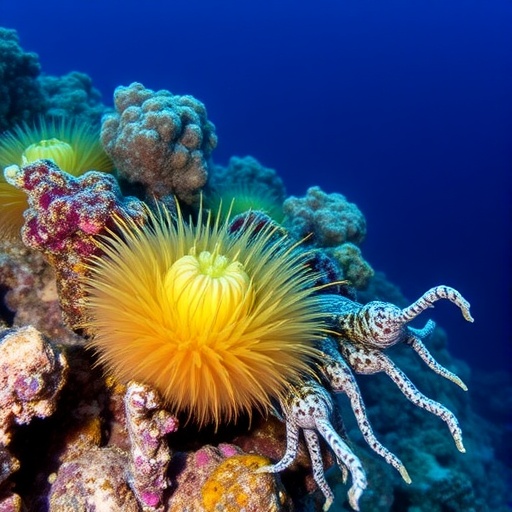
In the realm of marine ecology, a groundbreaking study recently addressed the intricate dynamics of herbivory and predation risk within the coral reefs of contemporary Belize. This research, conducted by Tebbett, Cox, and Paul, sheds light on the complex interactions that not only influence the health of these vital ecosystems but also illuminate the feeding preferences among various herbivorous fish species. As climate change and anthropogenic stresses continue to threaten coral reefs worldwide, understanding these interactions becomes crucial.
The study delves into “halos of herbivory,” a term used to describe the observed zones around certain fish species where their feeding activities significantly impact the surrounding coral and algal communities. By mapping these halos, the researchers aimed to quantify the effects of herbivores on the reef ecosystems. By documenting these zones, insights into which coral species thrive under the influence of herbivore feeding can be drawn, revealing pertinent information about coral resilience in today’s changing marine environments.
Among the various herbivorous fish studied, parrotfish and surgeonfish stood out due to their distinct feeding behaviors and preferences. Parrotfish, with their beak-like jaws, graze intensively on algae that can otherwise smother corals, while surgeonfish are known to exhibit selective feeding behaviors. These feeding preferences play a critical role in controlling algal populations and maintaining the overall health of coral reef systems.
Interestingly, the researchers also examined how predation risk influences the feeding behaviors of these herbivorous species. Predators exert a significant influence on herbivore behavior, dictating when and where these fish can feed safely. The presence of predators often leads herbivores to exhibit more cautious feeding strategies, which may affect the overall nutrient dynamics within the reef ecosystem. Understanding this interplay between herbivory and predation is essential for conservation strategies.
One of the most remarkable findings of the research was the identification of spatial patterns of feeding, revealing that herbivorous fish exhibit a propensity for specific areas of the reef. This selectivity can be attributed to various factors, including the abundance of preferred algae types and the availability of shelter from predators. These patterns are crucial for predicting the resilience of coral reefs, particularly in response to environmental changes or disturbances.
The researchers further utilized sophisticated techniques such as underwater video monitoring and direct observation to gather data on fish feeding behavior. This high-resolution data provided insights into the timing and duration of feeding bouts, allowing for a comprehensive analysis of herbivore activity in the context of their ecological roles. Such methodological advancements highlight the evolving nature of marine ecology research, where technology enhances our understanding of complex biological interactions.
Coral reefs serve as global biodiversity hotspots, hosting an array of marine life that relies on these habitats for food and shelter. The implications of the study extend beyond individual species to encompass broader ecological principles. The health of coral reefs is intrinsically linked to the herbivory dynamics explored in this research. As herbivore populations decline due to overfishing and habitat degradation, the resulting imbalance could lead to algal blooms that threaten coral survival.
Addressing these issues necessitates targeted conservation efforts aimed at sustaining herbivorous fish populations. Protecting these fish not only benefits the species themselves but also serves a vital role in preserving the overall integrity of coral reef ecosystems. The results of this study underscore the importance of integrating herbivore management into reef conservation strategies to bolster coral resilience.
Furthermore, the findings raise critical questions about the future of coral reefs in a changing climate. With rising sea temperatures, ocean acidification, and increased nutrient loading from runoff, it is imperative to explore how these stressors affect the delicate balance of herbivory and predation within reef systems. Understanding these interactions can inform predictive models on the potential responses of coral reefs to ongoing environmental changes.
Collaboration between scientists, conservationists, and policymakers is essential for translating the results of studies like this one into actionable strategies that promote coral reef conservation. By synthesizing research findings with on-the-ground conservation efforts, we can foster adaptive management practices that respond to the dynamic challenges facing coral ecosystems today.
In conclusion, the work of Tebbett and colleagues serves as an important reminder of the intricate relationships that define coral reef ecosystems. By examining the interplay of herbivory and predation risk, the study provides invaluable insights that enhance our understanding of coral health and resilience. As we strive to preserve these remarkable ecosystems, it becomes increasingly clear that the protection of herbivorous fish is vital for the sustainability of coral reefs in the face of environmental challenges.
Tebbett, S.B., Cox, K.D., Paul, V.J. et al. Halos of herbivory, feeding-preference, and predation risk on contemporary Belizean reefs. Coral Reefs (2025). https://doi.org/10.1007/s00338-025-02738-2
Cite Scienmag News
Violet Maxwell. (August 28, 2025). Herbivory, Feeding Preferences, and Predation on Belize Reefs. Scienmag. https://scienmag.com/herbivory-feeding-preferences-and-predation-on-belize-reefs/
Violet Maxwell. "Herbivory, Feeding Preferences, and Predation on Belize Reefs." Scienmag, 28 August 2025, https://scienmag.com/herbivory-feeding-preferences-and-predation-on-belize-reefs/. Accessed 1 September 2026.
Violet Maxwell. "Herbivory, Feeding Preferences, and Predation on Belize Reefs." Scienmag. August 28, 2025. https://scienmag.com/herbivory-feeding-preferences-and-predation-on-belize-reefs/


