


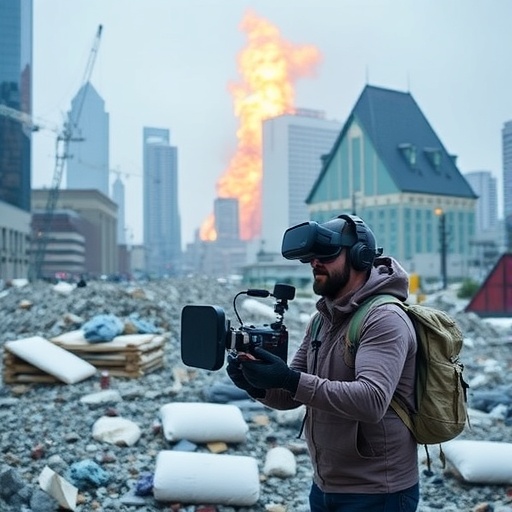
Virtual reality (VR) technology has transitioned from a niche novelty to an essential tool in many sectors, including education, healthcare, and emergency management. One of the most exciting applications of VR is in disaster preparedness training. A recent systematic review by Kaggwa et al. highlights the effectiveness of VR training programs in preparing individuals for various disaster scenarios. The research underscores how immersive technology can transform traditional training methods, making them more engaging and effective.
The appeal of VR in disaster preparedness lies in its ability to simulate high-stakes environments without the associated risks. Traditional training methods, such as lectures or classroom sessions, often fail to provide realistic experiences. On the other hand, VR can immerse learners in simulated emergencies, allowing them to practice responses in lifelike settings. This immersive experience is vital as it can significantly enhance a trainee’s ability to make quick, informed decisions during actual disasters.
Moreover, VR training can cater to a wide range of disaster scenarios, from natural disasters like earthquakes and floods to human-made crises like terrorist attacks or industrial accidents. Each scenario can be tailored to the specific needs of the trainees, thus providing a customized training experience that is difficult to achieve through traditional methods. The ability to easily modify simulations also means that training programs can adapt based on real-time data or emerging threats, keeping responders better prepared for evolving challenges.
The systematic review conducted by Kaggwa and his team focused on several studies that utilized VR technology for disaster preparedness training. The authors analyzed the outcomes of these studies, measuring factors such as knowledge retention, skill acquisition, and overall confidence in emergency response. The results were compelling; individuals who participated in VR training demonstrated significantly improved performance compared to those who underwent traditional training methods.
One remarkable aspect of VR training highlighted in the review is its ability to provide instant feedback to trainees. This feedback loop is crucial in fostering an environment of continuous improvement. As trainees engage with the simulation, they can receive real-time assessments of their performance, enabling them to make immediate adjustments. This feature not only enhances learning but also contributes to greater retention of critical information and skills needed during real disasters.
Additionally, VR training can be conducted remotely, making it accessible to a wide variety of learners, regardless of geographical location. This flexibility is particularly valuable in times of crisis when conventional training sessions may not be feasible due to safety concerns. The ability to conduct VR training online also opens doors for collaboration across different regions or even countries, fostering a unified approach to disaster response.
The review further discusses the impact of VR training on psychological preparedness. Trainees often experience anxiety or fear when faced with disaster scenarios, which can hinder their performance. However, repeated exposure to VR simulations can help desensitize individuals to these stresses, allowing them to respond more effectively in real situations. This psychological aspect is as important as the physical skills taught, providing a holistic approach to disaster training.
Challenges remain, though, particularly in terms of the technology’s accessibility and the cost associated with it. While prices for VR equipment are gradually decreasing, barriers still exist, especially for organizations with limited resources. The review emphasizes the need for continued innovation in VR technology to ensure it becomes a standard part of disaster preparedness training, available to organizations of all sizes.
Ethical concerns also arise regarding the use of VR in disaster training. Given that disasters can be traumatic experiences, it is crucial to approach simulations sensitively and responsibly. Developers of VR scenarios need to balance realism with ethical considerations, ensuring that trainees are adequately prepared without causing undue emotional distress.
Kaggwa’s review serves as a call to action for policymakers, educators, and emergency response organizations to consider integrating VR technology into their training frameworks. The insights gathered from the systematic review demonstrate that VR can significantly enhance training outcomes, leading to better-prepared individuals and more effective emergency responses.
In conclusion, the transformative potential of VR technology in disaster preparedness training cannot be overstated. The systematic review provides robust evidence supporting the effectiveness of VR, offering a pathway for improving emergency response protocols worldwide. As the world faces increasingly complex crises, investing in advanced training tools like VR may be the key to safeguarding lives and improving community resilience.
It is crucial for further research to explore long-term retention of skills learned through VR training as well as its integration with other educational tools. In an era facing unprecedented environmental challenges and societal disruptions, there is a pressing need for innovative approaches to prepare individuals and communities for the unexpected.
Ultimately, this review by Kaggwa and colleagues is more than just an academic exercise; it is a vision for the future of disaster preparedness, illustrating how technology, when blended with educational strategies, can empower us to face the unknown with confidence and competence.
Kaggwa, M.M., Chaimowitz, G.A., Agboinghale, P. et al. Virtual reality training programs in disaster preparedness: a systematic review.
Discov Educ 4, 325 (2025). https://doi.org/10.1007/s44217-025-00771-5
Cite Scienmag News
Courtney Benton. (August 27, 2025). Assessing VR Training for Disaster Preparedness: A Review. Scienmag. https://scienmag.com/assessing-vr-training-for-disaster-preparedness-a-review/
Courtney Benton. "Assessing VR Training for Disaster Preparedness: A Review." Scienmag, 27 August 2025, https://scienmag.com/assessing-vr-training-for-disaster-preparedness-a-review/. Accessed 3 September 2026.
Courtney Benton. "Assessing VR Training for Disaster Preparedness: A Review." Scienmag. August 27, 2025. https://scienmag.com/assessing-vr-training-for-disaster-preparedness-a-review/


